Virtual reality design requires creating interactive and believable environments. 3D technology enables building these spaces with precision, from an object's geometry to global illumination. A clear example: when designing a virtual escape room, 3D modeling defines every piece of furniture and texture, and 3D printing can generate physical prototypes to validate the ergonomics of the controls.
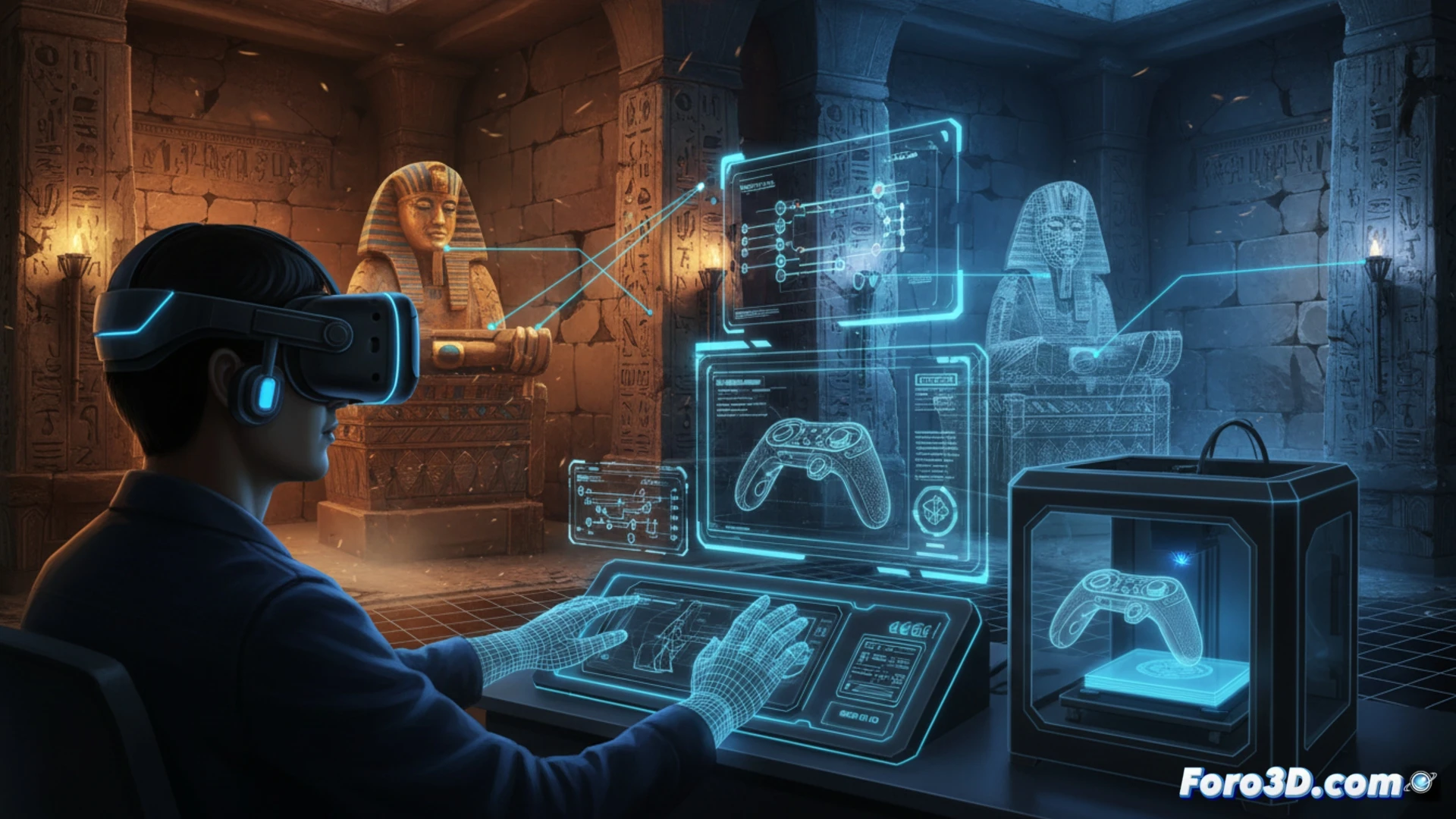
Workflow between modeling and VR engine 🎮
The process begins in modeling programs like Blender or Autodesk Maya. There, assets are created with optimized topology to maintain a stable frame rate. They are then exported to engines like Unity or Unreal Engine, where physics, interactions, and stereoscopic rendering are added. Tools like Substance Painter texture the models. To validate the design, headsets like Oculus Rift or HTC Vive are used. 3D printing of custom controllers, with software like Fusion 360, allows testing the grip before mass production.
When the client wants a virtual world but only knows how to use Paint 🎨
Enter the client who wants a realistic simulation of their furniture store, but their reference is a drawing made in Paint with a mouse. You explain that 3D modeling isn't magic, although sometimes it seems like it. You show them a cube in Blender, and they ask if they can already sell it as a virtual office. In the end, they accept that realism takes time and that their sketch of a chair with legs of different sizes is not what we call an optimized asset.