The German railway network, once a symbol of efficiency, shows a deterioration that dismantles the image of a model country. While politicians boast about management, workers and students suffer daily delays and cancellations. The lack of investment in maintenance has turned train travel into a roulette of uncertainty that harms those who depend on public service for their daily lives.
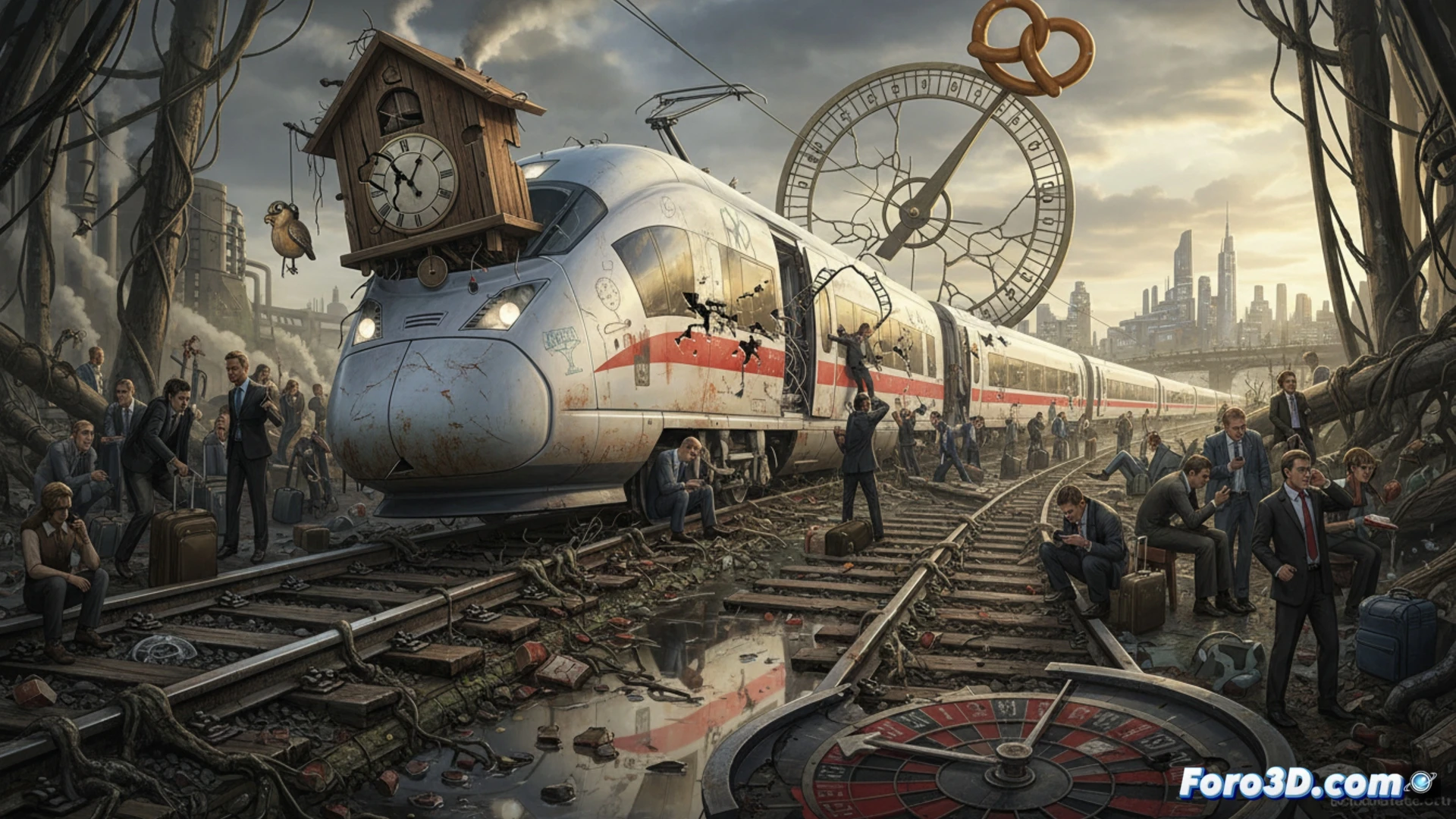
Obsolete tracks: the technological burden of Deutsche Bahn 🚂
The signaling and traffic control technology on many German routes dates back to the 1970s. Systems like CIR-ELKE, designed to increase capacity, are being implemented in drips and drabs due to lack of budget. While countries like Switzerland or France renew their catenaries and switch points, Germany accumulates a technical debt of 88 billion euros in railway infrastructure, according to the federal network agency.
Magic solution: blaming the construction work (and the rain) 🌧️
Deutsche Bahn's manual for explaining delays includes three chapters: leaves in autumn, sun in summer, and urgent maintenance works. The irony is that the works are needed precisely because of decades of neglect. If punctuality were a train, the managers would have missed it long ago while looking for excuses in the pocket of budget cuts.