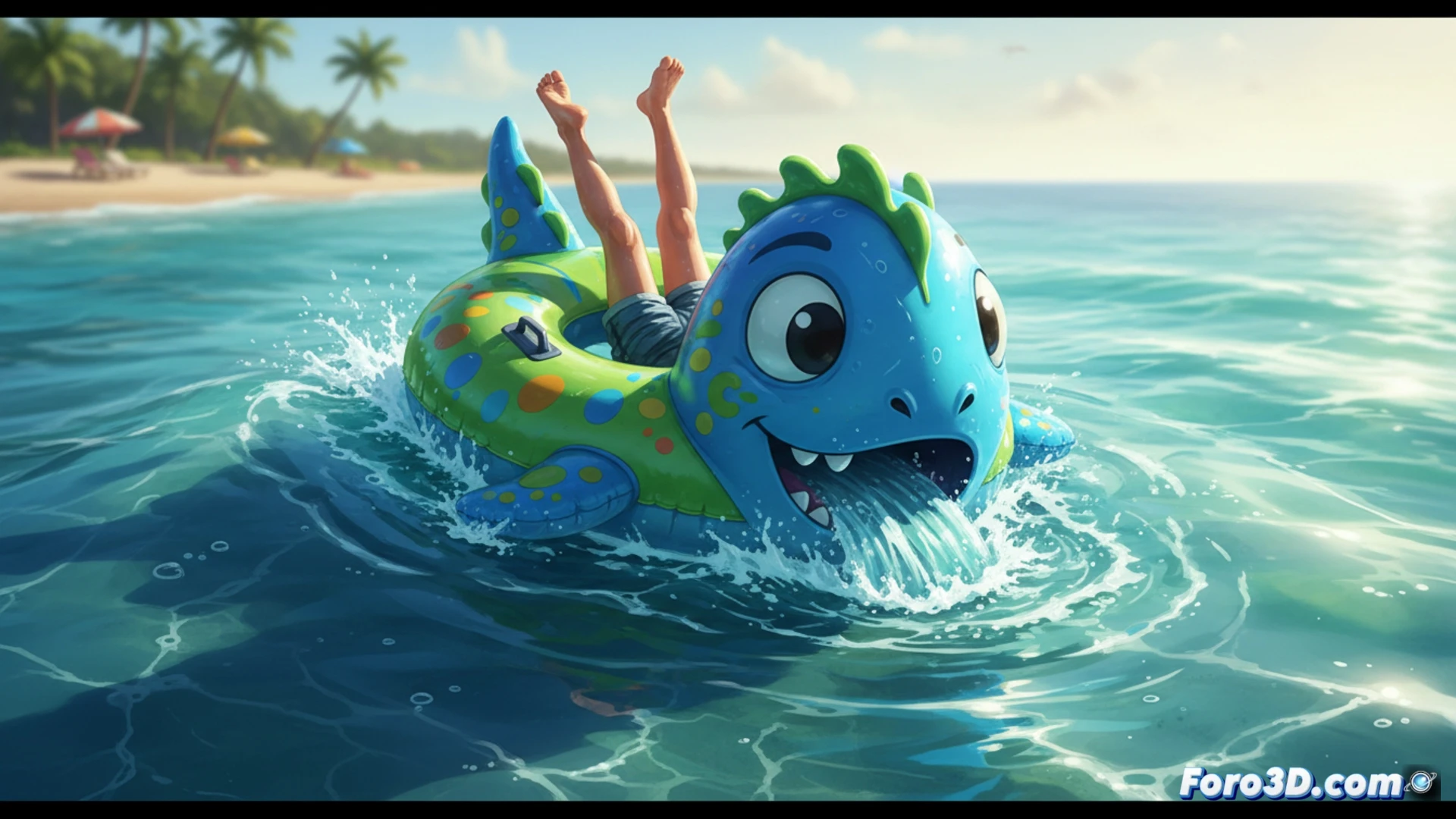
Every summer, the scene repeats on beaches: a small child gets trapped face-down inside a giant donut or swan float, while their parents try to rescue them amidst laughter and screams. The phenomenon, known as the vacuum float syndrome, combines poor weight distribution with the force of the waves. It is not a child's fault, but a basic physics problem that turns a toy into a floating trap.
The physics behind the design: stability and center of gravity 🏖️
Giant floats are usually made of flexible PVC with a single air chamber surrounding a central hole. When a child sits down, their center of gravity is above the inflated edge. When they lean, the weight shifts the air to one side, creating a suction effect that pushes the body against the material. The lack of internal handles or side reinforcements prevents the child from pushing themselves out. The technical solution would be to add a rigid base or independent air compartments to prevent tipping.
Rescue manual for desperate parents 🆘
If you see your child turned into an upside-down sea turtle, don't panic. Spin the float like a pizza so the child ends up face-up. If that fails, ask a lifeguard for help: they are trained to free human offspring from inflatable plastic. And if all else fails, take out your phone and record the moment. In ten years, it will be the highlight video of Christmas dinner. The beach is unforgiving, but humor is not.