Summer arrives and with it the obsession with tanning. But many resort to self-tanners and end up looking like a traffic cone. Why that unnatural orange tone? The answer lies in the chemistry of the skin and how the product reacts when applied to dead cells and dry areas.
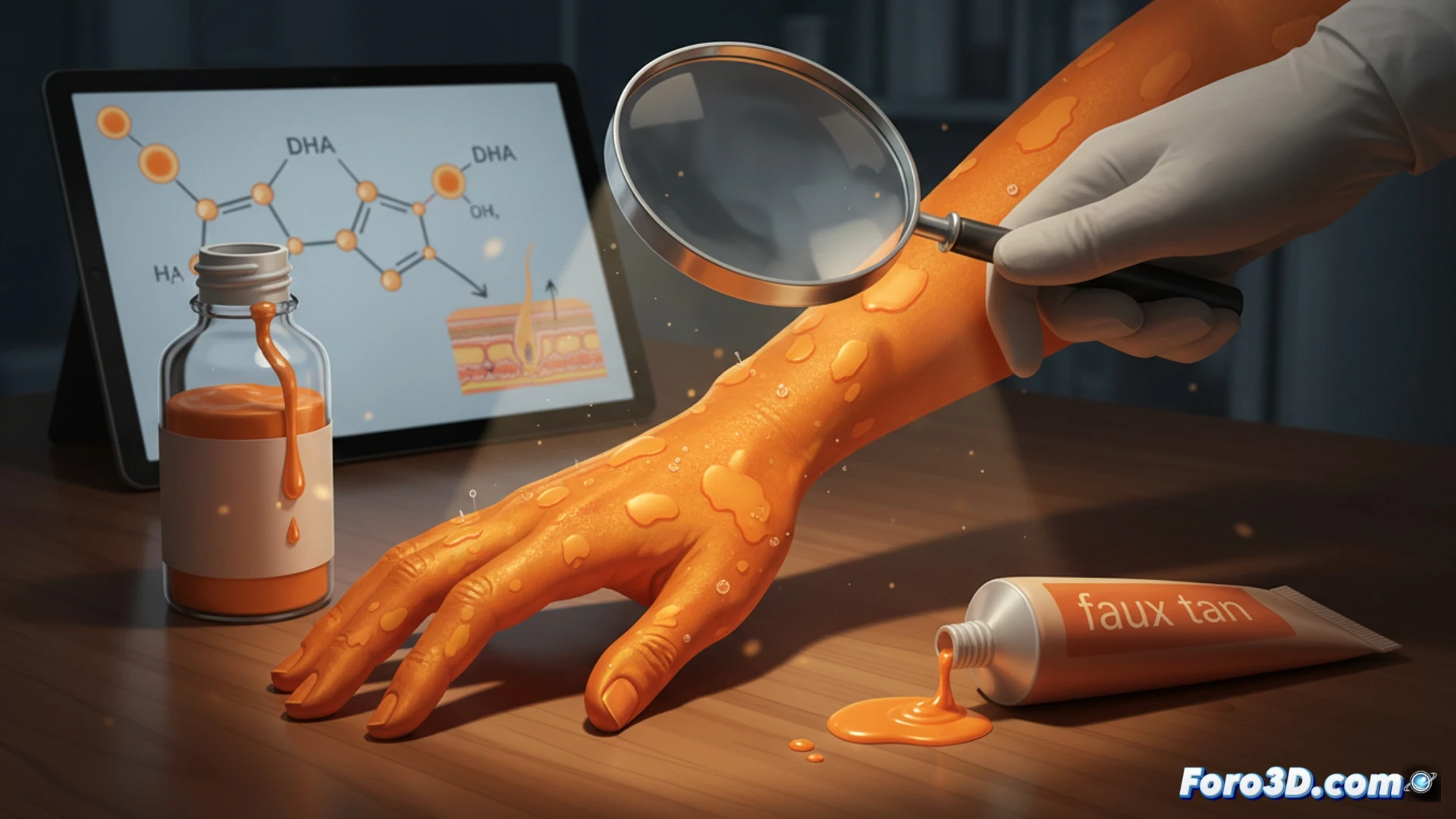
The chemistry behind the disaster: DHA and skin pH 🧪
The active ingredient in these products is dihydroxyacetone (DHA), a sugar that reacts with the amino acids in the outermost layer of the skin. This reaction, called the Maillard reaction, produces brown melanoidins. The problem arises when the skin's pH is more alkaline, accelerating the reaction and generating an orange tone. Areas with more calluses, like elbows and knees, accumulate more product and become fluorescent hotspots.
The carrot effect: when you look like a traffic sign 🥕
Applying self-tanner without exfoliating first is like painting over a bumpy wall. The result is a gradient ranging from neon orange to brown streaks. If you also sweat or get wet, the tone becomes even more uneven. The worst part is that the next day, you look like a traffic light on amber. The solution: exfoliate, moisturize, and apply with gloves. Or accept that this summer you'll be the human cone of the beach.