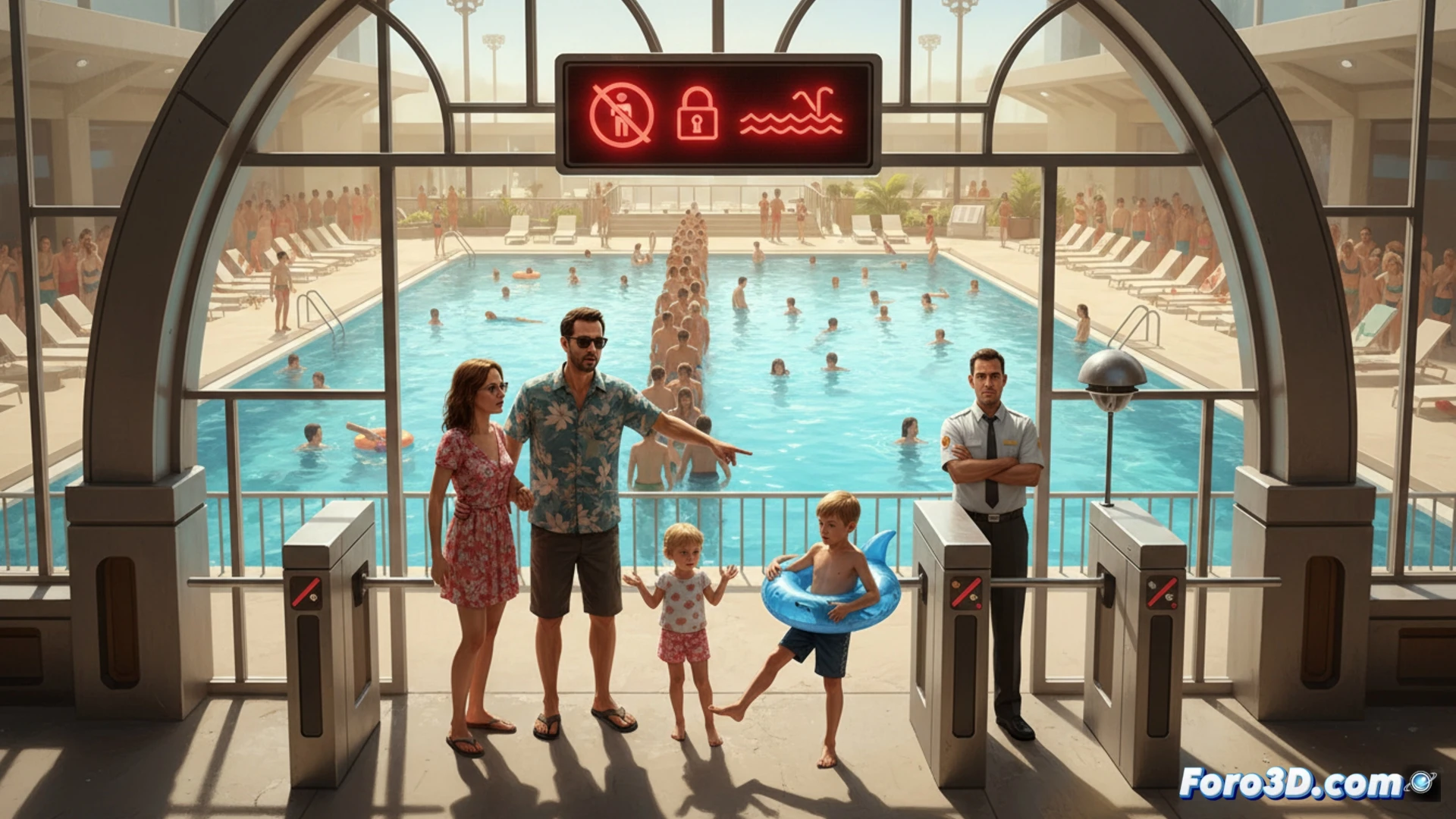
Summer arrives, you're loaded down with kids, towels, and floaties, and when you get to the municipal pool, you're met with a "capacity full" sign. A scene that repeats every year, as if the access control system had a special sensor to detect your arrival with the whole family in tow.
The technical logic behind access collapse 🏊
Behind the sign lies a capacity calculation based on safety regulations and space per user. Municipal pools use manual or digital counting systems that record entries and exits. On extremely hot days, demand exceeds supply during peak hours. Managers activate the limit to comply with the lifeguard-to-swimmer ratio, which is usually 1 per 250 square meters of water surface. Once that number is reached, the system blocks entry. No conspiracy, just math and risk prevention.
The gatekeeper's sixth sense for detecting exhausted parents 😅
But let's be honest: the gatekeeper has a special gift. As soon as they spot an adult with four kids, a bag of chips, and a dolphin floatie, they activate the full capacity protocol without even glancing at the counter. It's as if the system has an unwritten algorithm that prioritizes retirees with umbrellas and lounge chairs. The kids cry, you sweat, and the sign smiles. The pool isn't full; it's full of excuses for you to come back another day.