3D technology is not just for engineers or designers. A general practitioner can use it to create anatomical models from patient scans. For example, upon detecting a tumor, they can print an exact replica to plan surgery or explain the case to the patient. Programs like 3D Slicer or InVesalius allow processing medical images and exporting them for printing.
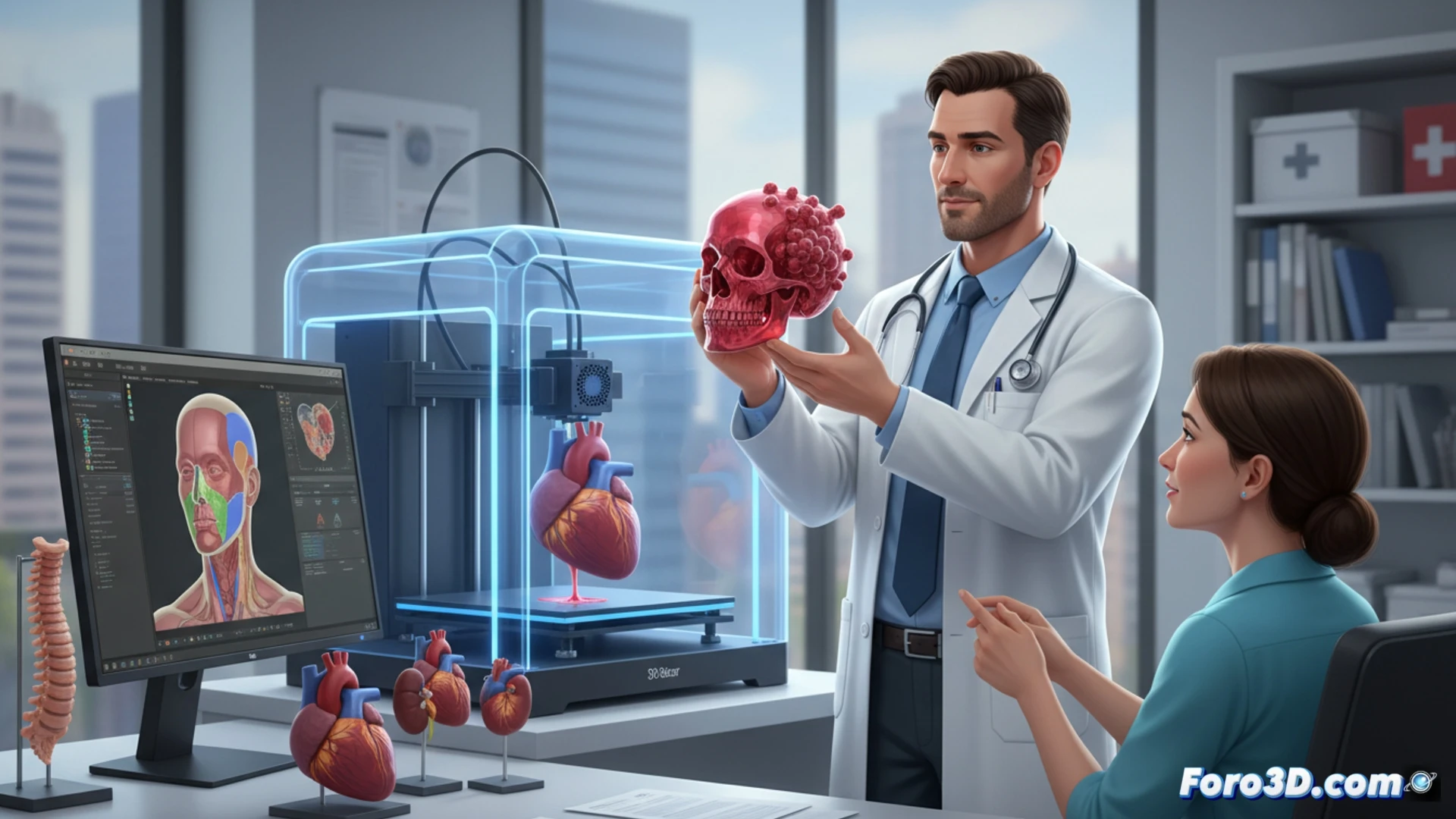
Key programs and workflow in the clinic 🩺
The process begins with a CT scan or MRI in DICOM format. With 3D Slicer, structures (bones, organs) are segmented and a 3D model is generated in STL. Then, Meshmixer or Blender cleans up the geometry for printing. FDM printers with PLA filaments are sufficient for basic clinical use. The doctor obtains a tangible object that improves communication with the patient and reduces diagnostic errors.
When the doctor becomes a printing handyman 🖨️
Of course, now the general practitioner not only prescribes paracetamol but also calibrates their 3D printer bed while discussing whether the tumor looks more like an eggplant or a potato. And if the patient asks why the replica has stripes, they respond seriously: that's the PLA texture, not a metastasis. At least, the consultation ends with an anatomical souvenir as a keepsake.