The Dark Energy Spectroscopic Instrument (DESI) has created the most extensive three-dimensional map of the cosmos, covering 11 billion years of history. This breakthrough allows scientists to observe how the universe has expanded. Initial data indicates that dark energy, that mysterious force accelerating expansion, might not be constant, but rather changing over time.
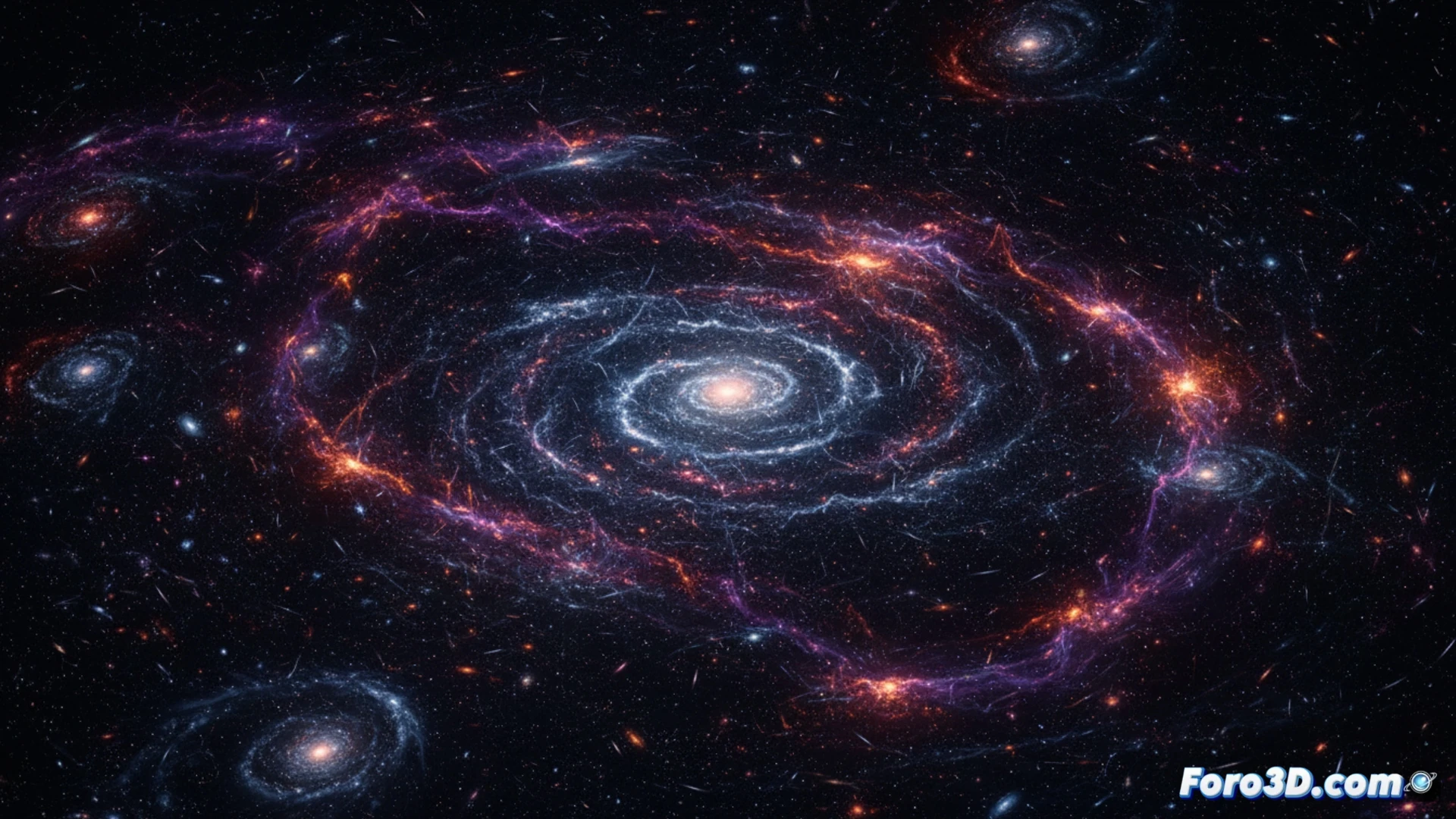
How DESI builds the map of the cosmos 🌌
DESI uses 5,000 robotic optical fibers on a telescope in Arizona to capture light from galaxies and quasars. By measuring the redshift of these objects, researchers calculate their distances and velocities. The resulting map reveals the large-scale structure of the universe, from galaxy bubbles to cosmic voids. This allows comparing actual expansion with theoretical models of dark energy, showing possible deviations.
Dark energy escapes us again 🤔
It turns out that dark energy, that concept we use to justify why the universe doesn't behave as expected, now also turns out not to be constant. It's as if physics has been pulling our leg: first dark matter, then dark energy, and now it turns out the latter is fickle. Soon we'll discover that the universe is a whimsical entity that changes its mind every billion years, just to keep astronomers employed.