The artistic success of Disco Elysium lies not in its polygons, but in their absence. Studio ZA/UM achieved a singular technical feat by merging a standard game engine (Unity) with an expressionist pictorial aesthetic. Every frame of the game functions as a digital oil painting, where visible brushstrokes and canvas textures create an illusion of painterly motion. This article breaks down the technical workflow behind this unique style, analyzing how modeling, painting, and audio tools were integrated to bring to life one of the most visually striking works of the decade.
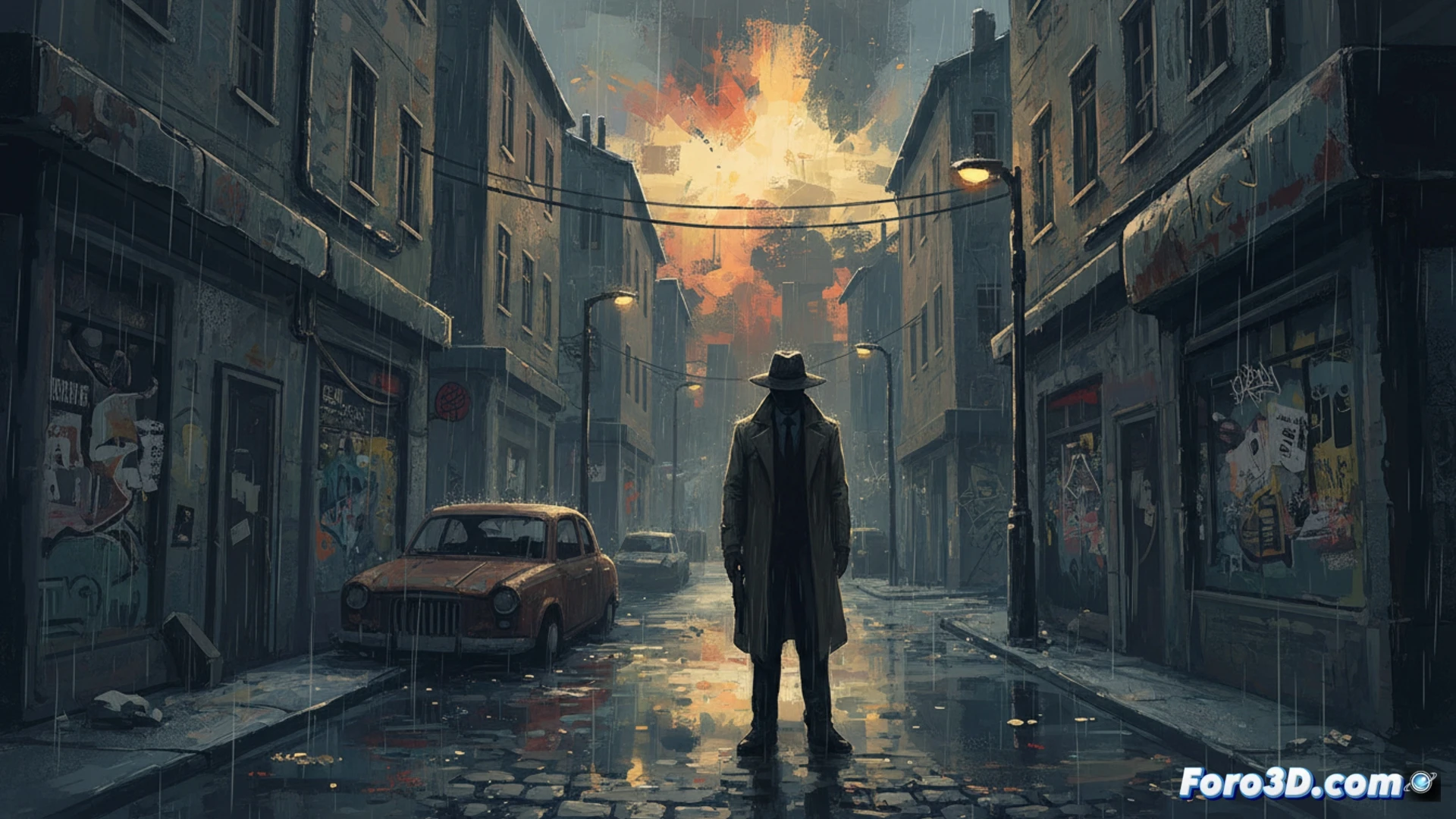
Workflow: from Photoshop to Unity, via Maya 🎨
The artistic process began with Adobe Photoshop, where designers digitally painted each scene and portrait as if they were acrylic sheets. The brushstrokes were not smoothed out; they were exaggerated to remain visible even in motion. These flat assets were then transferred to Maya for character animation. The technical trick lay in the fact that the models did not aim for 3D realism, but rather simulated an animated cutout. Maya's bones and deformers were applied over painted textures, generating an animation that seemed like a drawing coming to life. Finally, Unity assembled the mosaic: static backgrounds (complete paintings) were combined with animated characters, using a system of orthographic cameras and custom shaders that respected the canvas texture without generating harsh shadows that would break the pictorial illusion.
Sound as an invisible brushstroke 🎧
The visual identity is completed by the sound work integrated via FMOD. Far from being mere accompaniment, the audio in Disco Elysium functions as another brushstroke. Dialogues and ambient music are dynamically mixed in real-time, emulating the density of a painting. Footsteps on Revachol's wet pavement do not sound like realistic foley; they sound like the memory of a sound, with reverberations reminiscent of an empty gallery. This technical decision reinforces the game's psychological narrative, where the world is a projection of the protagonist. Integration into Unity allowed the audio engine to react to player choices, changing the score's tone as if a painter were altering the color palette on the fly.
How did ZA/UM manage to synchronize the animations of hand-painted canvases with the Unity engine to convey emotions without relying on 3D models or traditional physics?
(PS: game jams are like weddings: everyone is happy, no one sleeps, and you end up crying)