The work of Yoshitoki Ōima, A Silent Voice, transcends the traditional manga format by turning hearing impairment into a visual narrative pillar. Years after the bullying suffered by Shoko Nishimiya, the story explores the redemption of Shoya Ishida. However, what is revolutionary is not just the plot, but how the art dispenses with conventional dialogue to convey emotions. Every gesture and every sign becomes a visual code that the reader must decipher, creating an immersive experience that challenges oral narrative.
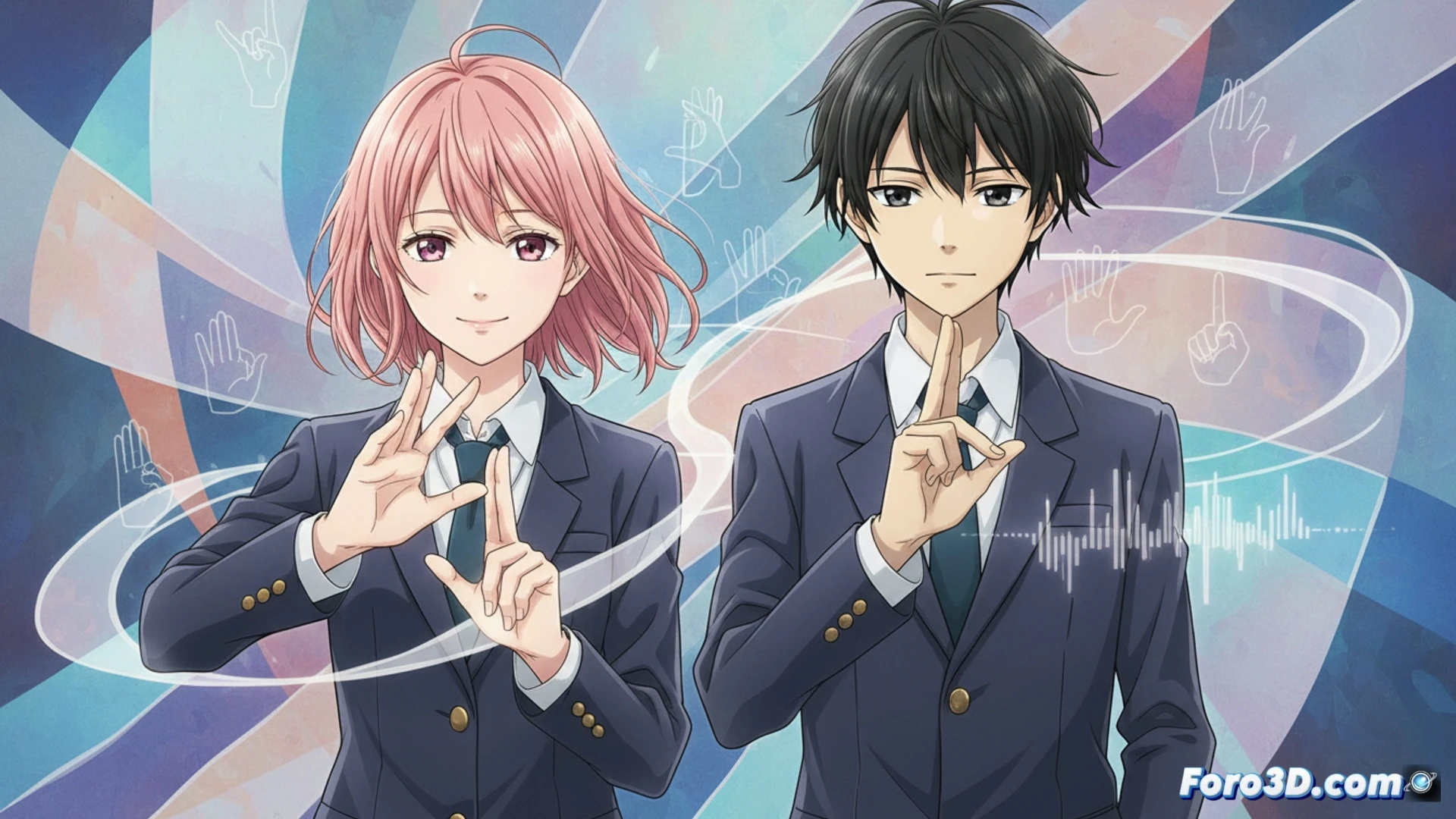
Facial subtlety and gestural symbolism in technical narrative 🎭
From a technical perspective, Ōima employs a meticulous study of facial expressions to replace vocal intonation. The manga uses extreme close-ups of eyes and mouths to reflect microexpressions of guilt or isolation. Sign language is not an ornament; it is a visual communication system that forces the reader to pay attention to hand movements and panel context. This technique, inherited from cinematic storyboarding, allows the work to function as a visual manual of empathy. In the animated adaptation by Kyoto Animation, the use of 3D digital animation for hand gestures amplifies the precision of the message, turning each sign into a political act of visibility.
The comic as a tool for digital activism and awareness 🌐
In the ecosystem of digital art, A Silent Voice demonstrates that the comic can be a vehicle for social activism without resorting to pamphleteering. The work uses graphic silence (empty panels or abstract backgrounds) to represent the communication barrier experienced by deaf people. By exposing school bullying from the perspective of both the victim and the aggressor, the manga forces the reader to confront their own complicity. On digital platforms, this narrative goes viral not for its explicit message, but for its ability to generate debate through visual subtlety, positioning the graphic novel as a tool for cultural change.
How the visual representation of sign language in A Silent Voice can be used as a tool for digital activism to promote inclusion and make visible communication barriers in contemporary graphic narrative
(PS: pixels also have rights... or at least that's what my latest render says)