In cinematic pre-production, the storyboard is the bridge between the idea and the screen. For those of us working in 3D previsualization, finding solid narrative references is key. Banana Fish, a work by Akimi Yoshida published in the 1980s, offers a style manual that breaks with the excesses of traditional manga. Its sober and realistic approach, focused on character expressiveness and visual rhythm, makes it an exceptional case study for designing shots and sequences in digital environments.
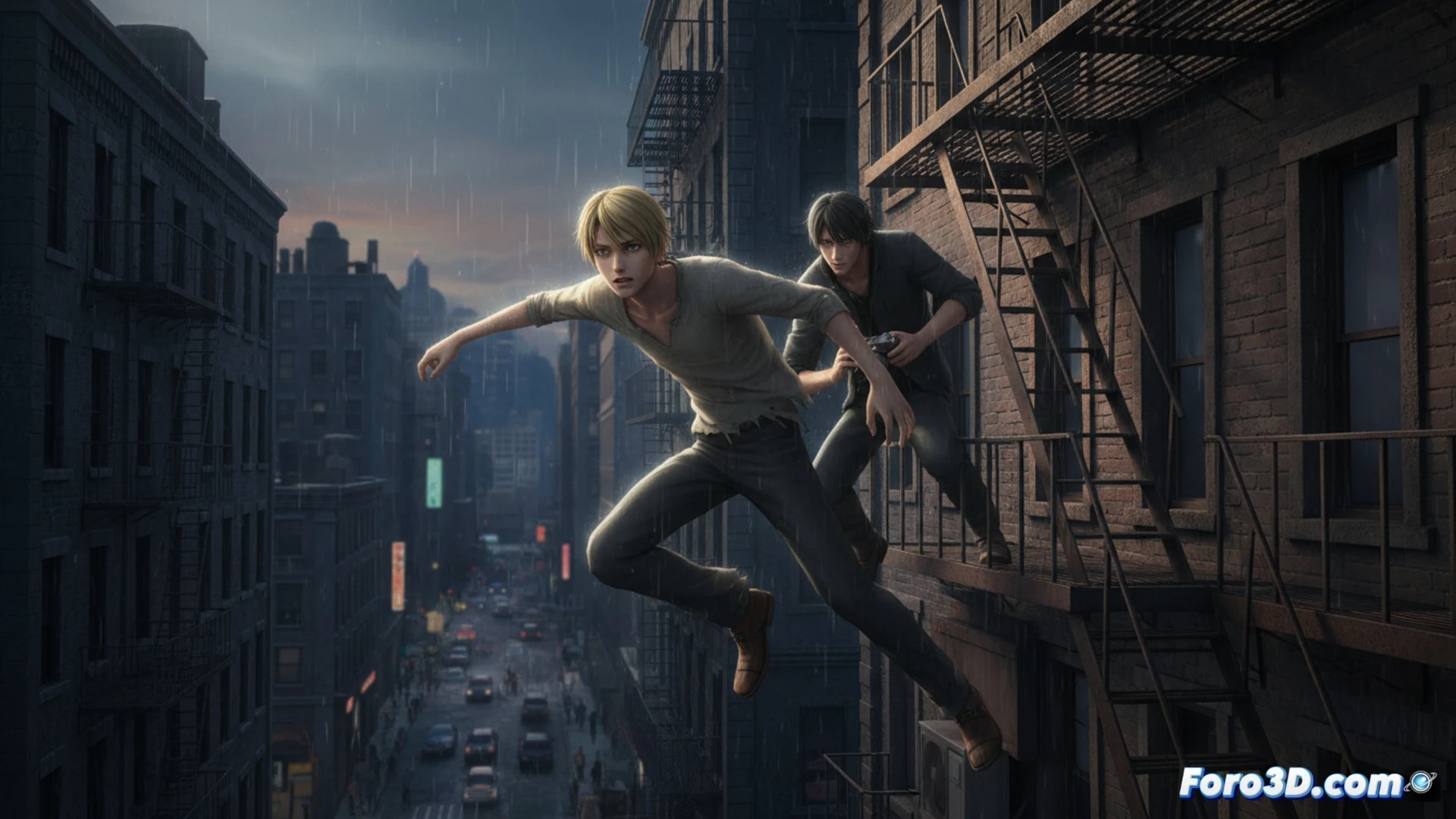
Shot composition and sequential rhythm in previsualization 🎬
Yoshida's style prioritizes tight framing and medium shots that isolate the character from their environment, generating constant psychological tension. This technique is directly applicable to 3D blocking: by limiting the visual field, the viewer is forced to focus on micro-expressions and body language. Additionally, Yoshida uses narrative ellipses and abrupt cuts reminiscent of 1970s cinematic editing. In tools like Blender or Maya, we can replicate this rhythm by adjusting shot duration on the timeline and using cameras with lenses equivalent to 50mm or 85mm, avoiding exaggerated angles to maintain visual sobriety. The lighting, almost always lateral with hard shadows, can be simulated with directional lights to create the same atmosphere of latent threat that defines the series.
The gaze as a narrative engine 👁️
What sets Banana Fish apart is its use of gaze and silence. Ash Lynx doesn't need dialogue to convey his internal conflict; his posture and the position of his eyes suffice. In previsualization, this reminds us that the storyboard should not be saturated with action. Sometimes, a three-second static shot of a character's face says more than a chase scene. For the 3D previsualizer, the challenge is to capture that intention without falling into melodrama, using the camera as a distant, almost documentary observer that respects the digital actor's space.
How can the visual narrative of Banana Fish, with its use of asymmetrical compositions and subjective shots, be applied to optimize 3D storyboarding in building dramatic tension and spatial continuity during cinematic pre-production?
(PS: Previs in film is like the storyboard, but with more possibilities for the director to change their mind.)