The Finnish studio Housemarque, responsible for titles like Returnal and the upcoming Saros, has defined its own style within cosmic horror. Its formula combines arcade action with time loops and existential narratives. For Gregory Louden and Simone Silvestri, the greatest influence is not Lovecraft, but their own catalog. A creative self-perpetuation that shapes each new project.
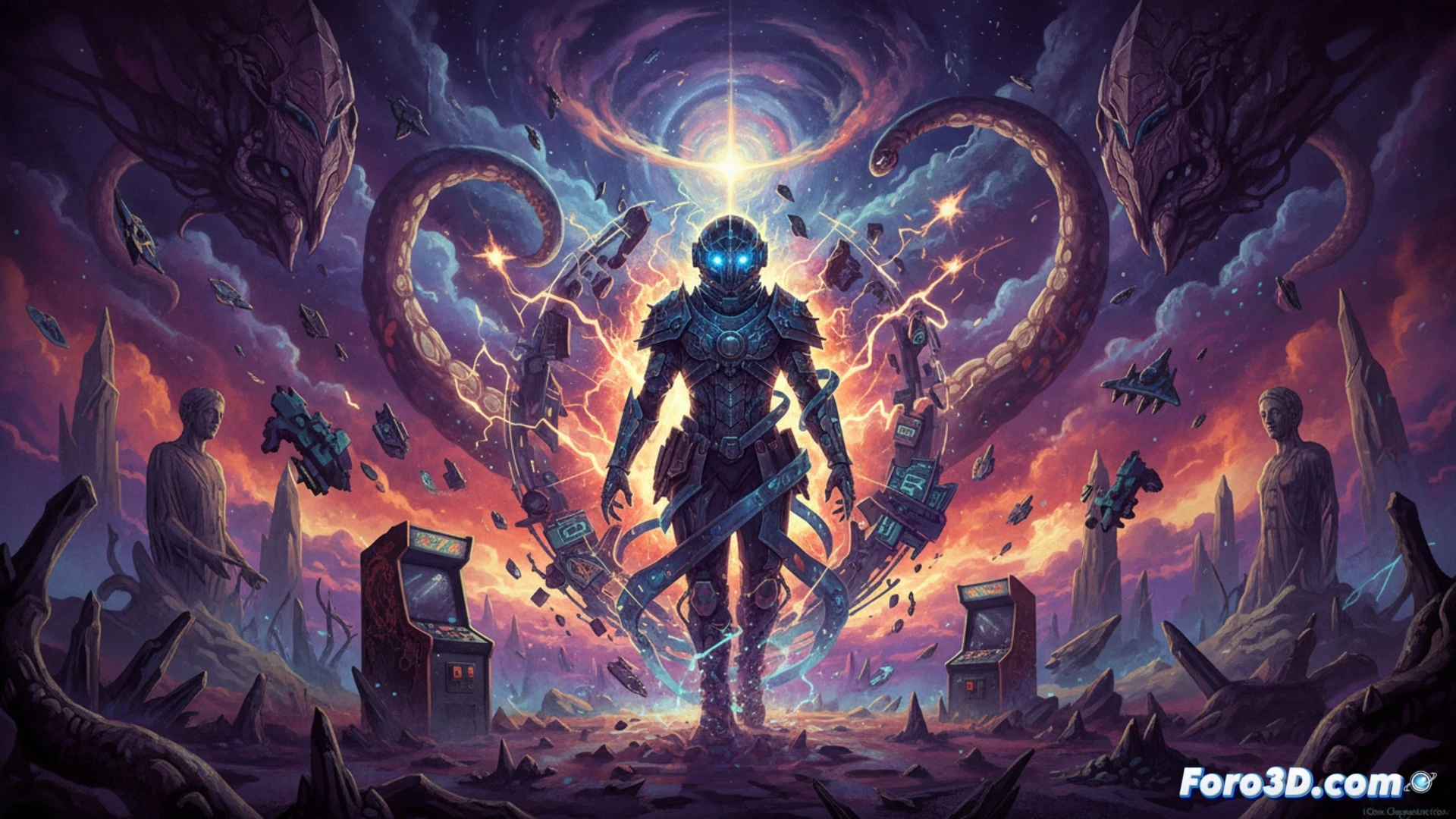
Technical Development: How the Time Loop Becomes Game Mechanics 🎮
The implementation of the time loop in Returnal was not a simple narrative device. The Housemarque team designed a procedural system that alters the arrangement of enemies, items, and rooms in each cycle. This forces the player to constantly adapt their strategy, while the story unfolds in fragments. For Saros, they have refined this approach, integrating weapon and skill progression within a cycle of death and rebirth that reinforces the feeling of hopelessness and exploration. The proprietary graphics engine allows for smooth transitions between combat and exploration phases.
The Irony of Inspiring Oneself to Avoid Repetition 🔄
It is curious that a studio whose hallmark is the repetition of time loops draws inspiration from its own work to avoid repeating itself. It is as if Housemarque had created a metaphysical time loop where each new game is an improved version of the previous one. While other studios look to Lovecraft or classic horror, they look in the mirror and say: hey, that thing we did was cool, let's do it again but weirder. And it works.