The Hospital Virgen de las Nieves in Granada has taken a step forward in corneal transplants by integrating 3D technology. This tool allows for more precise surgical planning and the creation of patient-specific grafts, promising to improve visual outcomes and reduce complications in the operating room.
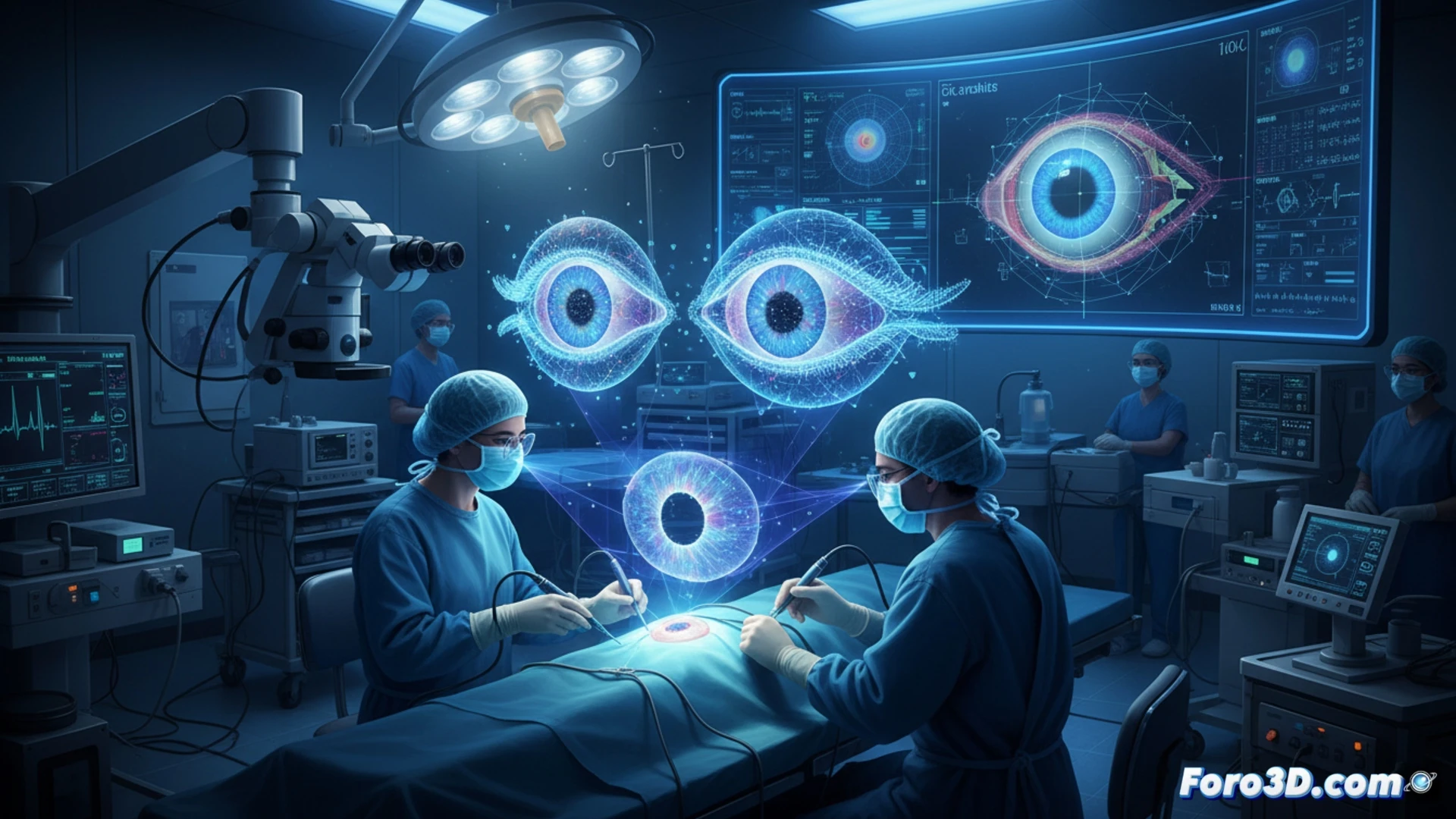
Tomography and 3D modeling for custom grafts 🧬
The technique is based on optical coherence tomography images, which are used to generate three-dimensional models of the damaged cornea. The surgeon can thus design a graft that exactly matches the required shape and thickness, optimizing the fit of the donor tissue. This personalized approach minimizes errors and accelerates the patient's visual recovery.
Goodbye glass eye, hello printed graft 👁️
Finally, technology arrives where it hurts the most: the eye. Now, instead of praying that the graft in question fits like an old sock, surgeons can design it as if it were a custom-made suit. Of course, they better not ask for the striped or polka-dot model, or else the vision will end up very psychedelic.