At the intersection of digital art and crisis narrative, The Nice House on the Lake, by James Tynion IV and Álvaro Martínez Bueno, stands as a manual of visual activism. Ten people are trapped in a lakeside house while the outside world collapses. The work is unsettling not only for its plot, but for how digital lighting and hyperrealistic textures turn comfort into a visual prison—a key resource for those seeking to communicate social isolation and climate anxiety through comics.
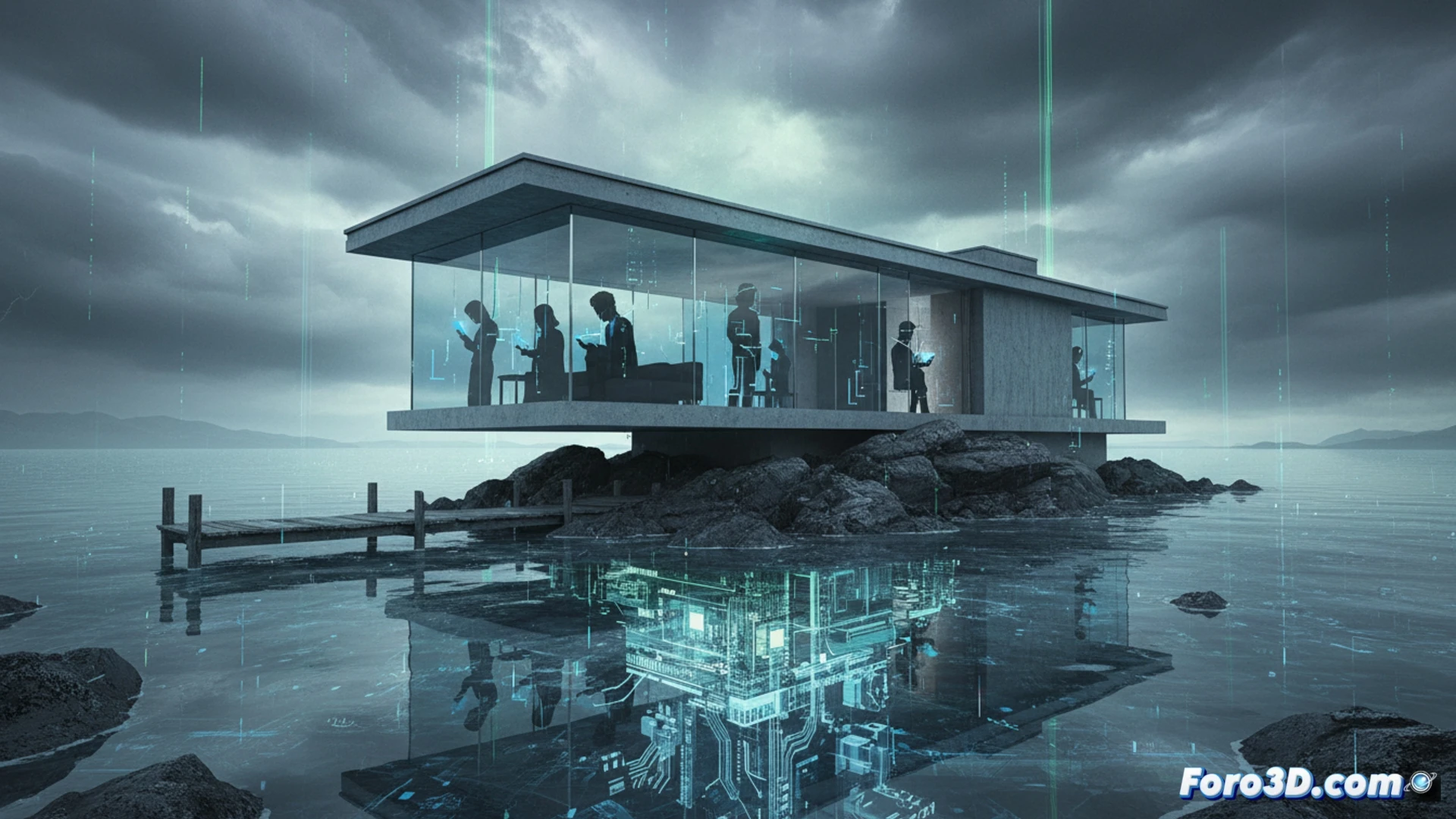
The technical use of digital lighting as a tool for tension 🎨
Martínez Bueno employs a precise mastery of artificial lights to subvert the safety of home. In the panels, shadows do not follow a naturalistic logic; they stretch from everyday objects like lamps or screens, generating constant unease. The digital textures, applied to backgrounds and faces, mimic the roughness of grainy photography or the sheen of a wet surface, breaking the barrier between the real and the simulated. This technical approach demonstrates that lighting and digital retouching are not mere embellishments, but narratives in themselves. For the visual activist, learning to control these tools allows for building atmospheres of psychological oppression without resorting to the explicit, creating a powerful message about control and surveillance in times of global crisis.
From domestic panic to political awareness 🌍
The work fits into the genre of social horror, using the enclosed space as a metaphor for ecological collapse and political paralysis. By applying digital techniques that distort the familiar (a sinisterly lit sofa, a reflection in a glass hiding a threat), the comic forces us to look at our own surroundings with distrust. This method is exportable to activism: a well-crafted digital image, playing with everyday lights and textures, can generate immediate empathy towards isolation or crisis, making an abstract problem tangible. The Nice House on the Lake demonstrates that digital art not only entertains but builds a collective awareness of the end of the world we are already inhabiting.
How lighting and digital texture techniques are used in The Nice House on the Lake to represent the tension between the visual comfort of the refuge and the social horror of the external crisis.
(PS: if your virtual reality installation doesn't change the world, at least let it not lag)