The series The Immortal Hulk, by Al Ewing and Joe Bennett, shattered the image of the green giant as a simple monster of rage. By being killed by day and resurrecting at night, Bruce Banner becomes a demonic and lucid entity. This narrative twist transforms the comic into a treatise on body horror where each transformation is an act of extreme pain, a visual metaphor for the trauma and systemic violence that society inflicts upon the marginalized body.
Grotesque Realism: Narrative and Visual Technique 💀
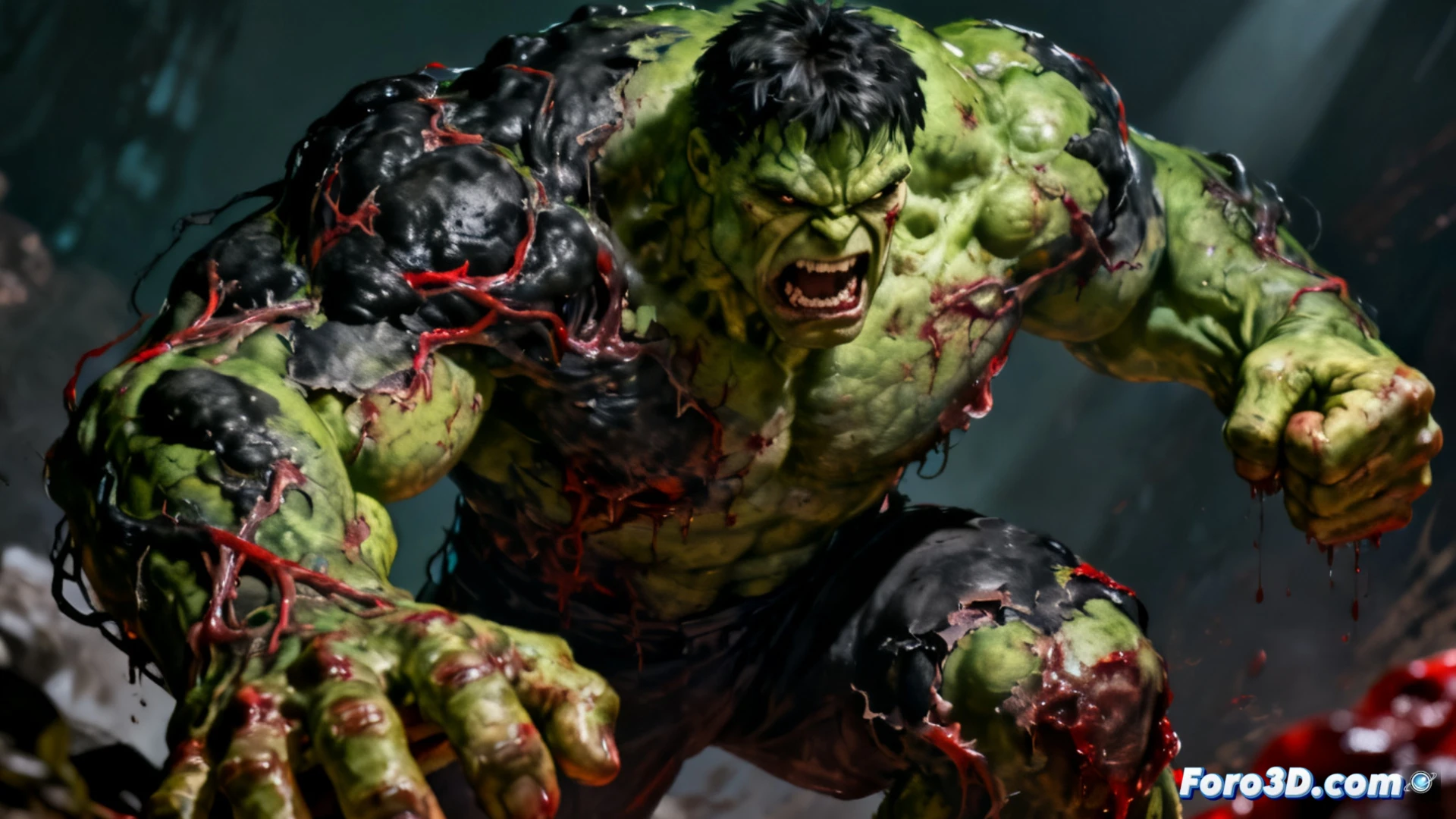
Joe Bennett employs a grotesque realism that goes beyond classic exaggerated muscle. His panels show bones rearranging, skin tearing, and distorted anatomy reminiscent of cinematic body horror. This technique seeks not epicness, but discomfort. The reader does not see a hero, but a patient on an existential operating table. For digital art and 3D modeling, this aesthetic offers a manual of expression: mesh deformation, texturing of open wounds, and nightmarish ambient lighting are tools to translate trauma into a visual language.
From Comic to 3D Modeling: Visual Activism 🎨
A digital artist could reinterpret key scenes from The Immortal Hulk to amplify its social denunciation. Modeling a Hulk with textures of bruised flesh and open scars, instead of an idealized body, turns animation into a manifesto. The nightly transformation, rendered with volumetric lighting and mesh distortions, symbolizes how systemic violence manifests in the real bodies of victims. Thus, 3D art ceases to be mere entertainment and becomes a tool for denunciation, using body horror as a mirror of a broken society.
How does the representation of Hulk's mutant body in The Immortal Hulk function as a critique of capitalism and social control over human vulnerability?
(PS: digital political art is like an NFT: everyone talks about it but no one really knows what it is)