In 1950, the discovery of the Tollund Man in a Danish peat bog shocked the world. His body, dated to the Iron Age (4th century BC), was exceptionally preserved: the skin, beard, and even the folds of his face remain intact. Today, digital archaeology allows us to study every millimeter of this relic without exposing it to contamination or deterioration, using advanced 3D scanning and photogrammetry techniques.
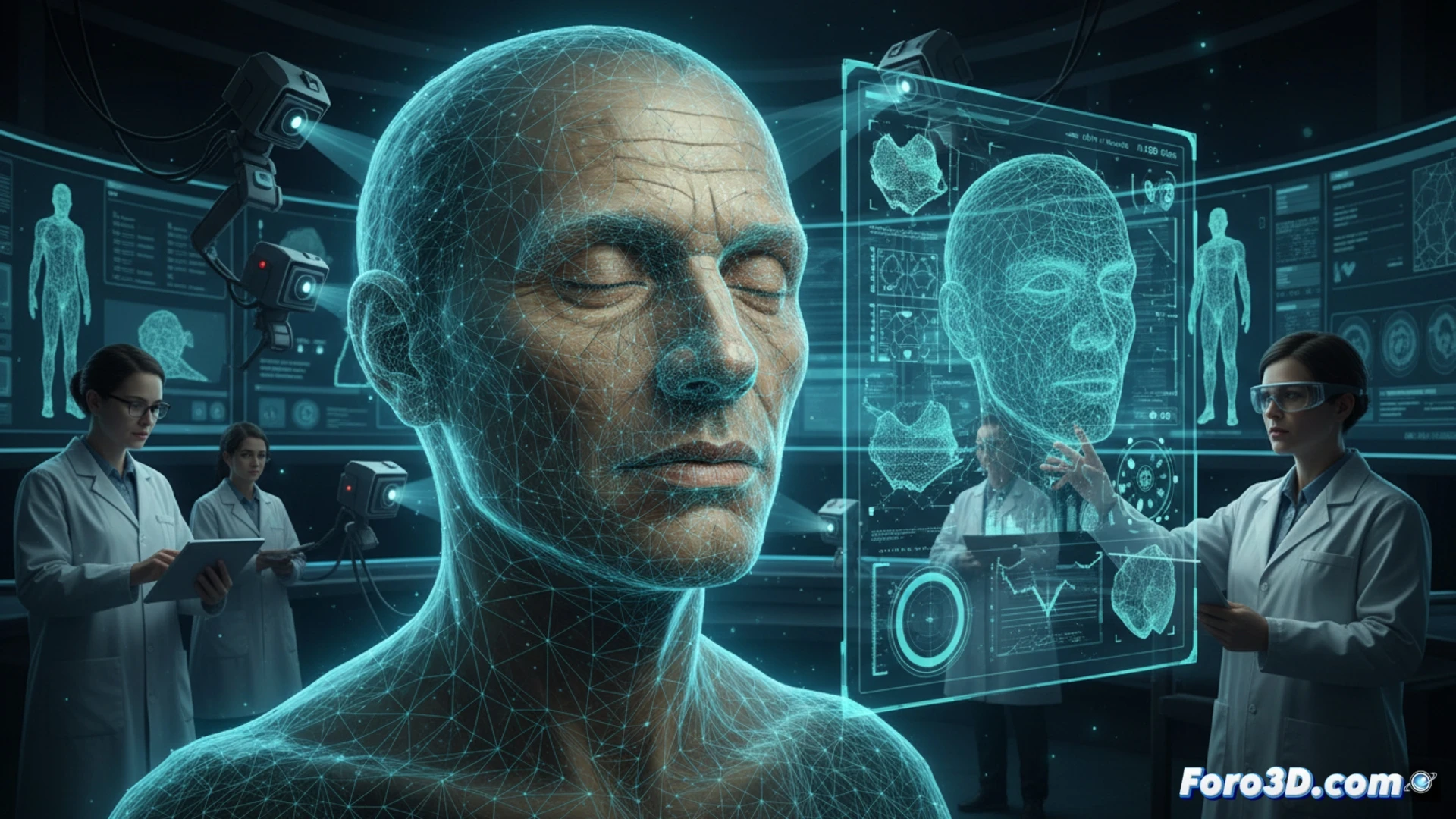
Photogrammetry and polygon mesh: the technical process behind virtual conservation 🖥️
The team at the Silkeborg Museum used high-resolution photogrammetry to capture the texture and geometry of the Tollund Man. Over 500 photographs were taken with controlled cross-lighting, eliminating reflections and harsh shadows. These images were processed in software such as RealityCapture and Agisoft Metashape, generating a dense point cloud that was translated into a sub-millimeter detail polygon mesh. The resulting model allows for rotating, zooming, and analyzing the facial expression, beard, and neck wrinkles, all without handling the actual body. Additionally, a texturing process based on PBR (Physically Based Rendering) was applied so that the interactive model retains the exact skin tone and characteristic bog moisture.
An ethical window into the past: what do we gain by digitizing death? ⚖️
The digitization of the Tollund Man responds not only to a technical ambition but also to an ethical necessity. Every time a mummified body is moved or displayed, it suffers imperceptible but cumulative wear. By creating a digital twin accessible from any web browser, researchers can study the signs of strangulation, tool marks, and organic remains without the need for physical contact. Thus, the mystery of this Iron Age man is preserved for future generations, not as a museum curiosity, but as a living archive that 3D technology keeps safe from time.
Since the 3D digitization of the Tollund Man allows for accurately reconstructing his face without damaging the body, what ethical dilemmas arise when deciding whether these recreations should show his exact appearance at the moment of death or an idealized version of his daily life in the Iron Age?
(PS: If you dig at a site and find a USB stick, don't plug it in: it could be Roman malware.)