In 1996, the discovery of a skeleton in the Columbia River, Washington, sparked a legal conflict between Native tribes and the scientific community. The Kennewick Man, 9,000 years old, became the center of a debate about the identity of the first Americans. The solution was not only legal but technological: digital archaeology allowed it to be studied without destroying its physical integrity.
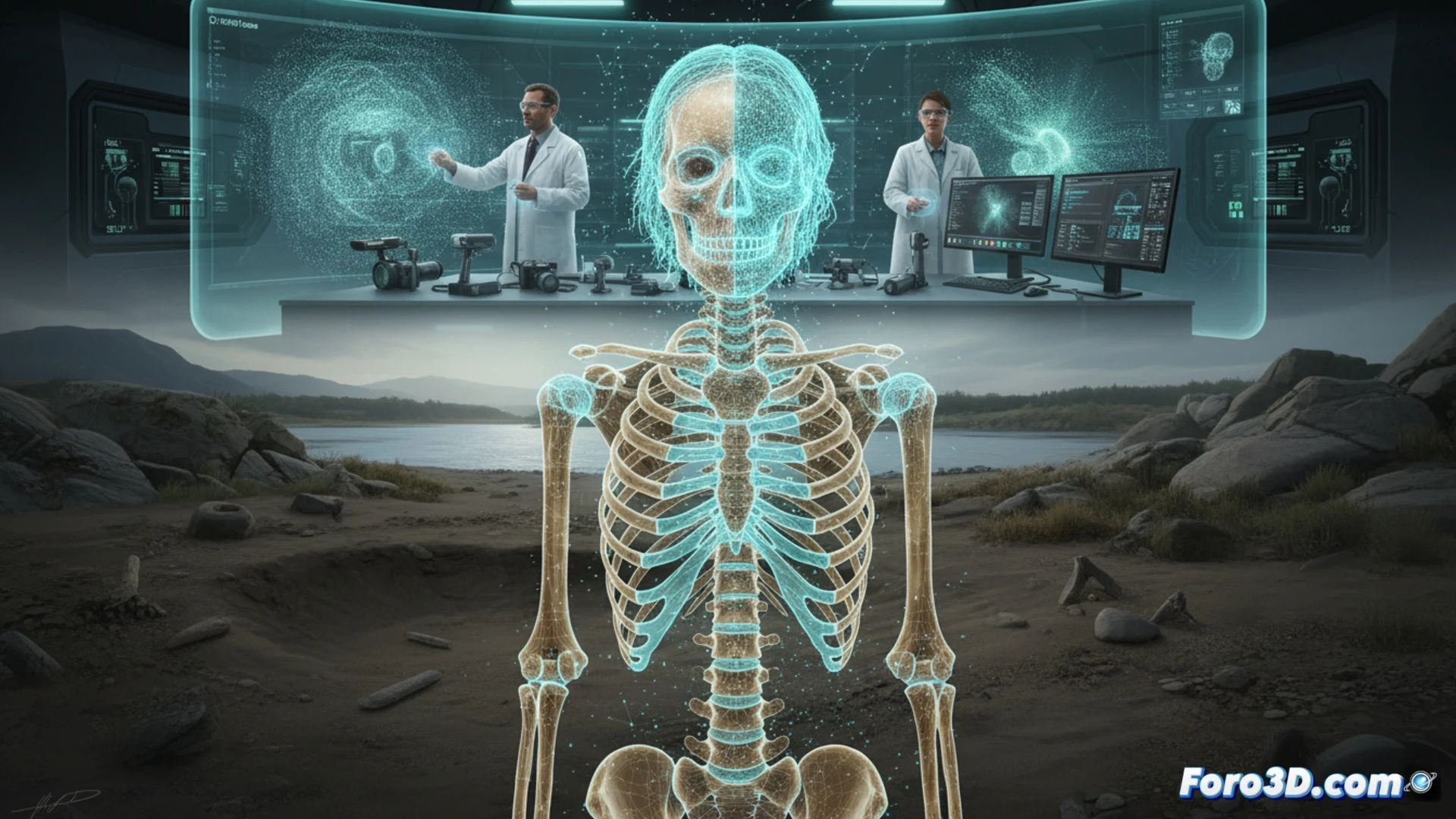
Photogrammetry and 3D modeling for forensic preservation 🦴
The Kennewick skeleton underwent a rigorous three-dimensional documentation process. Using high-resolution photogrammetry, an exact digital model of each bone was generated, allowing anthropologists to take measurements and perform morphological analyses without direct contact. This digital twin was key to the forensic facial reconstruction, revealing features that did not match modern Native populations. The technique avoided constant handling of the material and created an accessible archive for future research, even while the legal battle defined its final custody.
Digital lessons for a contested heritage 🏛️
The Kennewick case demonstrates that 3D scanning is not just an analysis tool but an ethical bridge. By digitizing such sensitive remains, the beliefs of Indigenous communities are respected while scientific curiosity is satisfied. Today, its digital model allows its morphology to be compared with other digitized fossils, such as the Buhl Man or the Spirit Cave skeleton, tracing ancestral migration routes without moving a single bone from its final resting place.
How did photogrammetry and 3D modeling of the Kennewick Man's skull solve the unknowns about his origin and appearance, without damaging the valuable bone remains?
(PS: and remember: if you can't find a bone, you can always model it yourself)