In 1952, the discovery of the Grauballe Man in a Danish bog shocked the world. His body, dated to the Iron Age, was preserved in extraordinary conditions: the skin, hair, and even fingerprints remained intact. This level of detail makes this individual a perfect candidate for digital archaeology, where non-invasive documentation is key.
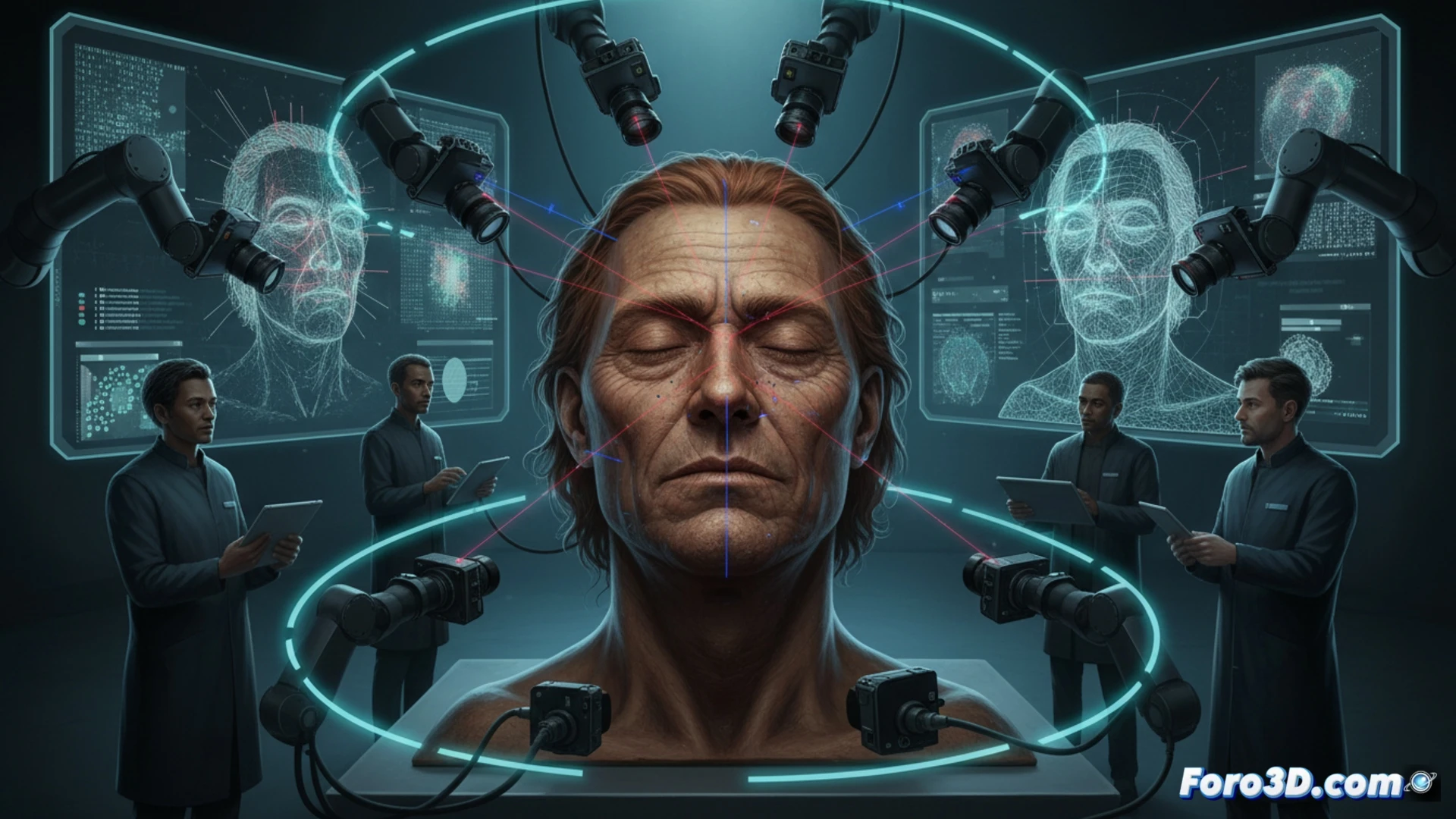
Photogrammetry and Laser Scanning: The Technical Protocol 🛠️
To study the Grauballe Man without risk of deterioration, techniques such as close-range photogrammetry are applied. This process involves capturing hundreds of high-resolution images from all angles, then reconstructing a three-dimensional model using specialized software. Laser scanning complements the volumetric capture, recording even the texture of the wounds on the neck. The result is a digital mesh that preserves every groove of the fingerprints and every fold of the skin, allowing anthropologists and forensic experts to make precise measurements without touching the fragile original.
Beyond Conservation: An Interactive Legacy 🌍
The digitization of the Grauballe Man not only protects the find but also democratizes access to it. Any researcher or enthusiast can explore the 3D model from anywhere in the world, rotate it, and zoom in on specific areas such as the cut on the throat or the hands. Compared to other bog bodies like the Tollund Man, the digital model of Grauballe allows for direct comparative analysis. Digital archaeology thus transforms a fragile remnant into an eternal resource for science and education.
How has the digital facial reconstruction of the Grauballe Man evolved from traditional forensic techniques to current 3D scanning tools, and what new data has it revealed about his identity and historical context?
(PS: If you dig at a site and find a USB drive, don't plug it in: it could be Roman malware.)