In the middle of summer, a daily mystery occurs that defies logic. When you prepare a soda, the ice turns into water within minutes, as if it's in a hurry to disappear. However, if a cube falls to the kitchen floor, it remains there, stubborn and solid, for hours. This phenomenon, which we have all observed, has a scientific explanation that goes beyond simple room temperature.
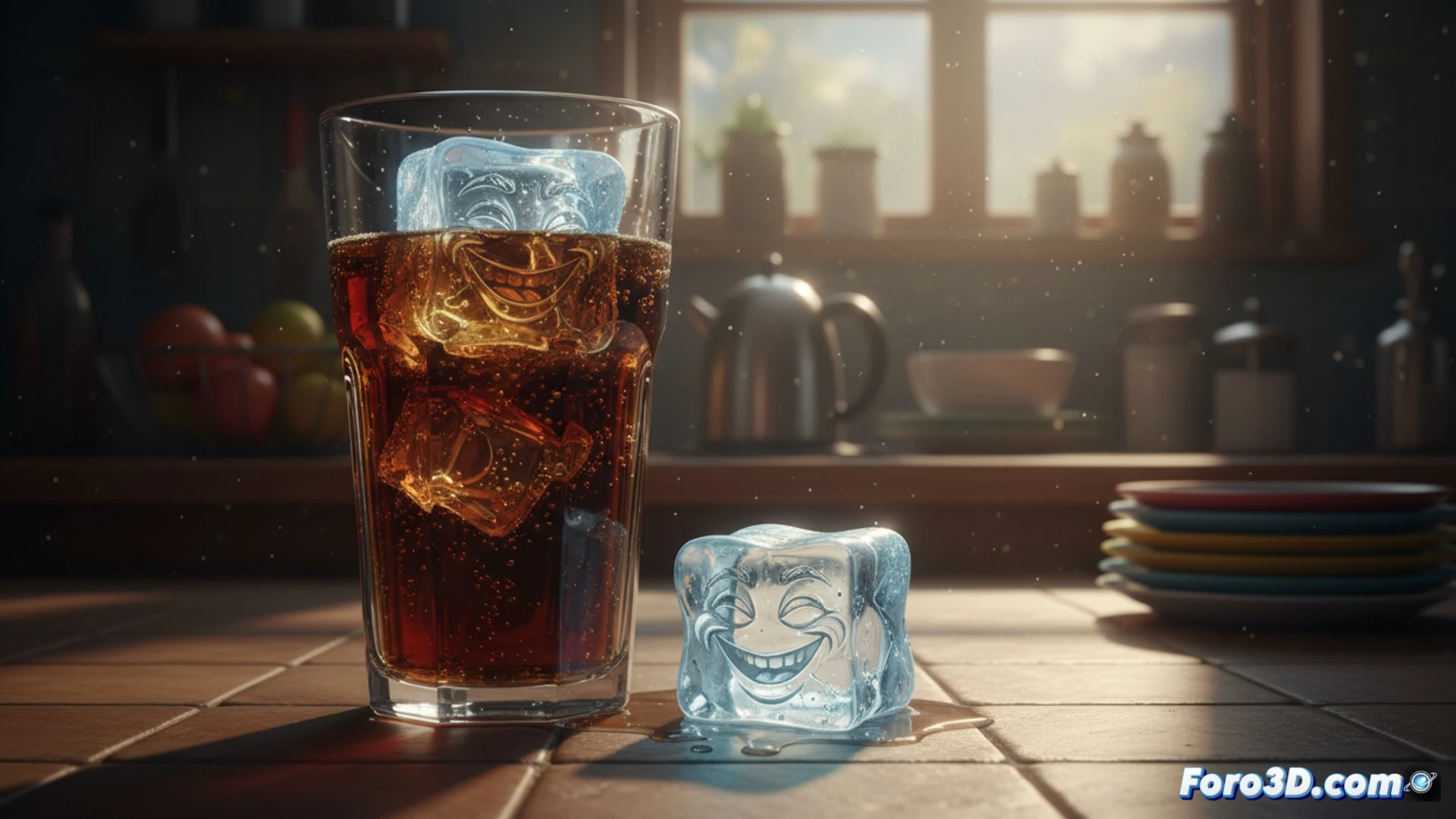
Thermal transfer and temperature gradient 🔥
The key lies in the difference in thermal conductivity between materials. A glass or metal cup is an excellent conductor of heat. When you pour the soda at room temperature, the liquid transfers its thermal energy to the ice quickly and efficiently, accelerating melting. In contrast, the kitchen floor, whether ceramic or linoleum, is an insulator. The ice cube only receives heat from the surrounding air, a much slower process. Additionally, the liquid water that forms on the surface of the ice acts as an additional insulating layer, further slowing down energy transfer.
The revenge of the lazy cube 🧊
So now you know: ice isn't lazy, it's selective. If it falls to the floor, it decides to take a thermal nap because it knows no one will pay it any attention. In the glass, however, it feels the social pressure to cool the soda and sacrifices itself in record time. It's the law of least effort applied to thermodynamics: if you don't ask anything of it, the ice doesn't budge. And then we wonder why the kitchen is the place where ice cubes go to die of old age.