In 1976, Richard Dawkins published The Selfish Gene, a book that shook evolutionary biology by proposing that genes, not organisms, are the true protagonists of natural selection. Living beings would be nothing more than temporary vehicles for immortal replicators seeking to perpetuate themselves. This idea, compared to On the Origin of Species, changed our understanding of altruism and cooperation in nature.
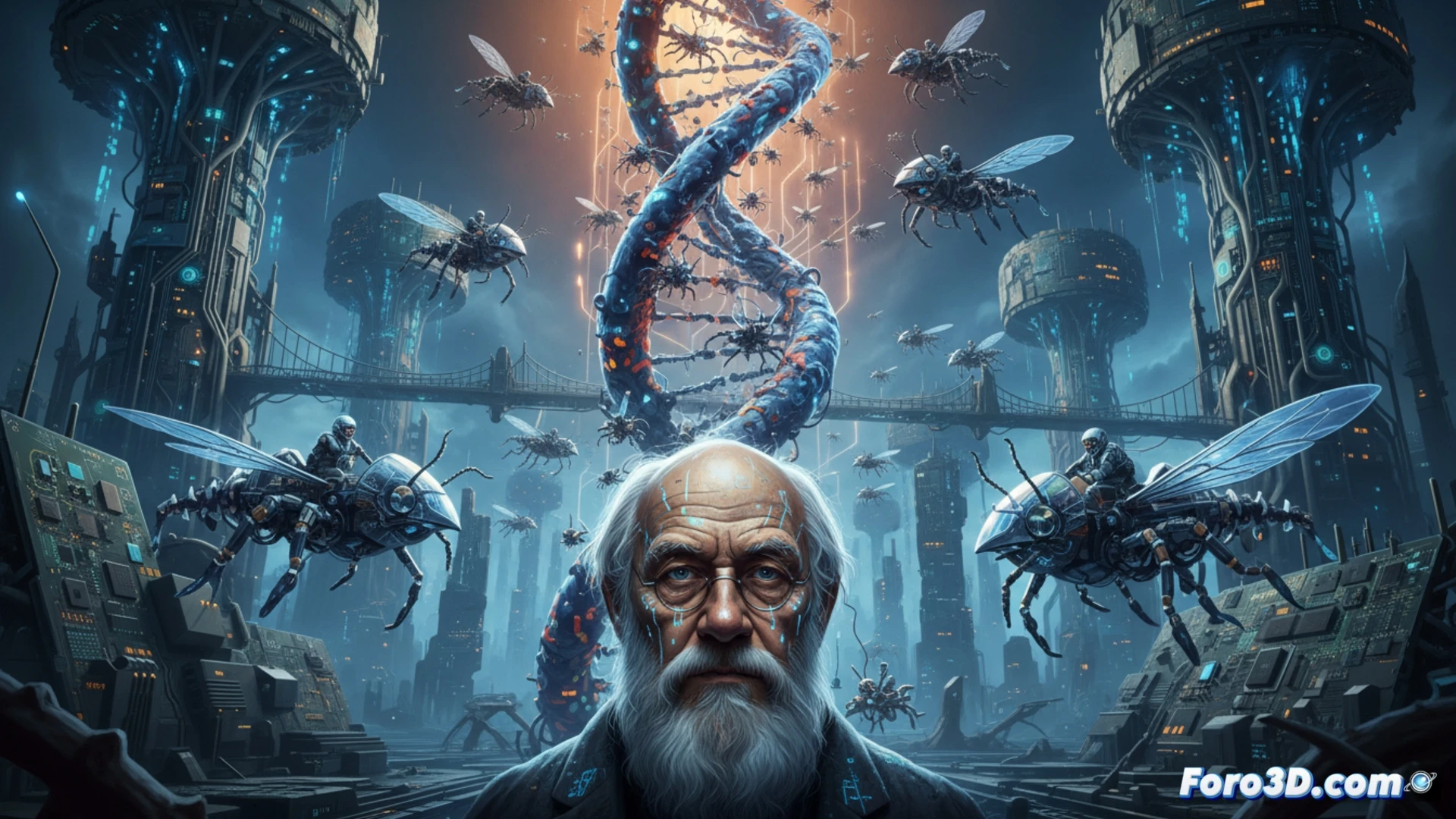
Genes as source code: the metaphor of the evolutionary programmer 🧬
From a technical perspective, the selfish gene anticipated key concepts in software development and complex systems. Dawkins describes genes as units of information competing for limited resources, similar to how algorithms optimize their efficiency in a computational environment. Natural selection acts as a constant debugger: random mutations generate variants, and only the most stable and functional copies persist. This logic of replication and competition resembles differential evolution processes in artificial intelligence, where parameters are adjusted to maximize an objective function without direct programmer intervention.
The selfishness of your code: why your software doesn't obey you 💻
If we apply Dawkins' logic to development, your code is not loyal to you, but to its own propagation. Every function, variable, or dependency seeks to replicate itself in other projects, ignoring your initial plan. That library you added to save time ends up taking up more space than your business logic. Like genes, the most selfish code fragments are the ones that survive: those that copy themselves without permission, generate infinite dependencies, and force you to maintain them. In the end, you are not the one programming: you are the temporary vehicle of a script that longs for immortality on GitHub.