A team of scientists has identified how the APOE4 gene, the strongest risk factor for late-onset Alzheimer's, causes chronic brain inflammation. The mechanism involves the activation of the enzyme cPLA2. In animal models, they managed to shut down this enzyme with specific inhibitors, opening the door to personalized treatments for carriers of this genetic variant.
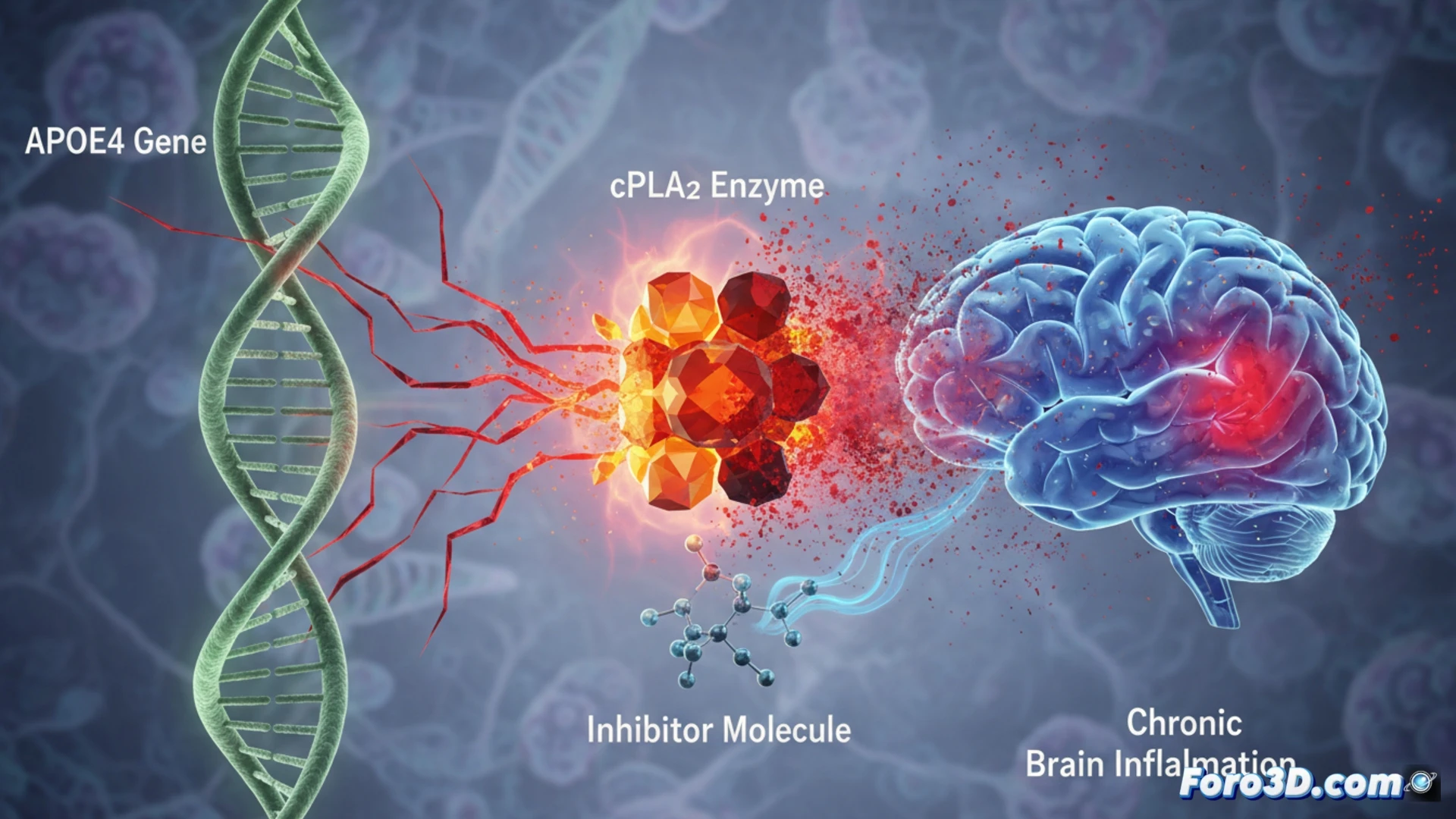
cPLA2 Inhibitors: The Molecular Switch That Calms the Brain 🧠
The cPLA2 enzyme acts as an amplifier of damage. When the APOE4 gene is present, this enzyme goes out of control and produces an inflammatory cascade that damages neurons. The identified inhibitors block its activity in mice, reducing neuroinflammation and cognitive decline. Although human trials are lacking, the approach is promising because it targets the direct cause, not just the symptoms.
Your Gene Betrays You, But Science Already Has an Antidote (in Mice) 🐭
If you have APOE4, your brain has been throwing an unauthorized inflammatory party for years. Luckily, scientists have found how to kick out the uninvited guests: by inhibiting the cPLA2 enzyme. For now, it works in mice, who must be delighted to be the guinea pigs of eternal mental youth. Meanwhile, we keep waiting for the next step not to be another decade of promises.