In 1992, Seville inaugurated the Alamillo Bridge, an icon by Santiago Calatrava. What few know is that its original design included a second twin bridge, symmetrical and parallel, which was never built due to budget adjustments. This forced asymmetry, now a hallmark of Seville's skyline, hides a perfect case for digital twin engineering: the possibility of virtually recreating what never existed.
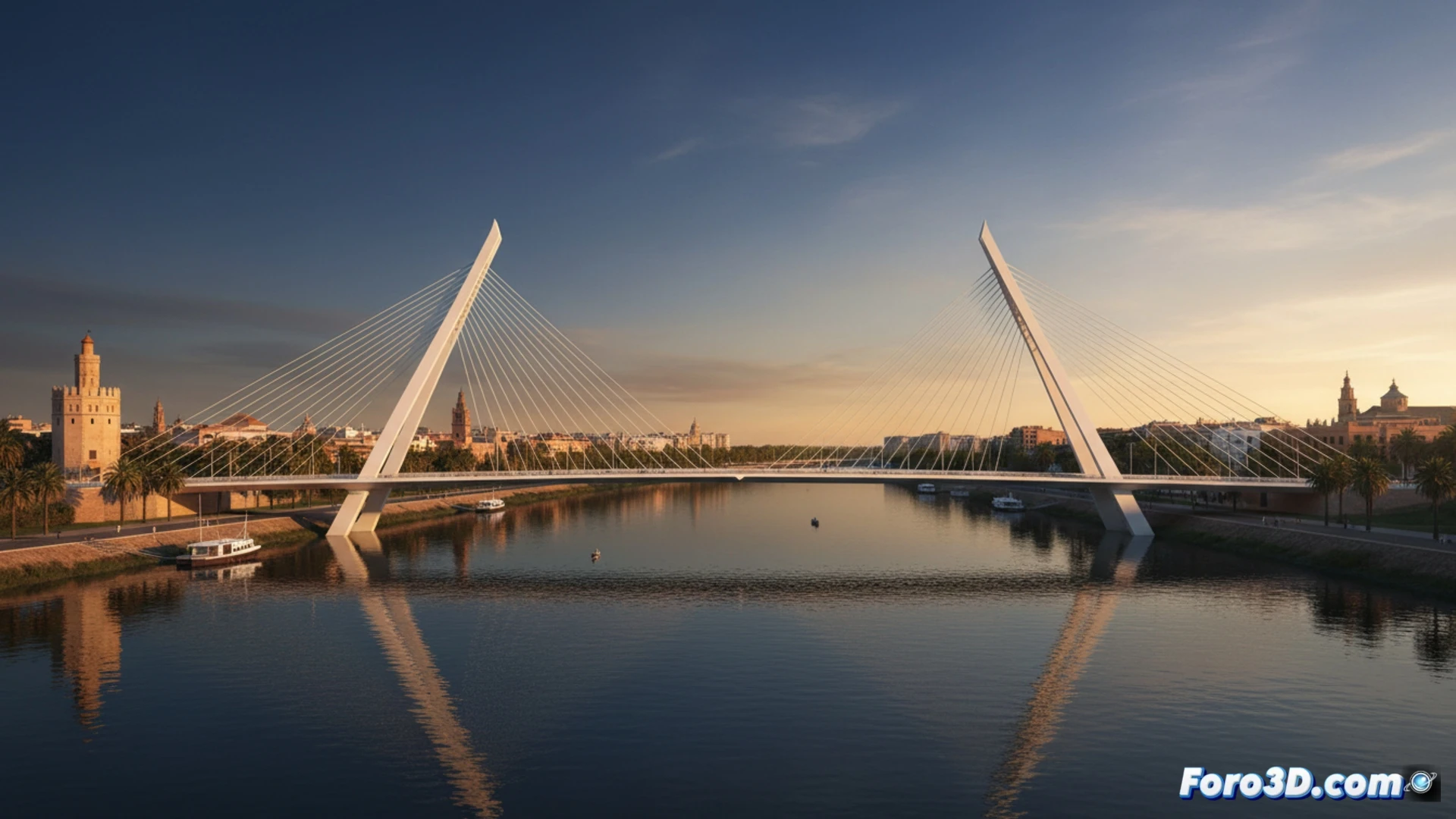
Parametric reconstruction from original blueprints 🏗️
To generate the digital twin of the absent bridge, the first step is to digitize Calatrava's structural plans. Using parametric modeling software such as Rhinoceros 3D or Grasshopper, the 142-meter inclined pylon, the 13 pairs of stay cables, and the steel deck are replicated. The key lies in applying a mirror symmetry transformation relative to the axis of the Guadalquivir River, adjusting the foundation elevations. The model is then imported into a BIM (Building Information Modeling) environment to assign mechanical properties: steel elastic modulus, cable prestressing tension, and concrete strength. This digital twin allows simulating wind and traffic loads, comparing its structural behavior with the real bridge, revealing how the absence of the second pylon alters the stress distribution on the existing deck.
Completing the unfinished: urban impact in virtual reality 🌆
Beyond engineering, the digital twin enables an exercise in architectural archaeology. By integrating the model into a virtual reality environment (Unity or Unreal Engine), we can place the phantom bridge in its current urban context. The simulation shows how the original symmetry would have doubled the visual impact, visually closing the Guadalquivir basin. Shadows, reflections, and pedestrian flows are analyzed. This twin not only rescues a lost design but offers urban planners and architects a tool to debate the legacy of truncated works, demonstrating that 3D technology can bring to life what the budget left on paper.
How can a digital twin accurately recreate a bridge that was never built, like the original Alamillo design, and what technical and engineering challenges does modeling that phantom structure from historical plans and incomplete data entail?
(PS: don't forget to update the digital twin, or your real twin will complain)