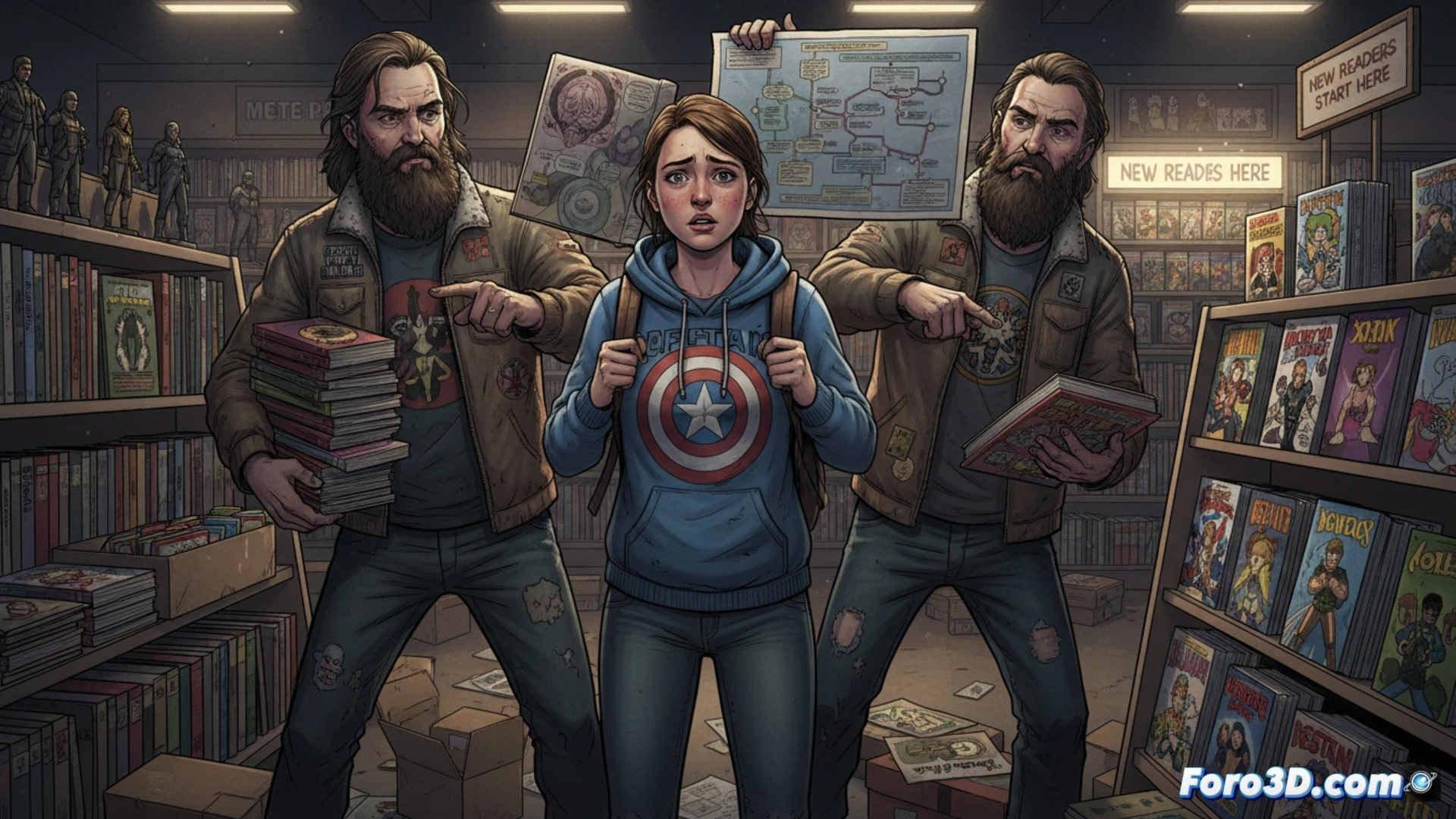
Gatekeeping is one of the biggest problems in the American comic book industry. New readers already face barriers like decades-long continuity and limited product availability. Added to this is an avoidable mistake on the part of fans. A recent case on Reddit illustrates this: a 20-year-old woman, an MCU fan, went to her first comic shop and a customer harassed her with questions to test her knowledge. She ended up nervous, with no desire to return.
How Technology Can Reduce Friction in Stores 🛠️
Comic book stores could use technology to make it easier for new readers to enter. Recommendation systems based on interests (movies, series, or characters) would help guide the customer without being intrusive. A QR code reader on shelves could link to summaries of story arcs or reading guides. Quick-scan apps to locate a volume without navigating through boxes of back issues. These tools would reduce social pressure and leave the experience in the user's hands, not an impromptu examiner's.
The Entrance Exam to the Justice League 🦸
Because nothing says welcome like an interrogation about Gwen Stacy's death before buying a comic. The guy in question surely felt like the guardian of the holy grail, with his trivia checklist to see if the girl deserved to browse a Batman comic. The saddest part is he probably didn't sell a single copy, but went home satisfied that he had protected the lore. No wonder anyone would rather stay home watching the movies, without an oral exam.