For more than three centuries, the exact location of the Galeón San José, sunk in 1708 off the coast of Colombia, was the ocean's best-kept secret. With a cargo valued at billions of dollars in gold, silver, and emeralds, its discovery in 2015 reopened the debate between commercial exploitation and historical preservation. Today, digital archaeology offers a peaceful and revolutionary solution to this dilemma.
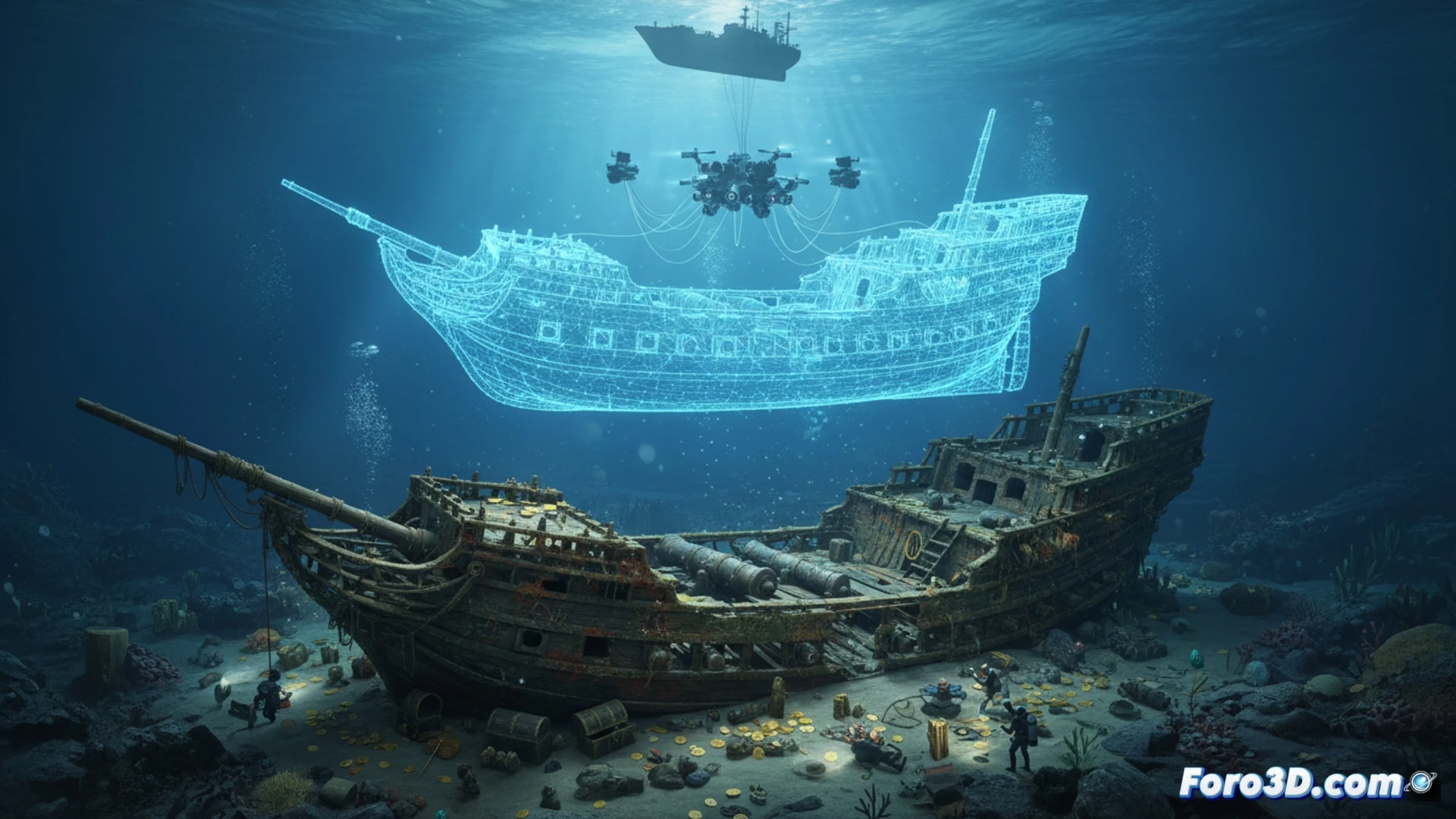
Underwater Photogrammetry and Virtual Reconstruction of the Wreck 🏗️
The key to documenting the San José without looting it lies in high-resolution underwater photogrammetry. Remotely operated vehicles (ROVs) equipped with stereo cameras and multispectral sensors capture thousands of images of the wreck and its surroundings. Using Structure from Motion (SfM) algorithms, these images are processed to generate a three-dimensional point cloud and a textured mesh model. This digital twin allows archaeologists to analyze the layout of the hull, the distribution of the cargo, and the cannons, all without disturbing the seabed or exposing organic materials to degradation.
Digital Conservation vs. Looting: A Dilemma Resolved ⚖️
3D technology not only documents but also democratizes access to heritage. While governments debate the ownership of the physical treasure, the virtual model of the Galeón San José can be studied by universities worldwide and exhibited in interactive museums. This digitization acts as an immutable forensic record, protecting the site from looters and offering an ethical alternative: preserving the archaeological context in situ while simultaneously extracting all the scientific and cultural value from the shipwreck.
How can the digital reconstruction of the Galeón San José help resolve the legal and conservation challenges of a submerged heritage that belongs to multiple nations?
(PS: and remember: if you can't find a bone, you can always model it yourself)