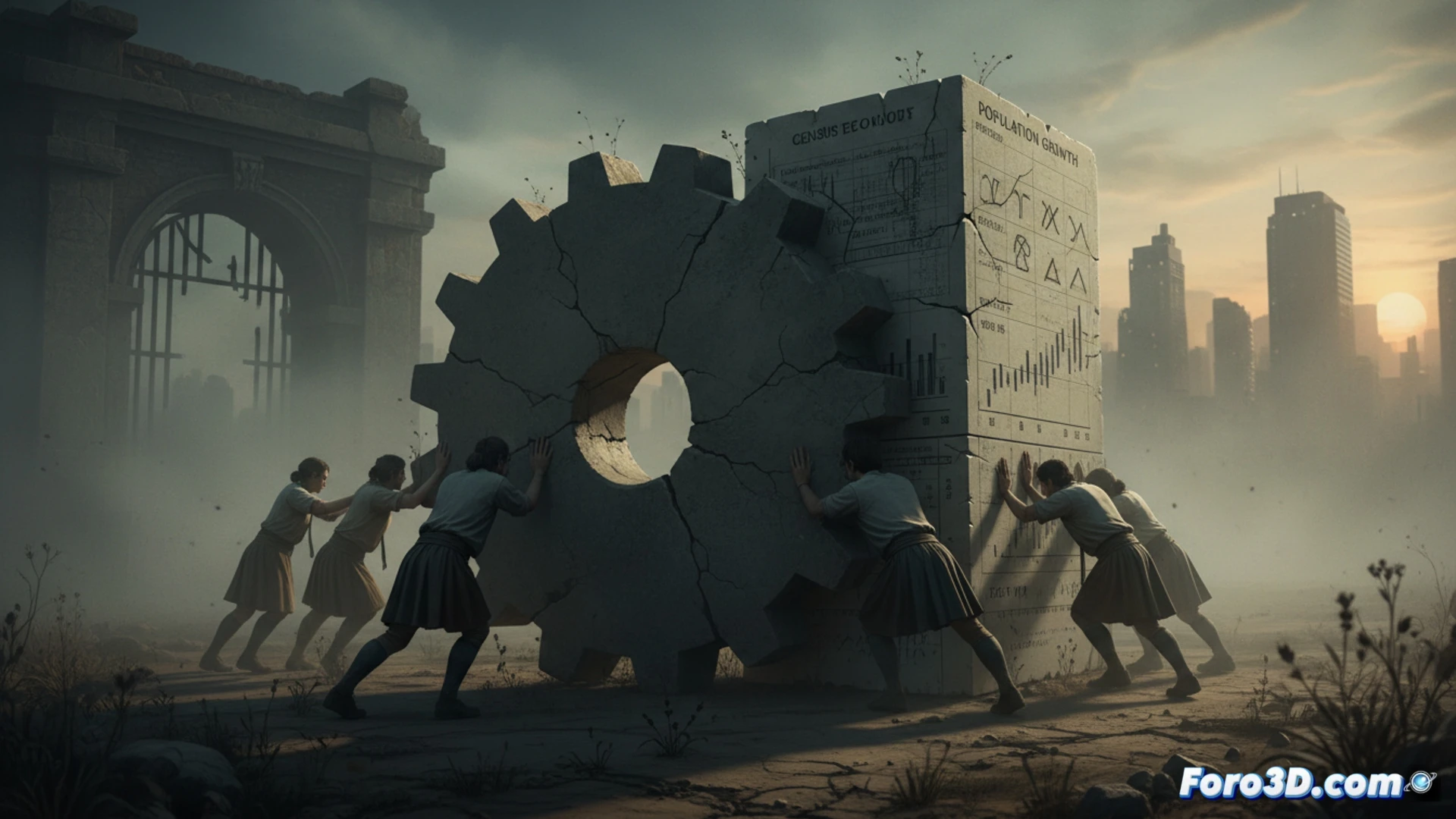
The U.S. economy faces a silent problem: its workforce is barely growing. With the adult population expanding at only 0.4% annually, the country is losing dynamism. Fewer young workers mean less consumption, less innovation, and stagnant GDP. This slowdown, common in the Americas, reduces productive capacity and threatens future prosperity.
Automation doesn't replace the lack of workers 🤖
Technology advances, but it doesn't solve the shortage of people of working age. Robots and artificial intelligence optimize processes, but they don't generate the mass consumption or taxes that sustain social security. Without a solid demographic base, productivity hits a physical limit. Companies invest in automation, but the domestic market shrinks due to a lack of new consumers.
Fewer babies, more robots, and a boring future 👶
It seems the solution for the economy is simple: manufacture more citizens or import them. Since neither option is popular, we're left with robots that work but don't pay taxes or buy houses. The American dream is reduced to waiting for an algorithm to inherit us. Meanwhile, social security wonders who will pay the pensions of those who no longer reproduce.