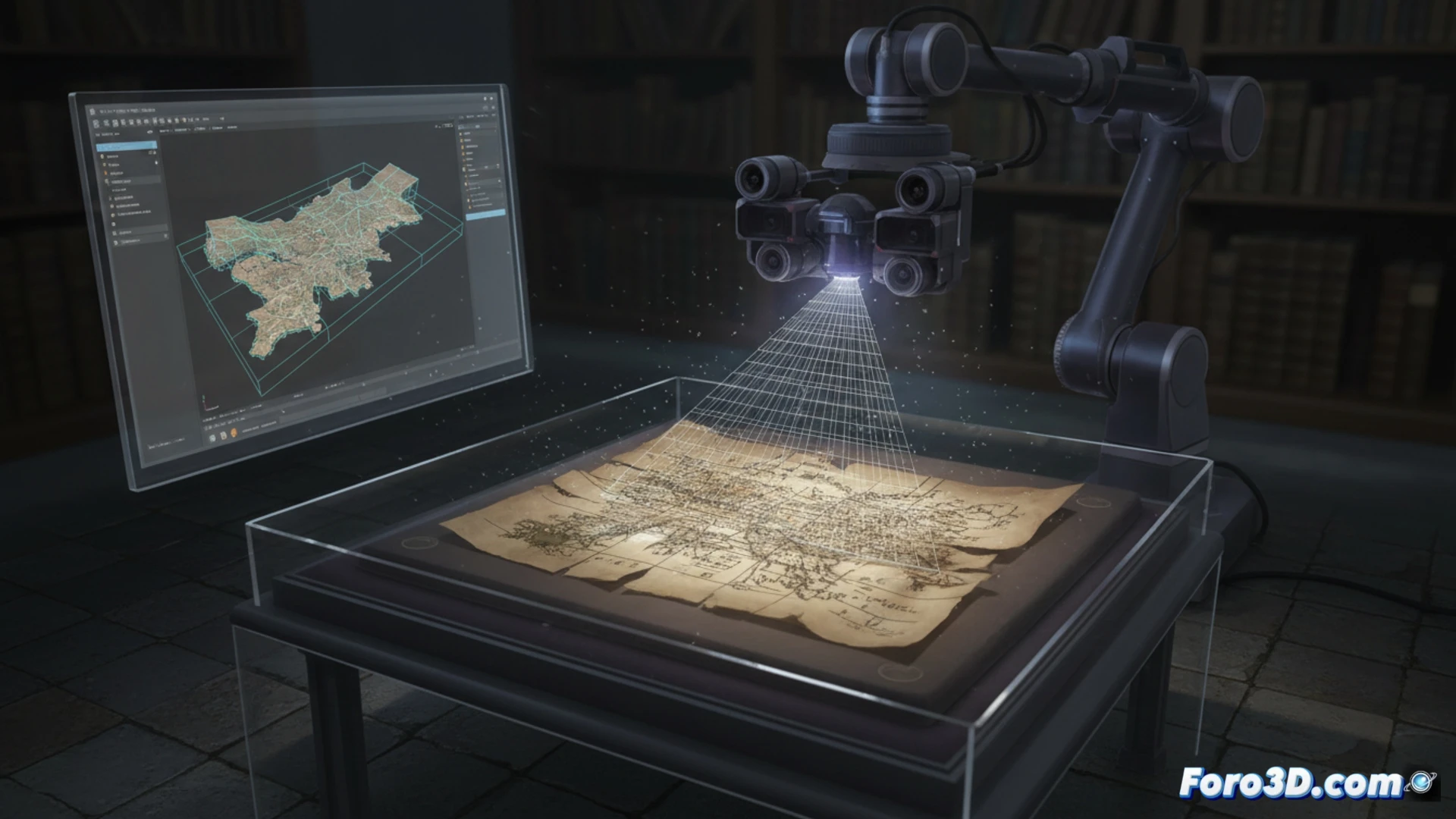
Archivists face fragile documents, old blueprints, and objects they cannot touch without damaging them. 3D technology allows these materials to be digitized without physical contact, creating virtual copies that can be consulted from anywhere. A clear example is the virtual restoration of an 18th-century map that crumbled at the touch. The necessary programs include Agisoft Metashape for photogrammetry, Blender for cleaning the mesh, and Sketchfab for publishing the model online.
Photogrammetry and laser scanning to leave no digital footprint 🖨️
Capture is carried out using two main methods. Photogrammetry uses between 50 and 200 photos taken from different angles, which software like RealityCapture or Meshroom processes to generate a point cloud. Laser scanning, with devices such as the Artec Leo or the Einscan Pro 2X, projects structured light onto the object and records every millimeter. Both systems export OBJ or PLY files that are optimized in Blender by reducing polygons without losing historical detail. The result is a digital twin that can be measured, rotated, and studied without opening the display case.
Goodbye to spilled coffee on the bishop's file ☕
Before, if a clumsy intern spilled their cup on the count's will, the archivist would cry, call the restorer, and say three Hail Marys. Now, with the 3D model saved in the cloud, the biggest risk is that a hacker with a grudge deletes the file. And of course, there's also the consolation that the original remains in the safe, while students consult the digital replica and stain the screen with potato chips. The profession has changed: now we protect documents from humanity, but above all from humanity itself.