In 1998, engineer John J. Williams found a rock in a rural area of North America that appeared to contain an embedded electrical connector. The piece, similar to a modern two-prong plug, is fused to the stone with no signs of glue or artificial bonding. X-ray analysis shows no internal cavities that would suggest later assembly, and dating of the surrounding sediment points to an age of at least 100,000 years. The find, known as the Enigmalith, remains without an accepted geological or archaeological explanation.
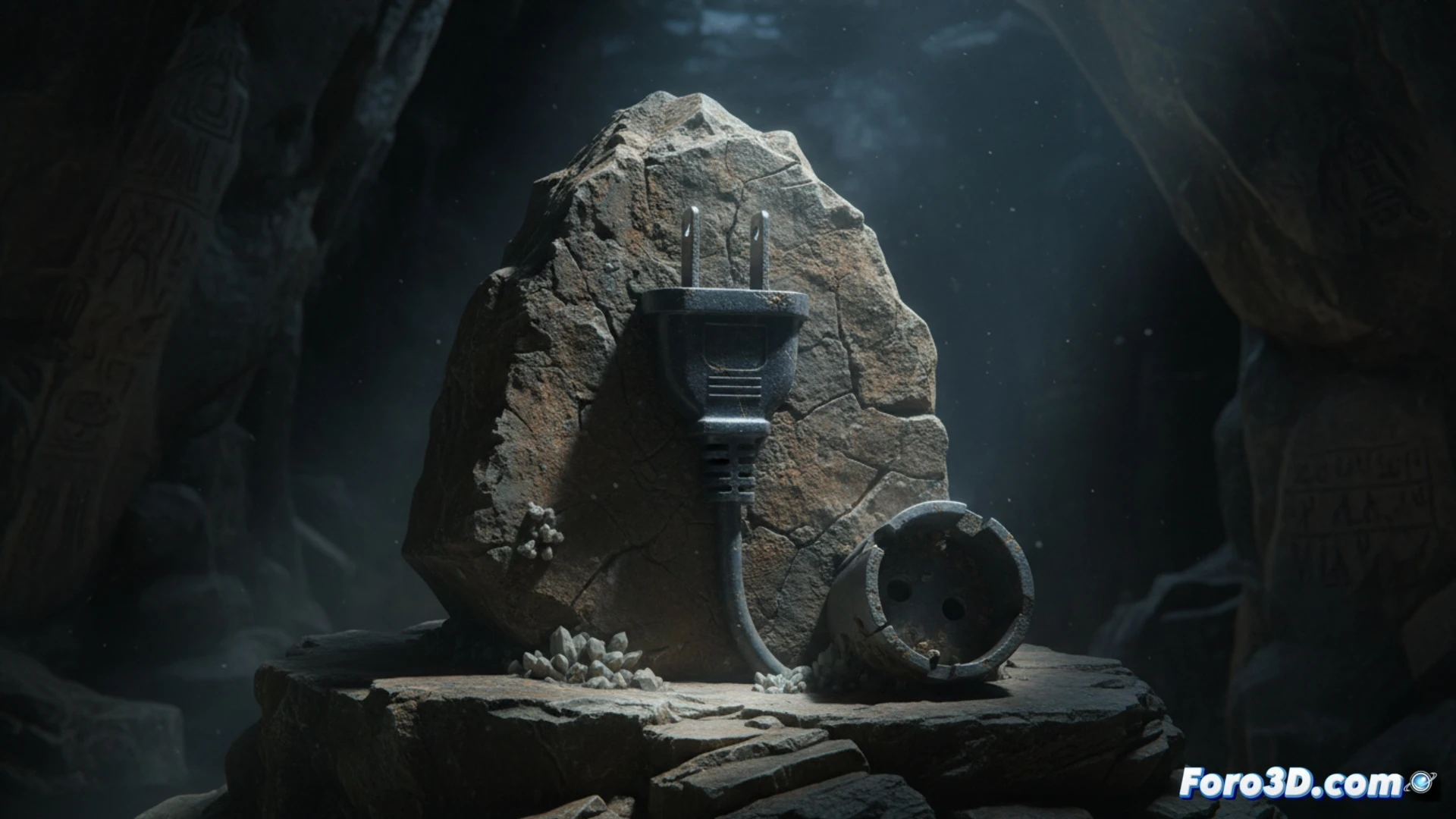
Technological anomaly in a prehistoric context 🔌
From a technical standpoint, the embedded object is neither a fossil nor a mineral concretion. Its metallic structure contains a composition of copper and tin, elements common in modern connectors, but with no signs of advanced oxidation despite its presumed age. The rock is hard granite, ruling out the possibility that the plug was inserted recently without leaving drill marks. Some suggest it could be an artifact from a lost civilization or a temporal interference, although no hypothesis has conclusive evidence.
The stone that challenges the maintenance technician 🛠️
If the Enigmalith were a functional plug, the first thing an electrician would ask is what voltage it supports and whether it has a ground connection. But being inside a rock, the problem is different: there is no device to plug it into, not even a 90s lava lamp. Most likely, this artifact is the definitive proof that someone, millennia ago, already had problems with tangled cables and decided to fuse them into stone forever.