The profession of Artificial Intelligence Engineer has become one of the most in-demand profiles of the decade, but also one of the most psychologically fragile. Behind the shine of generative models and advances in deep learning lies a work reality marked by impossible deadlines, pressure for immediate results, and a cognitive load bordering on chronic exhaustion. We analyze the psychosocial risks that stalk these professionals and how the tech industry is failing to protect its most valuable asset: mental health.
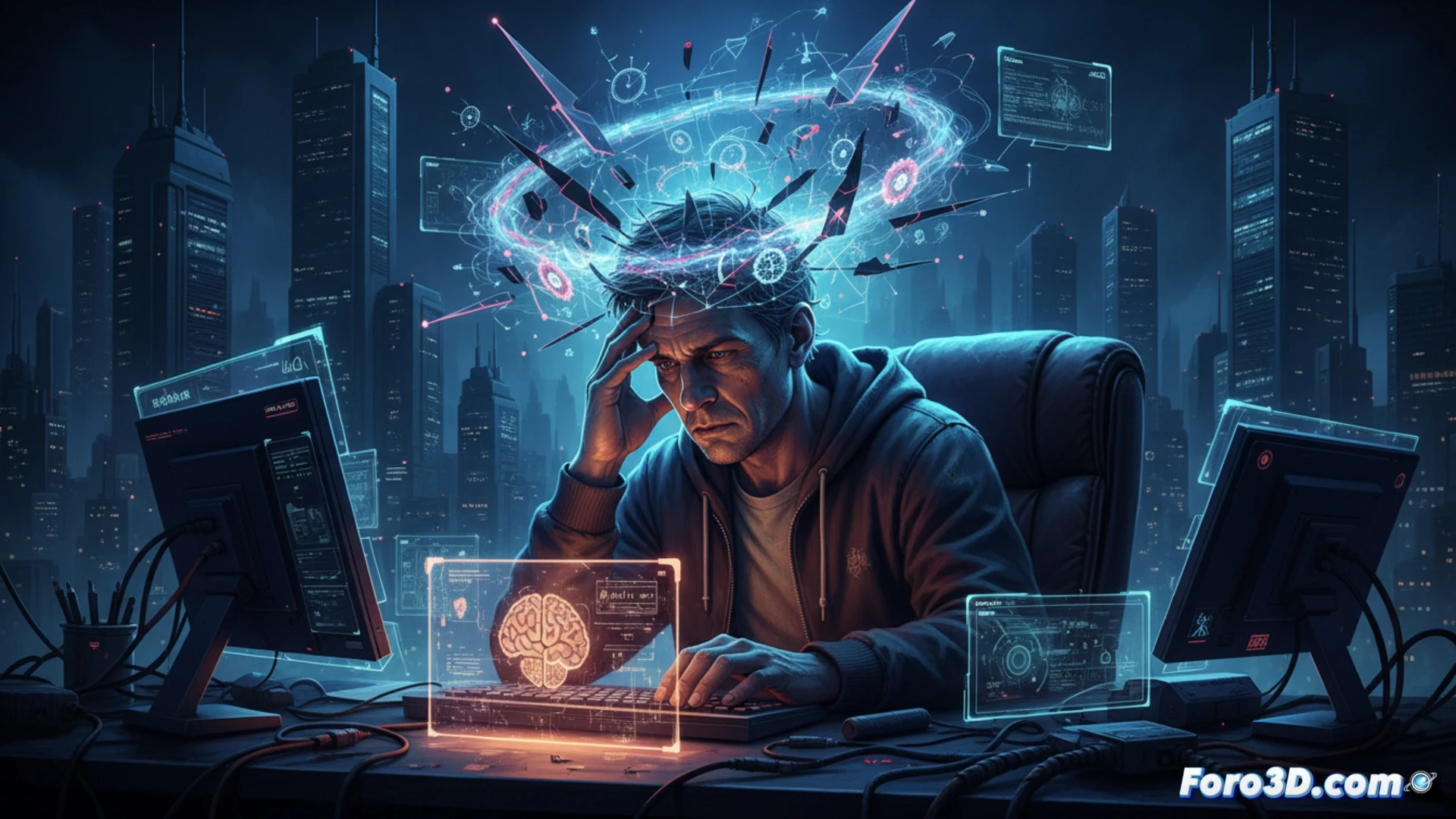
Algorithmic fatigue and burnout in the tech sector 🧠
The lifecycle of an AI project is particularly brutal. It begins with a research phase where uncertainty is at its peak, continues with model training that can last weeks consuming massive resources, and culminates in delivery deadlines that rarely account for experimental failures. This environment generates three main pathologies: severe visual fatigue from continuous exposure to screens and monitoring dashboards, musculoskeletal disorders in the neck and back due to extreme sedentary behavior, and a mental overexertion syndrome that manifests as anxiety and difficulty disconnecting. Recent studies indicate that over 40% of AI engineers report symptoms of burnout, a figure that doubles the average in other engineering sectors.
Towards digital compliance for mental health ⚖️
The solution cannot be delegated solely to individual resilience. Companies must implement digital compliance strategies that include workload audits, algorithmic limits on the number of simultaneous experiments, and real disconnection policies. Incorporating mandatory breaks every 90 minutes, rotating tasks between research and development, and periodic psychological monitoring are measures that firms like Google DeepMind and OpenAI are beginning to adopt. The question is no longer whether AI can replace the engineer, but whether the industry will be able to sustain the human who builds it.
Is the pressure to constantly innovate in artificial intelligence development a factor that normalizes mental exhaustion and psychological precariousness among engineers in the sector?
(PS: moderating an internet community is like herding cats... with keyboards and no sleep)