Around 1200 BC, a group of advanced civilizations such as the Hittites, Mycenaeans, and the Egyptian Empire vanished almost simultaneously. There was no single invader, but a combination of droughts, earthquakes, invasions by the Sea Peoples, and internal crises. Archaeologists call this phenomenon the Bronze Age Collapse, a global blackout of antiquity that left cities in ruins and writing systems forgotten.
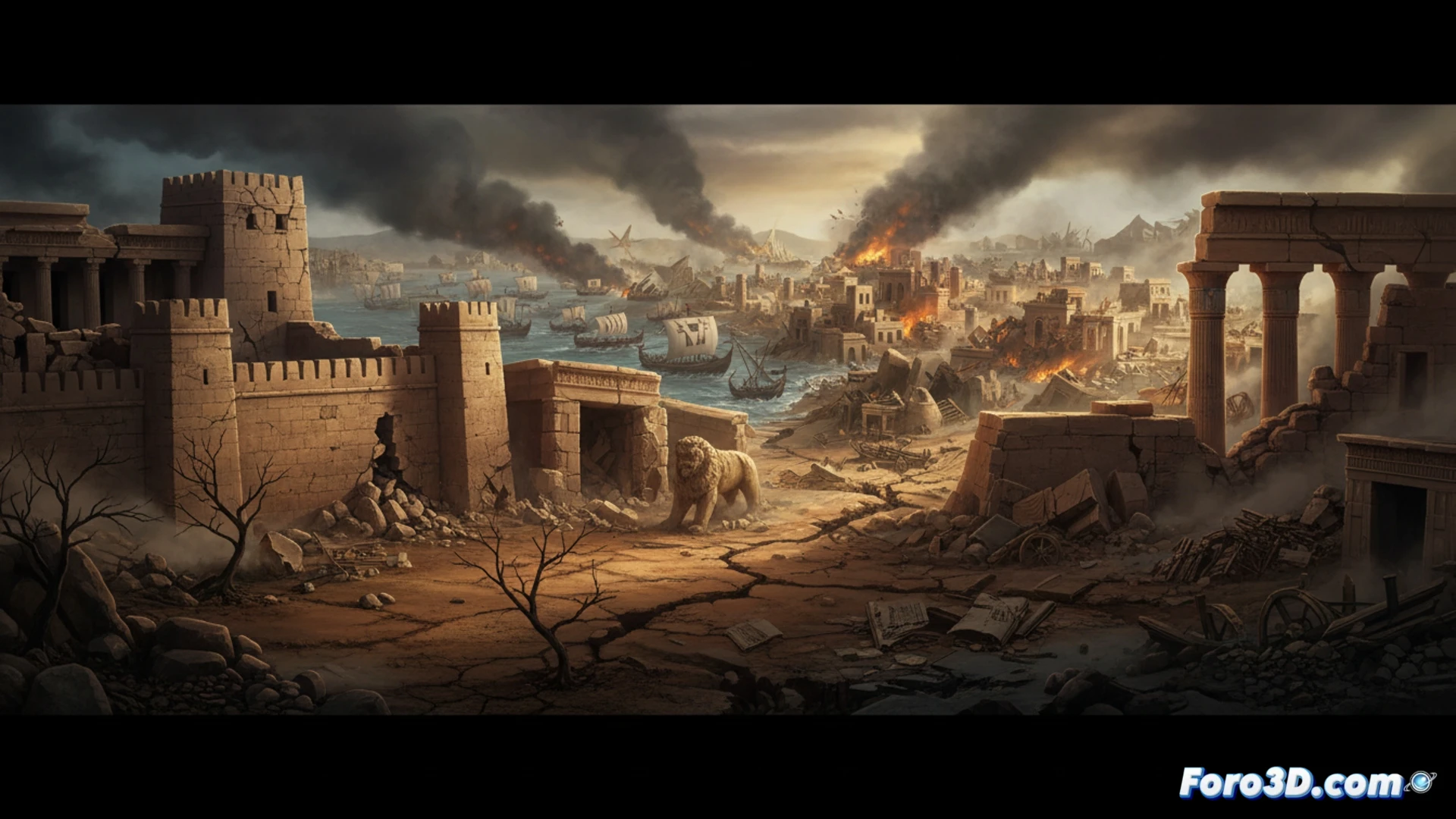
Lost technology: the end of bronze trade networks 🔥
Bronze, an alloy of copper and tin, required stable trade routes that crossed the Mediterranean. Kingdoms depended on these supply chains to manufacture weapons and tools. When the Sea Peoples attacked ports and droughts ruined harvests, tin stopped arriving. Without metal for swords or plows, elites lost power and production collapsed. Communities regressed to simpler technologies, such as iron, whose process was less efficient but did not depend on imports.
The end of the (ancient) world and its contingency plan ⚔️
Imagine being a Hittite king: you have palaces, war chariots, and scribes. Suddenly, the climate turns hostile, your tin suppliers disappear, and some guys called the Sea Peoples burn your port. Your rescue plan is to pray to the gods, but they don't answer either. In the end, the only survivors are those who lived in mud huts and used stone tools. As in many modern projects, complexity was the tomb of civilization.