The recent suspension of the Esports Commission by the IOC, under the new presidency of Kirsty Coventry, has halted negotiations to integrate video games into the Olympic program. Following the cancellation of the agreement with Saudi Arabia for the Olympic Esports Games, the project is faltering. Coventry prioritizes a conservative approach, but 3D technology could be the key to reconciling the institution with younger audiences without breaking traditional canons.
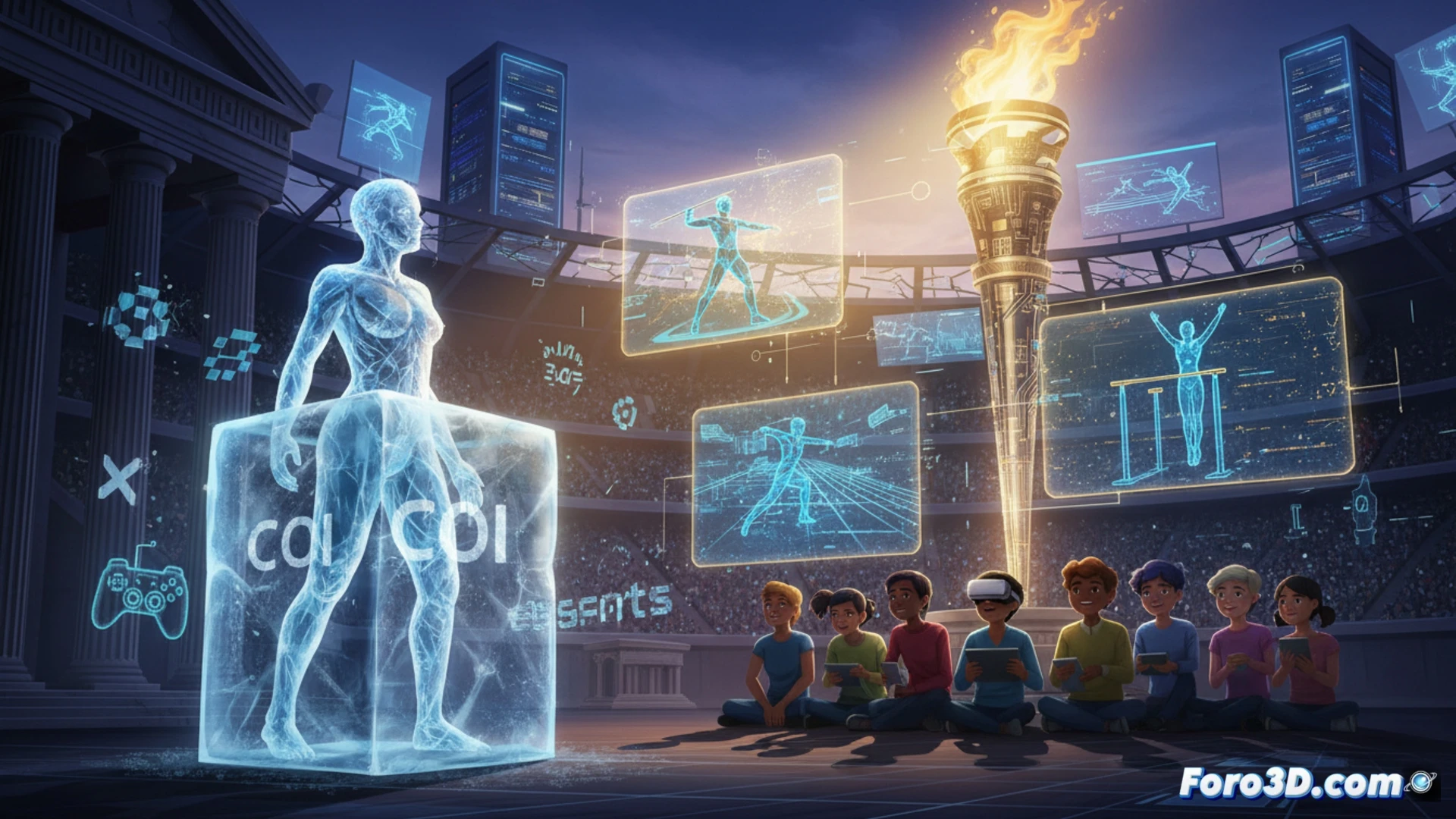
3D Reconstruction and Biomechanics: Simulation as a Sporting Bridge 🏅
The integration of esports into the Olympic ecosystem should not be limited to seating players in front of screens. 3D simulation technology offers tools that the IOC could leverage to legitimize digital competition. For example, volumetric reconstruction of matches allows spectators to visualize tactical strategies in real time, overlaying movement data onto three-dimensional avatars. Furthermore, biomechanical analysis of players, capturing their gestures and reflexes through 3D sensors, could become a performance discipline comparable to archery or gymnastics. This approach would transform esports into a spectacle of physical and mental precision, distancing it from the simple perception of electronic leisure and bringing it closer to the values of effort and technique that the IOC upholds.
The Mistake of Cancellation: A Lost Opportunity for the Sports Metaverse 🎮
Coventry's decision to close the specific commission and cancel the Saudi agreement is a step backward in the evolution of Olympism. While Saudi Arabia pushes forward with its own Esports Nations Cup, the IOC risks being left behind in the race to capture Generation Z. 3D technology is not a threat to tradition; it is a natural extension of the competitive spirit. If the IOC does not integrate immersive tactical visualizations and augmented reality broadcasts, it will miss the train of an audience that already consumes sports through digital simulations. The current halt is not an endpoint, but a wake-up call for the institution to embrace innovation or condemn itself to obsolescence.
Is it possible that 3D technology, more than traditional esports, is the key for the IOC to integrate new audiences without sacrificing the essence of physical sport?
(PS: at Foro3D we know that a simulated penalty in 3D always goes in... unlike in real life)