The promise of erasing a default history by paying a fee is a classic hook. These services sell a false solution: they send a temporary dispute letter that, upon verification by the creditor, returns the user to the list. We analyze how 3D infographics and process simulation can expose this fraudulent cycle and educate the consumer. 🎭
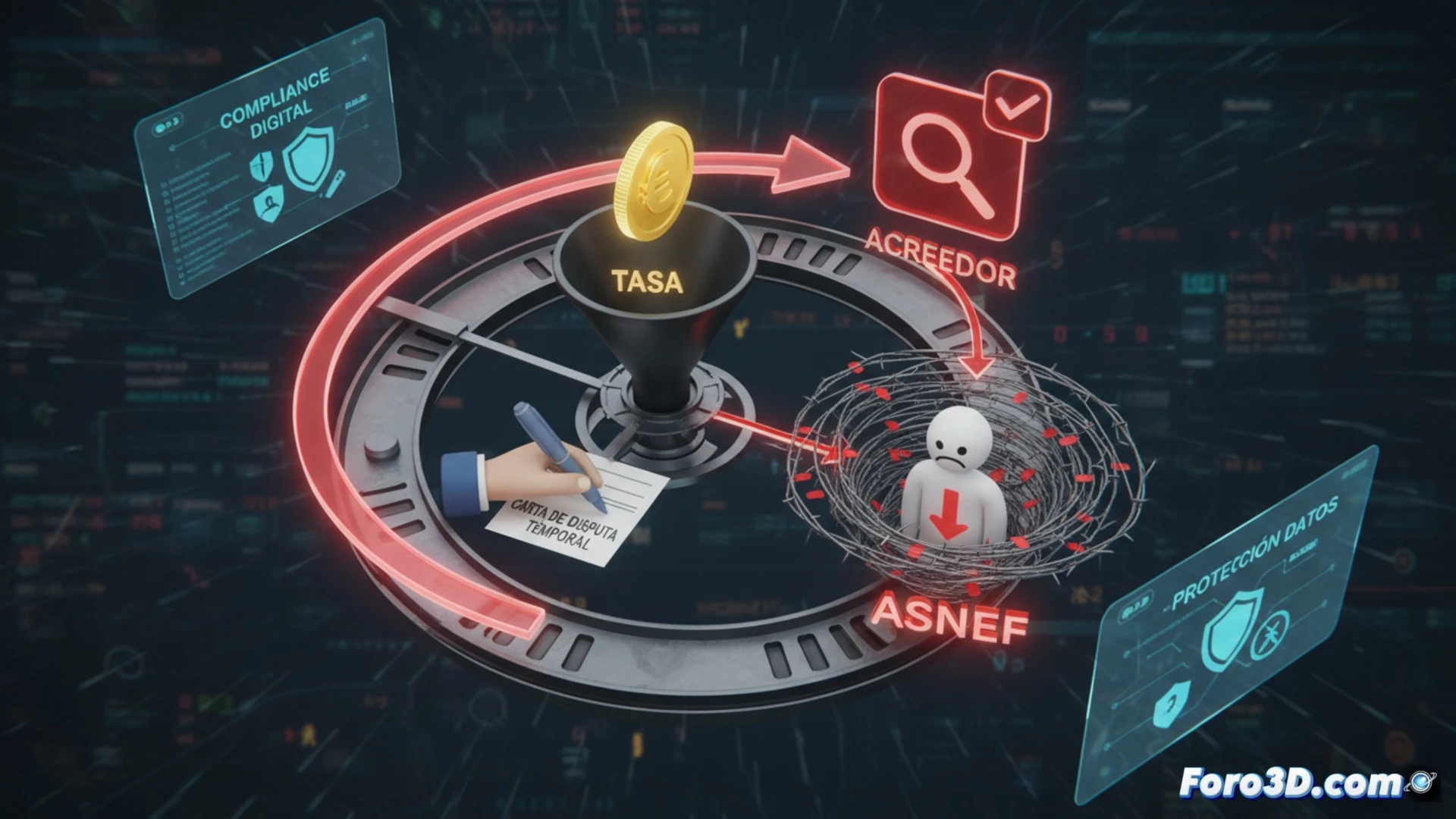
Process mapping: From promise to re-entry 🔄
Using 3D modeling tools and procedural animation, we can create an interactive visual flow that breaks down the deception. The first stage shows the scammer offering a fake deletion certificate. The second, the submission of a claim to ASNEF that temporarily freezes the data. The third, the creditor's confirmation of the legitimate debt, which reactivates the inclusion. A regulatory simulation, rendered in real-time, would allow the user to interact with variables such as the bank's response time or the document's validity, demonstrating that the actual legal process is only activated through payment or verified prescription, not with magic fees.
Transparency as a digital shield 🛡️
3D technology not only documents the fraud but visually disables it. By recreating the cycle in an immersive environment, the consumer understands that default is not erased with a trick, but with real compliance. These visualizations, hosted on query platforms, turn prevention into a tangible tool, disarming scammers and reinforcing the authority of legitimate credit bureaus.
How can 3D visualization of data flows in credit information exchange systems expose the vulnerabilities exploited by default erasure scams like the ASNEF cycle?
(PS: SCRA is like autosave: when you fail, you realize it existed)