In 1961, three geode hunters in California found what appeared to be an industrial spark plug embedded in a hardened clay rock. The surrounding geological formation was dated to 500,000 years, while the metal piece corresponded to a 1920 Champion spark plug. This Out of Place Artifact challenges conventional chronology and becomes a perfect case study for digital forensic archaeology.
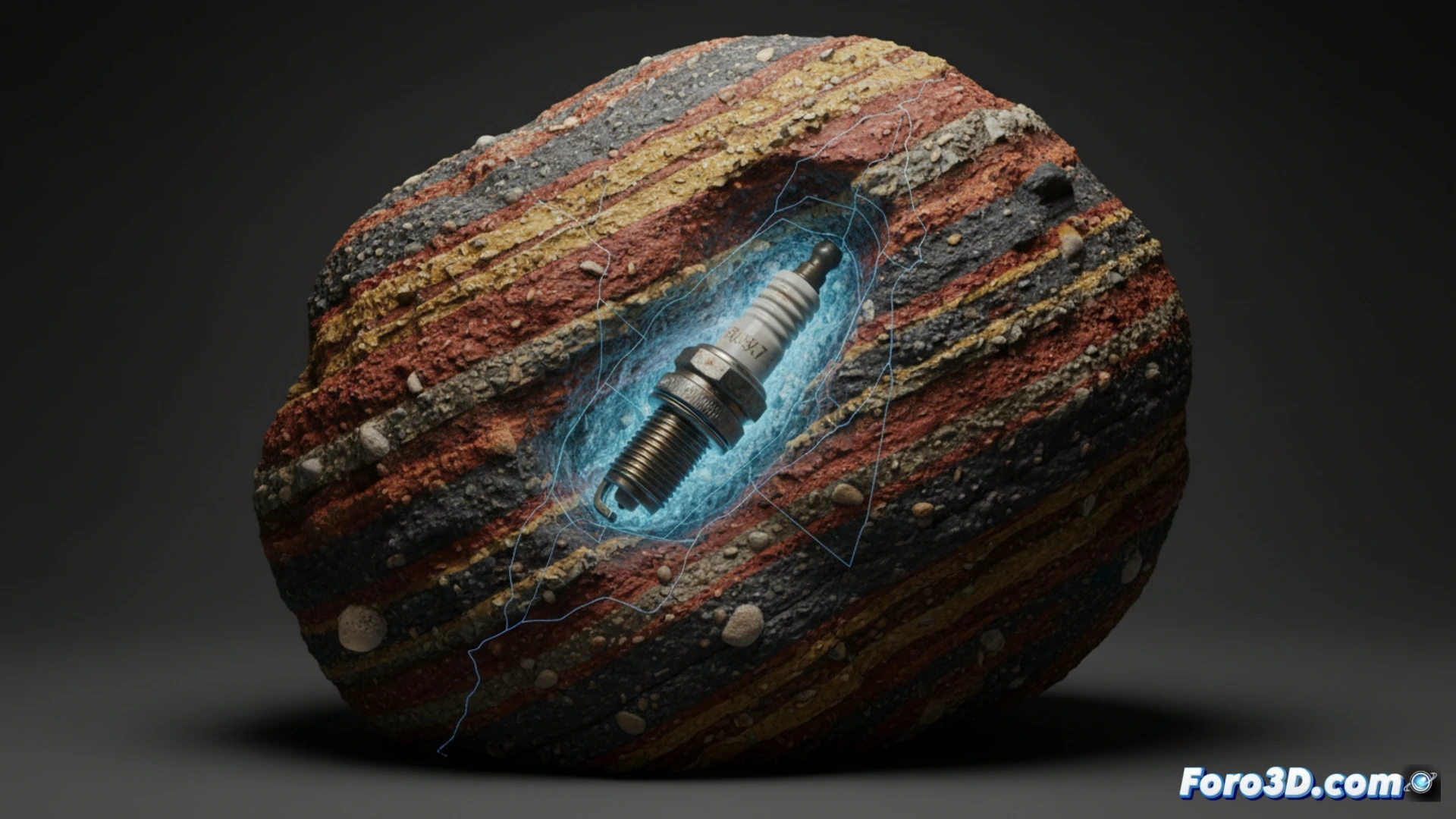
Virtual reconstruction and forensic analysis of the find 🔍
Through high-resolution photogrammetry and 3D modeling, we can digitally reconstruct the Coso Artifact and the rock matrix that surrounds it. The simulation allows us to analyze the interface between the metal and the geode, looking for evidence of fractures due to thermal expansion or calcite deposits that indicate natural mineral growth around the object. The volumetric model helps determine whether the spark plug was press-fitted into a pre-existing rock or if there was a process of accelerated cementation. The digital tool allows rotating and scaling the piece to compare its manufacturing marks with historical catalogs from the 1920s, verifying the authenticity of the Champion stamp.
Geological fraud or evidence of an altered chronology? ⏳
Digital archaeology forces us to be skeptical: 3D modeling shows that the rock has unusual hardness and a layer of oxidized iron that could simulate age. However, the absence of tool marks on the geode's surface reinforces the hypothesis of natural mineral growth. This case reminds us that current technology can debunk myths, but it also reveals that sometimes nature imitates the human artifact in ways that challenge our understanding of geological time.
The stratigraphic dating of the rock containing the Coso Artifact was performed using methods from the 1960s; what current digital archaeology techniques, such as micro-CT scanning or luminescence dating, could be applied to this object to verify its true age and settle the debate about its origin.
(PS: If you dig at a site and find a USB, don't plug it in: it could be malware from the Romans.)