At the crossroads between the superficial shine of anime idols and the raw reality of trauma, Oshi no Ko stands as a visual manifesto that uses aesthetic contrast as a tool for activism. Through seemingly harmless character design (moe art), the work of Aka Akasaka and Mengo Yokoyari exposes the systemic exploitation of the Japanese entertainment industry. This analysis explores how the clash between the sweet and the violent can be replicated in digital environments to denounce abuses.
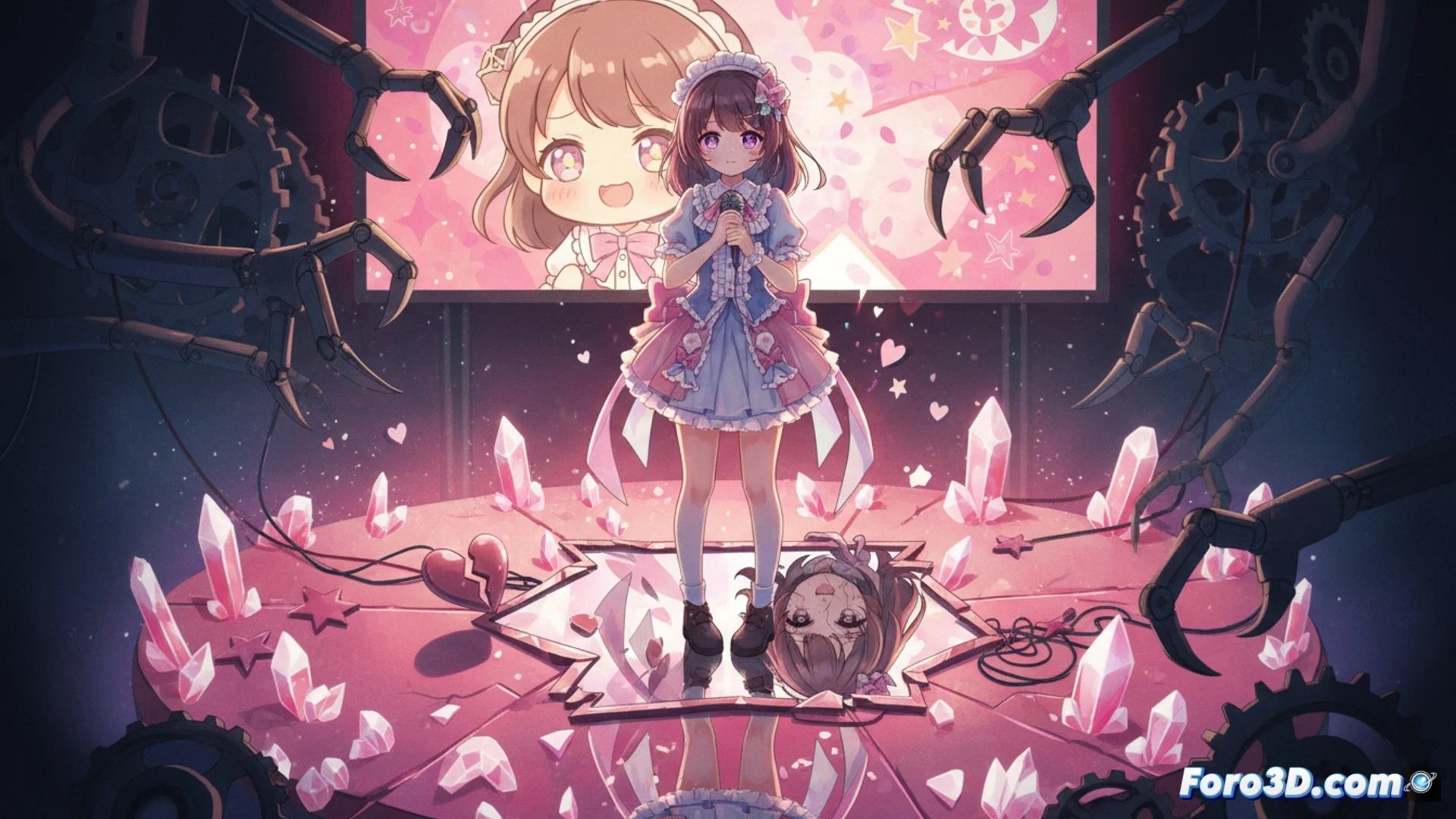
Light contrast and 3D modeling to narrate trauma 🎭
The technical key to Oshi no Ko lies in the juxtaposition of two opposing visual languages. On one hand, the characters feature exaggerated proportions, large eyes, and pastel color palettes, typical of the moe genre. On the other, scenes of emotional crisis employ hard shadows, realistic skin textures, and high-contrast lighting reminiscent of psychological horror cinema. In a 3D modeling environment, this effect would be achieved through a hybrid shader system: a toon material for moments of superficial happiness and a PBR (physically based rendering) with displacement maps for sequences of pain. Volumetric lighting, with dense fog in harassment scenes, and the use of fisheye lens cameras to distort reality in moments of panic, would replicate this narrative duality.
Superficial aesthetics as a mirror of oppression 💔
The true power of Oshi no Ko lies not only in its story, but in its ability to use beauty as bait for criticism. By dressing trauma in the guise of a kawaii character, the work forces the viewer to question their own complicity in the entertainment industry. In digital activism, this technique is replicable through the creation of 3D avatars that alternate between a commercial appearance and a realistic one, showing the cracks of exploitation. It is a reminder that the most effective denunciation does not always need to be ugly; sometimes, the contrast between a perfect smile and a precisely rendered tear is the most devastating denunciation.
How Oshi no Ko manages to subvert moe aesthetics, traditionally associated with the commercialization of innocence, turning it into a tool for denouncing systemic exploitation in the digital entertainment industry
(PS: digital political art is like an NFT: everyone talks about it but no one really knows what it is)