The work of Gerard Way and Gabriel Bá, The Umbrella Academy, is not just a superhero comic; it is a visual manual of family dysfunction wrapped in a gothic and surrealist style. Its page compositions, which break the traditional grid, capture the emotional fragmentation of its characters. This article analyzes how that eccentric visual language can be translated into 3D modeling and animation to become a powerful tool for digital activism on mental health.
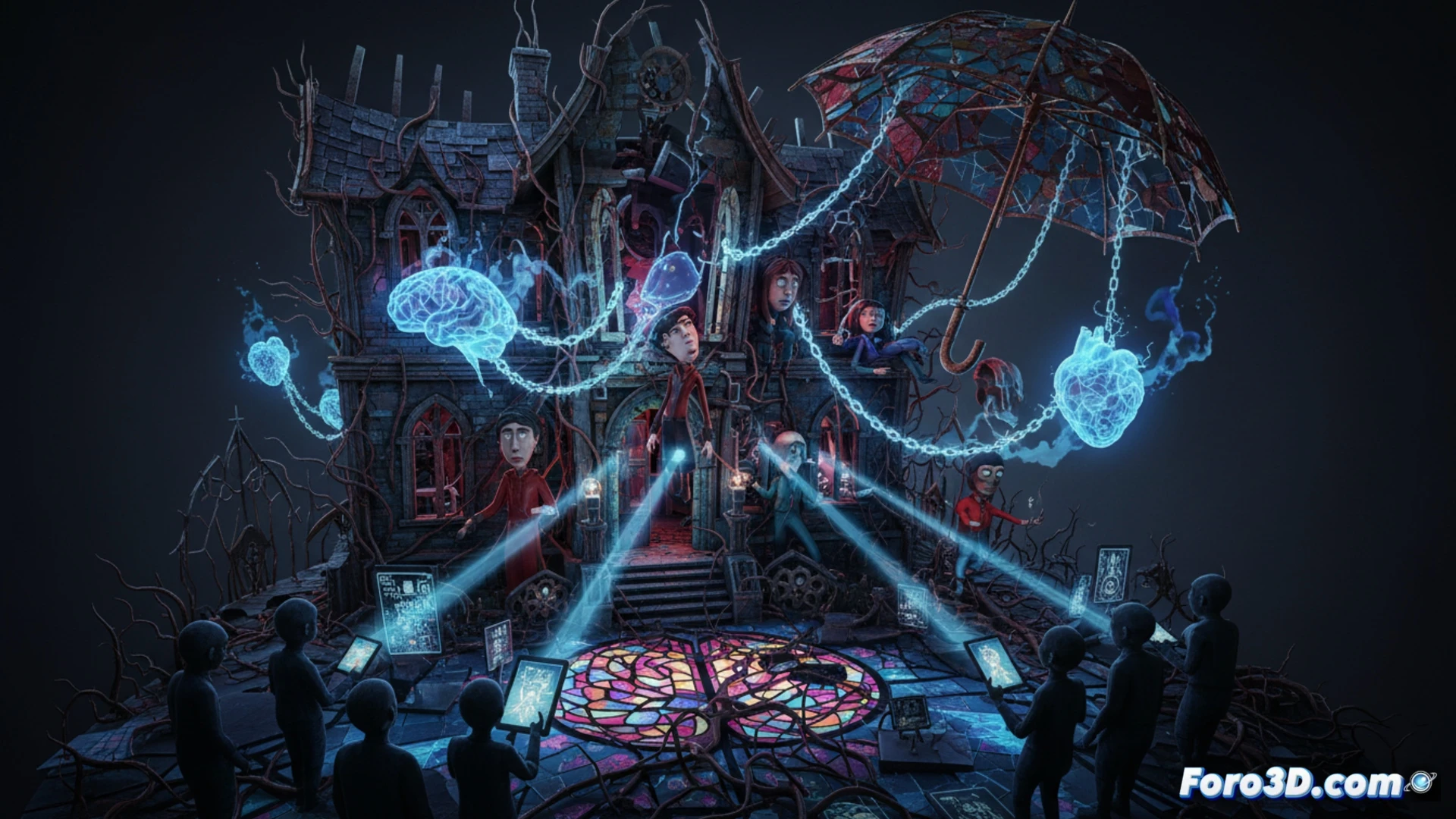
Surrealist composition and broken narrative in 3D modeling 🎭
Bá's art is characterized by distorting proportions and juxtaposing incongruous elements, creating an atmosphere of unease that reflects the trauma of the seven Hargreeves siblings. When translating this into three-dimensional space, a digital artist can employ techniques such as forced perspective, high-contrast lighting (digital chiaroscuro), and deformation of polygonal meshes to convey anxiety or isolation. For example, depicting Vanya in a room with impossible angles or Klaus surrounded by ghostly geometries not only beautifies the scene but communicates their internal state. This broken aesthetic, far from being mere ornamentation, becomes a visual language to speak about depression, addiction, and abandonment, central themes of the work.
From panel to pixel: activism against toxic family 💔
The true power of digital activism lies in making the invisible visible. By recreating in 3D the rawest scenes from the series, such as Reginald Hargreeves' emotional abuse or Allison's loneliness, artists can generate immediate empathy in the viewer. An animated short film or an interactive model that allows exploring the Academy house from a distorted perspective not only pays homage to the comic but functions as a visual denunciation. The eccentric aesthetic ceases to be an artistic whim and transforms into a silent cry about the wounds left by a dysfunctional family, using digital art as a vehicle for collective awareness.
Could this work function as an interactive installation in a museum?