Visual artist Gao Zhen, a U.S. resident, faces a complex legal case in China alongside his family. Authorities accuse him of creating sculptures of Mao in the 2000s, which they consider an explicit critique of the former president's regime. His wife holds a faint hope that Donald Trump's visit to Beijing, scheduled for May 14 and 15, could influence the case. The situation highlights tensions between creative freedom and political control in the Asian country.
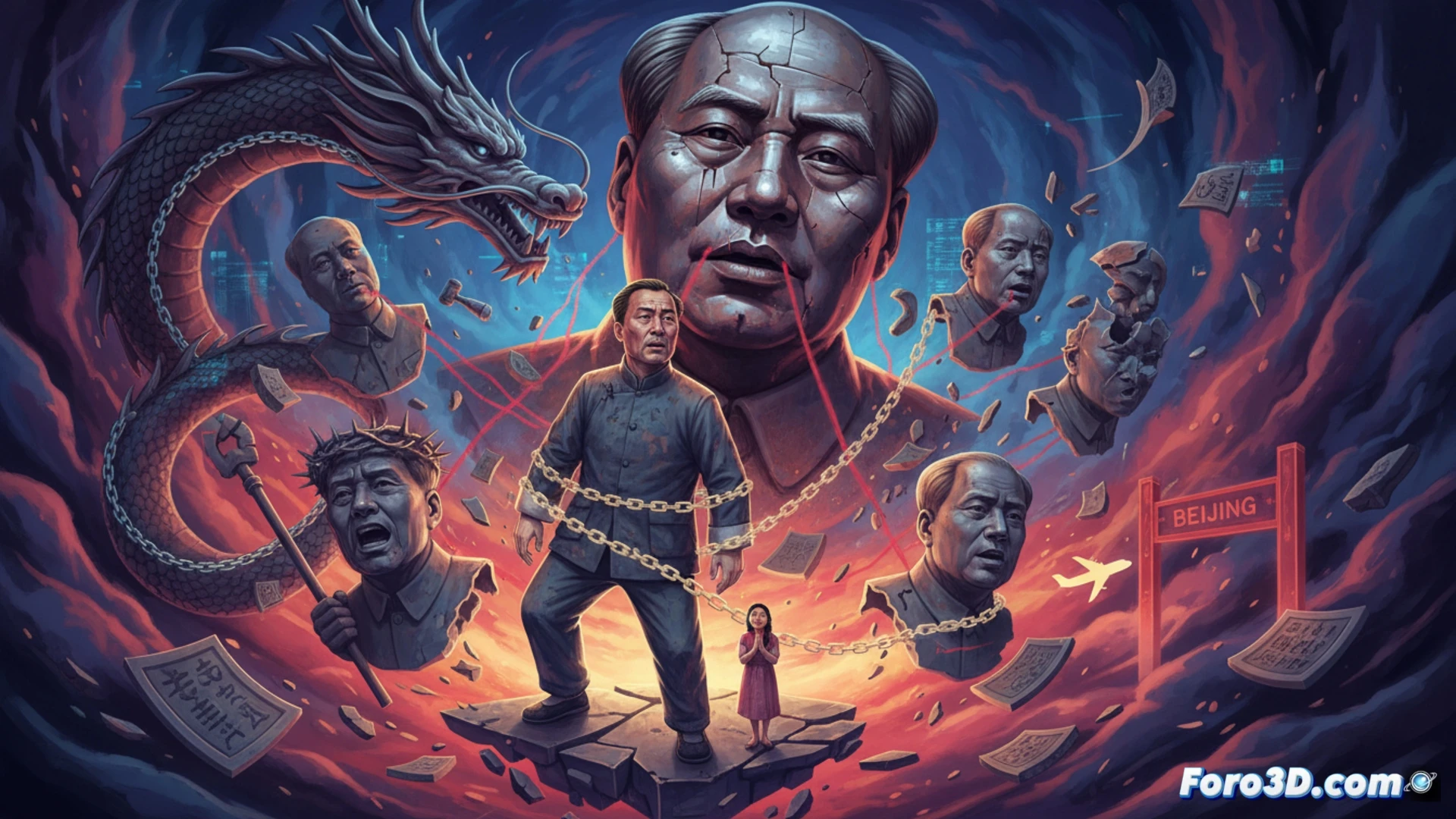
Surveillance technology and artistic censorship in the digital age 🖥️
Gao Zhen's case is set in a context where China has refined its digital control tools. Social media platforms employ image recognition systems to detect critical content, while artificial intelligence analyzes online behavior patterns. Political art, being digitally replicable, faces more precise surveillance than in the 2000s. Algorithms can identify works considered sensitive, such as the Mao sculptures, and block their dissemination within seconds. This technical environment makes it difficult for artists like Gao Zhen to share their work without intermediaries.
Trump, the accidental savior of Maoist art 🤡
The idea that Donald Trump could resolve a case of artistic censorship in China is quite amusing. The former president, known for his zero sensitivity to contemporary art, would be an unlikely figure to defend creative freedom. Perhaps during his visit to Beijing, amidst trade agreements and selfies, he might casually mention Gao Zhen's case. Sure, Trump would probably mistake the Mao sculptures for a bad garden furniture design. But hey, in the art world, any hope is valid, even if it comes from a guy who decorated his office with paintings of himself.