A small Roman gold ring, discovered alongside a curse tablet in the 18th century, is now being studied using digital technologies. Known as the Ring of Silvianus, this piece features a Latin inscription invoking the goddess Priapus to punish whoever stole a tunic. The connection to J.R.R. Tolkien's One Ring, though debated, gains strength when analyzing the hidden details that only photogrammetry and 3D modeling can reveal. 🔍
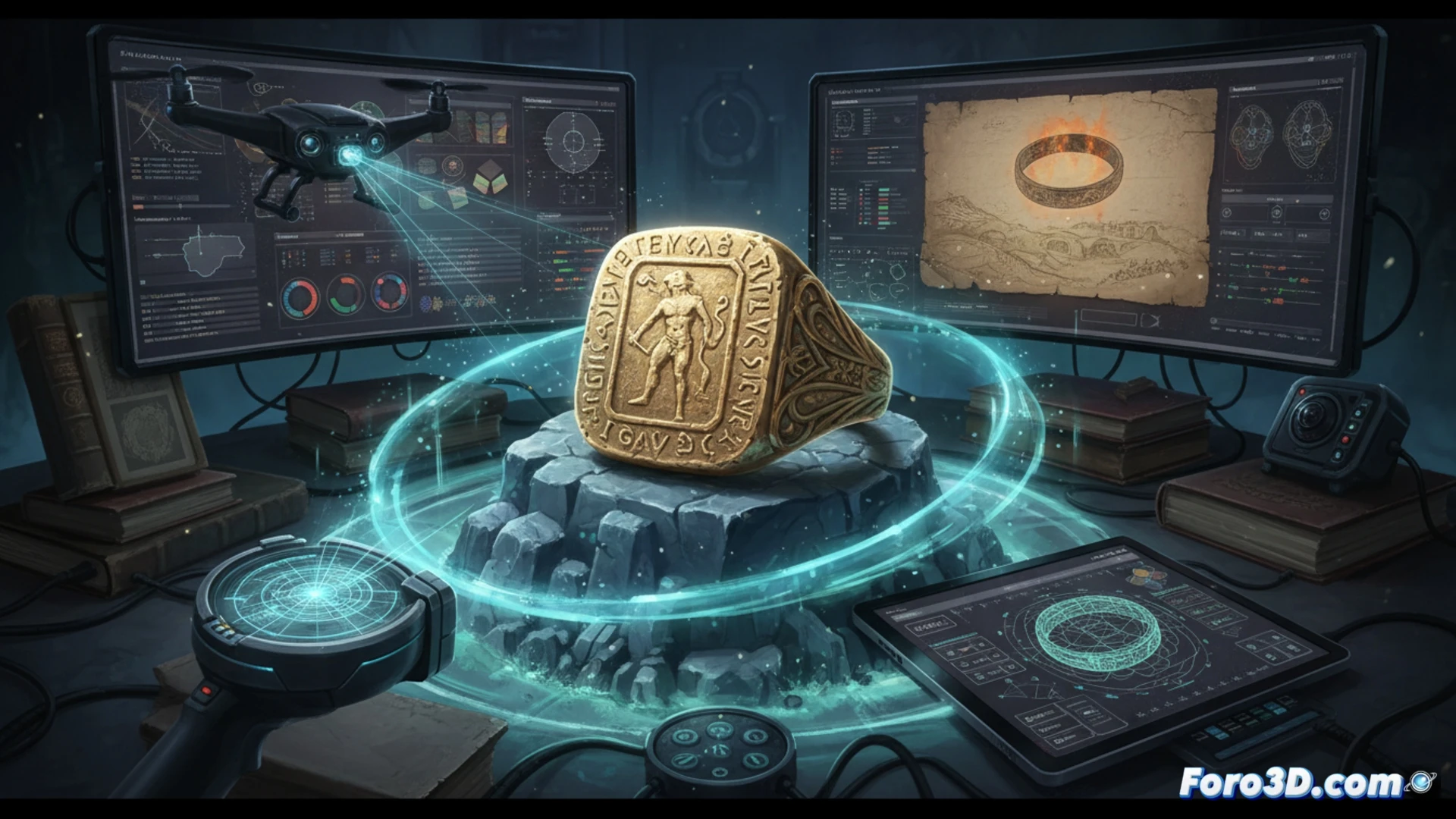
Photogrammetry and virtual reconstruction of the cursed artifact 🏛️
The application of high-resolution photogrammetry on the Ring of Silvianus allows capturing every micro-groove of the gold, including the inscription in Latin runic script barely visible to the naked eye. By generating a precise polygonal mesh, digital archaeologists can rotate the piece in a virtual environment, studying the differential wear of the metal and the direction of the manufacturing marks. This analysis reveals that the ring was deliberately flattened before being deposited, a ritual gesture directly linking it to the practices of defixio (written curses) in Roman Britain. The lead tablet, also digitized, shows the same calligraphic hand, confirming that both objects were part of the same magical act.
A digital echo between the Roman curse and Middle-earth ⚔️
When overlaying the 3D model of the Ring of Silvianus with cinematic recreations of the One Ring, unsettling parallels emerge: both are small, made of gold, and bear inscriptions that define their power. The key difference is that the Roman ring is not a fantasy object, but tangible evidence of how a curse could travel through the centuries. Tolkien, a philologist expert in Germanic languages and Latin, may have known of this piece through academic publications. Digital archaeology today allows us to reconstruct that bridge, bringing light back to an object that, like Sauron's, was conceived to bind and dominate, albeit in a much more earthly context.
How does the 3D digitization of the Ring of Silvianus allow revealing inscriptions or hidden details that traditional archaeological techniques had not been able to document?
(PS: If you dig at a site and find a USB stick, don't plug it in: it could be Roman malware.)