A team from the University of Bologna has discovered that water can be generated deep within the planet through a reaction between free molecular hydrogen and oxygen-rich minerals. This finding, published in Science Advances, suggests that the water cycle is not a closed system, but rather that new water is continuously produced beneath our feet.
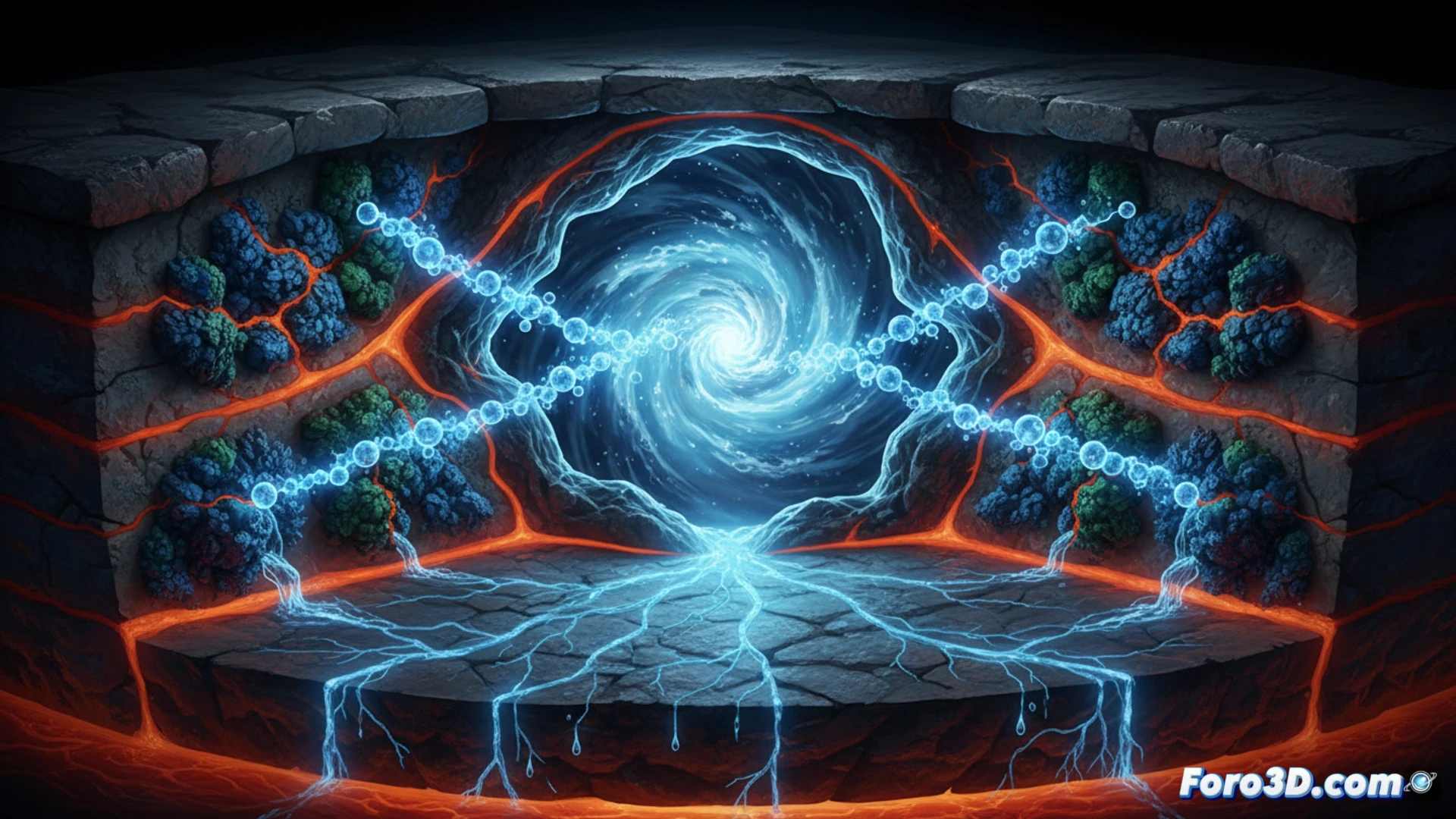
Technical Implications for Planetary Dynamics 🔬
The reaction occurs under conditions of high pressure and temperature, where hydrogen combines with mineral oxides. This process alters the understanding of mantle dynamics, potentially influencing the generation of earthquakes and the composition of deep magmas. Furthermore, it opens a pathway for searching for water on other rocky planets, as it does not depend exclusively on external sources such as comets or asteroids.
Earth, a Cosmic Distillery of Deep Waters 🌍
It turns out that the planet has been manufacturing its own water for billions of years without asking comets for permission. Meanwhile, some humans continue to pay for plastic bottles. Next time you see a faucet, think that perhaps the water you drink has just emerged from a chemical reaction 400 kilometers deep. The water cycle has become a little more geological and a little less meteorological.