Beneath the Upper Rhine Valley, shared by France, Germany, and Switzerland, lies Europe's largest aquifer. It holds 150 billion cubic meters of water and supplies more than five million people. A study from June 2026 revealed an alarming reality: pesticides, pharmaceuticals, and PFAS are severely contaminating this resource, threatening its quality and the health of ecosystems.
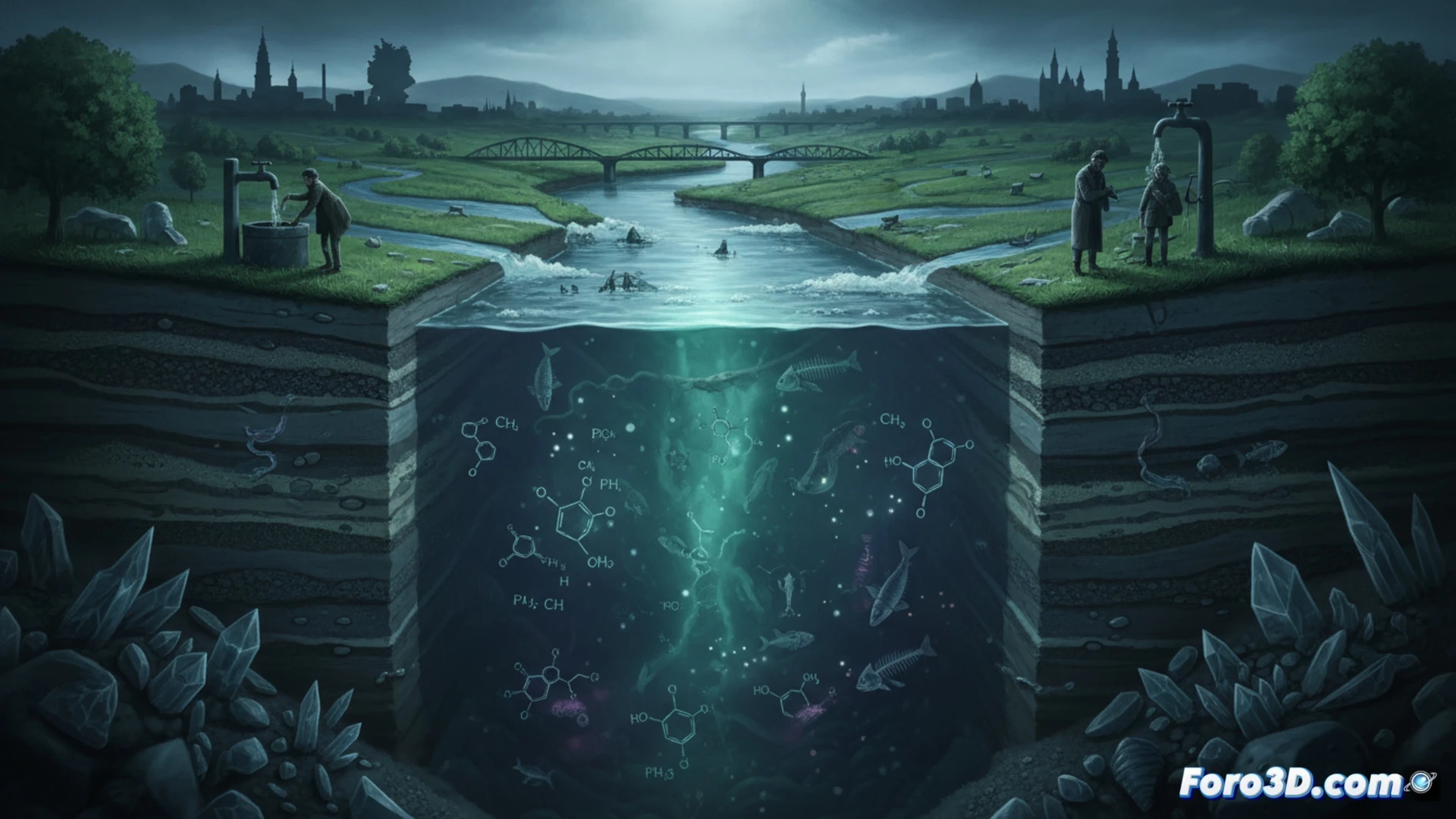
Detection technology: the invisible map of contamination 🧪
The study used liquid chromatography coupled with mass spectrometry (LC-MS/MS) to identify contaminants at the nanogram per liter scale. PFAS, known as forever chemicals, were detected in 95% of samples, with concentrations exceeding EU recommended limits. Isotopic analyses also traced the origin of pesticides, allowing researchers to model their dispersion in groundwater layers with geographic precision.
The aquifer that drinks what you flush down the toilet 🚽
It turns out that Europe's largest drinking water reservoir functions as a giant coaster for everything that shouldn't be there. Expired pharmaceuticals, garden pesticides, and PFAS from your miracle non-stick pans have been throwing a molecular party underground. The worst part isn't that they're there, but that they've been uninvited guests for decades without anyone asking for their ID. Now it's time to clean the house.