In Chapecó, Brazil, the capital of slaughterhouses, the EU-Mercosur agreement drives a demand for meat paid for with blood. Companies recruit indigenous people and immigrants for exhausting rhythms, sub-zero temperatures, and faulty machinery. One worker denounces: companies want robots, not humans.
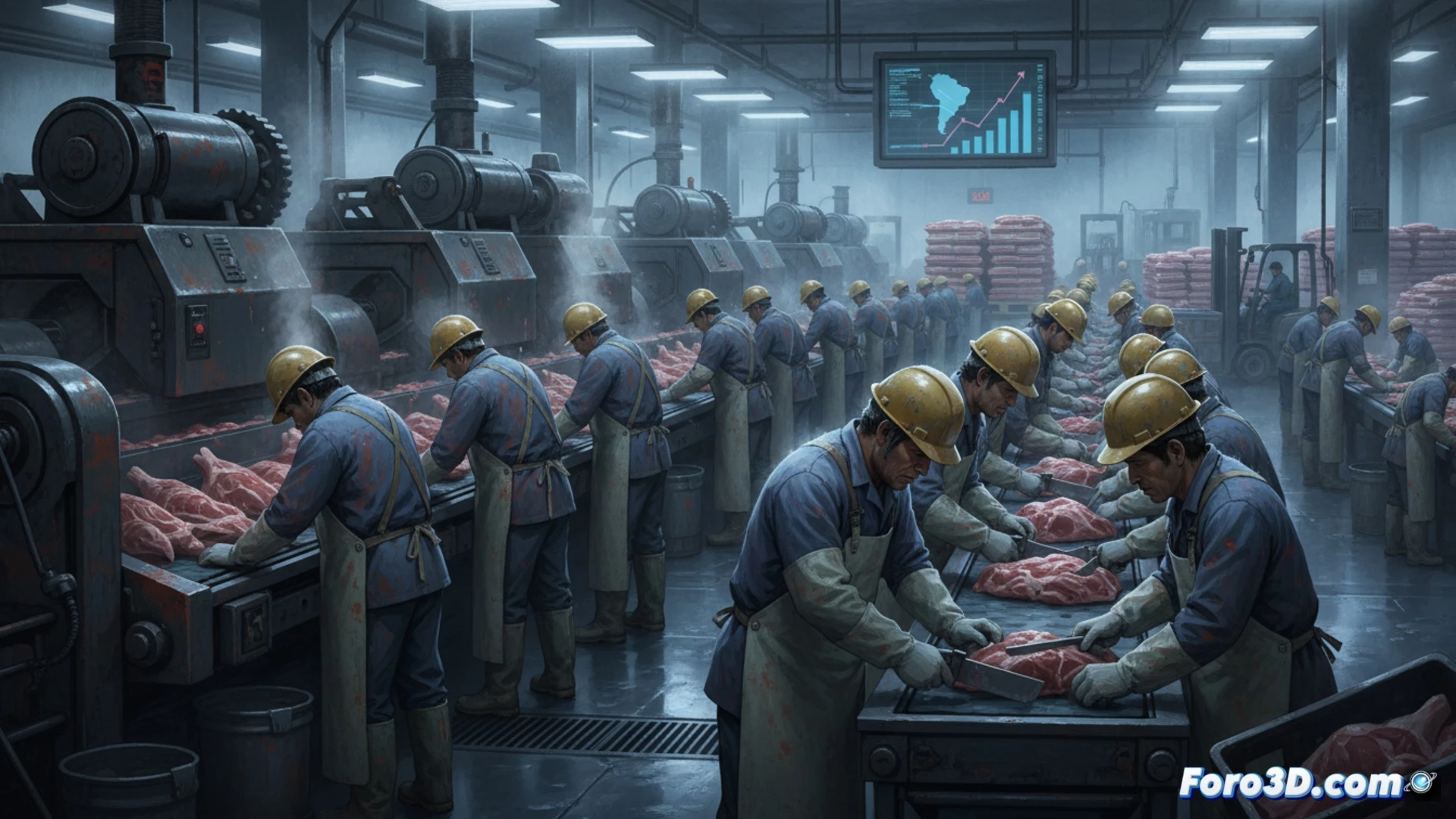
Failed automation: when the machine doesn't replace the worker 🤖
Technology in these slaughterhouses is not cutting-edge; it's obsolete and dangerous. Conveyor belts without safety sensors, blades without automatic shut-off, and cooling systems that fail at -10°C. Employees operate with repetitive movements for 12 hours, without breaks. Strain injuries and amputations are common. Innovation here is not robotics; it's exploitation.
Low-cost robotization: the wet dream of the meat industry 💀
Companies dream of robots that don't complain, but for now they have humans who do. While waiting for that cheap automation, workers in Chapecó are the biological version of a mechanical arm: without rest, without rights, and with zero maintenance. If the future is a robot, the present is cannon fodder.