The recent union agreement at Netflix Animation marks a concrete advance for workers in the sector, guaranteeing minimum wages and labor protections. However, this isolated achievement exposes an evident contradiction: while one company agrees to fair conditions, a large part of the technology and digital entertainment industry continues to evade basic rights, normalizing precariousness as the rule.
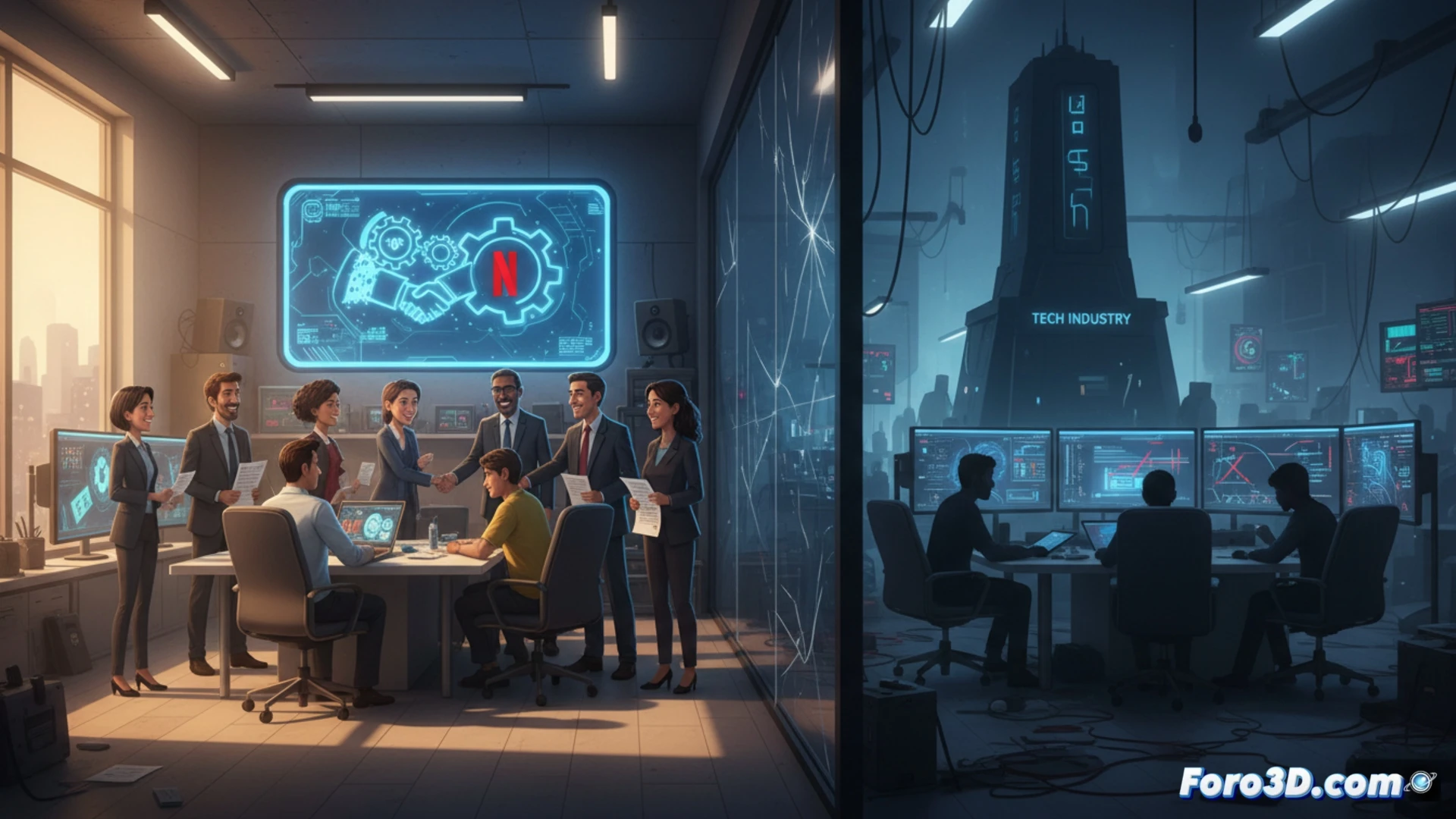
The architecture of digital precariousness: low wages and temporary contracts 🏗️
In the digital production ecosystem, companies often fragment projects through temporary contracts and subcontracting to evade labor responsibilities. The absence of a legal framework requiring decent wages and stability turns collective bargaining into a sporadic battle. As long as there are no laws mandating minimum standards, each agreement will be an island of rights in an ocean of labor uncertainty for animators, developers, and designers.
Fair contract at Netflix: and the rest of the sector, looking the other way 🎭
So Netflix signs a fair contract and everyone applauds. But outside that bubble, most studios continue to treat their creative teams as if they were software plugins: used, discarded, and updated with the next project. The irony is that to earn a decent salary in digital animation, you almost need a streaming giant to adopt you as the prodigal child. Meanwhile, everyone else is still waiting for the patch.