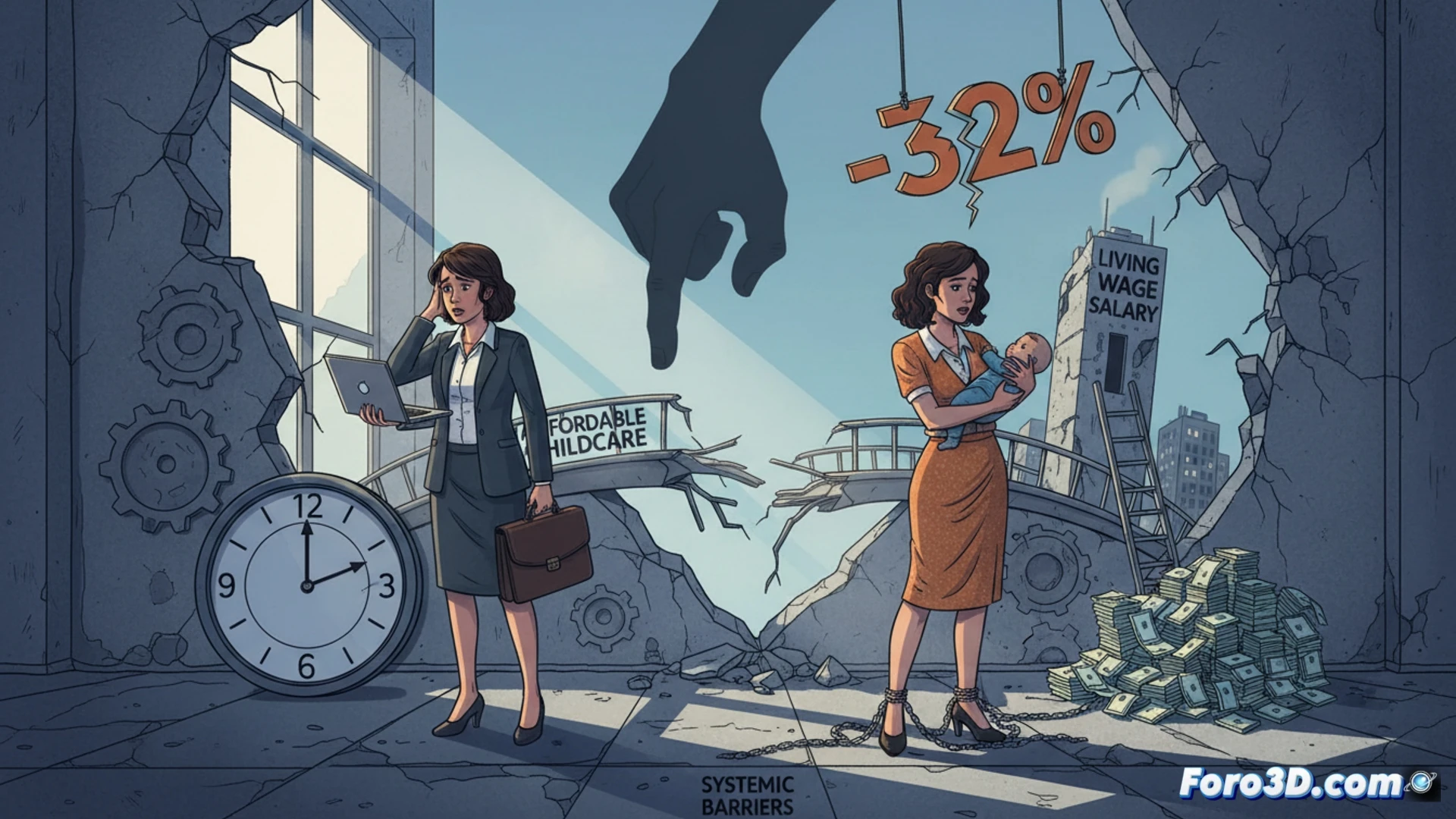
The increase in part-time employment to 32% exposes an obvious contradiction: workers are accused of not wanting to work, while real causes such as the lack of affordable childcare and wages that do not compensate for a full day are ignored. The fault is not individual, but structural. 😤
Automation and flexibility: tools without basic conditions 🛠️
Technology allows for flexible schedules and teleworking, but without a baseline of conditions it is useless. If a delivery app pays 4 euros per hour, the worker prefers two hours to eight. AI and algorithms optimize routes, but do not solve the fact that the cost of childcare exceeds the part-time salary. Digital productivity requires investment in care.
The magic solution: make the poor work for free 🎩
The recipe of some economic gurus is simple: if you have no one to take care of your children, work 16 hours. If the salary is not enough to pay for the babysitter, work 20 hours. And if you still can't make it, then 24. The problem is not the lack of hours, but that the system expects workers to live on air and willpower. But air doesn't pay the bills.