On August 12th, the Iberian Peninsula will witness a total solar eclipse, an event that has not occurred in over a century. Regions such as Aragon, Galicia, Asturias, and the Balearic Islands will see it in its entirety; the rest of Spain will see it partially. But beware: looking directly at the Sun, even during the eclipse, can cause solar retinopathy, a permanent retinal injury from infrared and ultraviolet radiation.
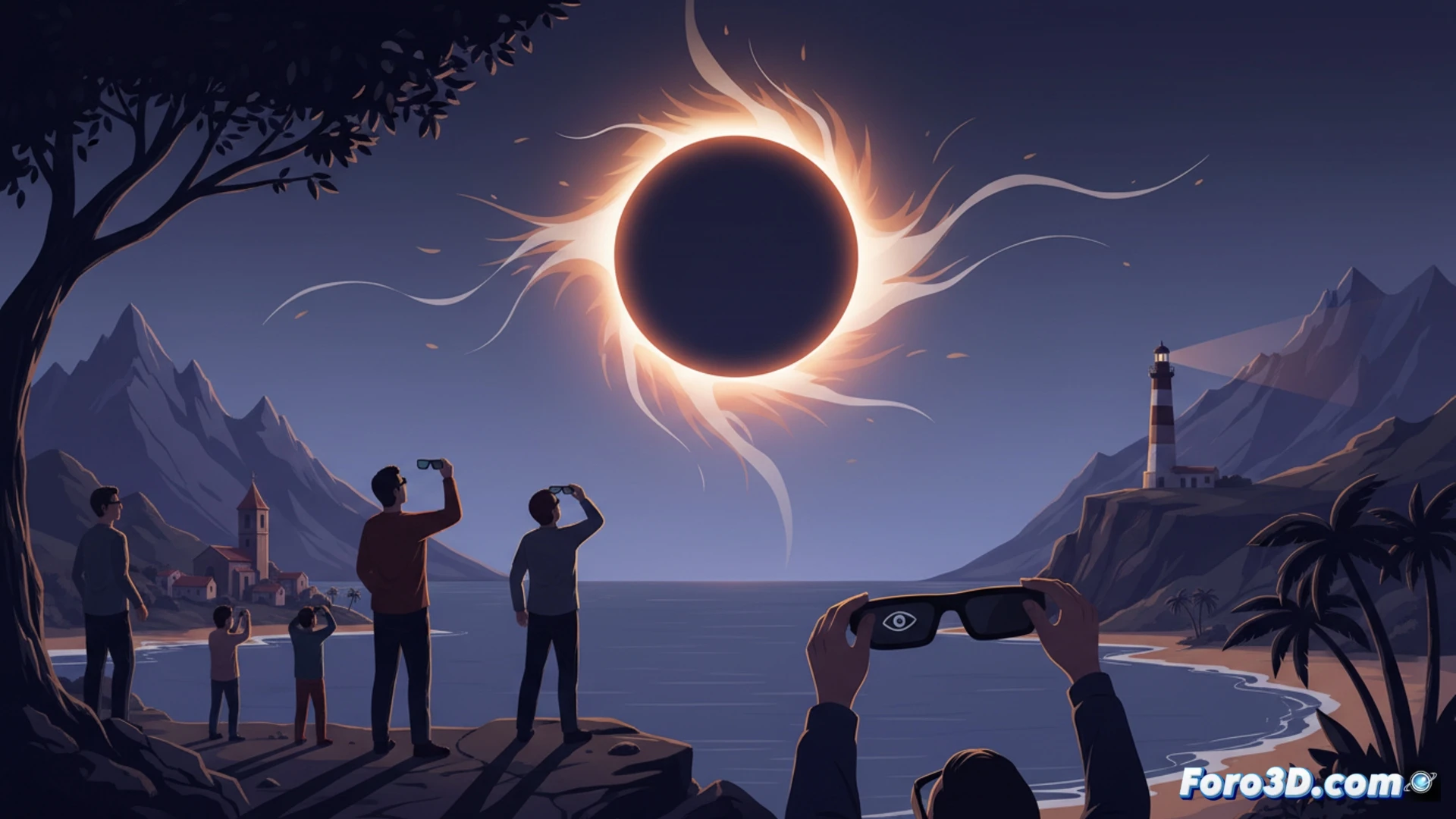
Technology for observing the sky without risks 🌞
To enjoy the eclipse without endangering your eyesight, you need certified filters according to ISO 12312-2 standard. Eclipse glasses or solar viewers are the basic option. If you use telescopes or cameras, install specific solar filters; welder's glass number 14 also works. Do not use common sunglasses, X-rays, or CDs: they do not block harmful radiation. Concentrated sunlight can burn the retina in seconds.
The moment your phone becomes useless 📱
And now, what no one tells you: trying to photograph the eclipse with your phone without a filter is like pointing a laser pointer at the sensor's eyes. Your camera fries, the photo comes out black, and you end up with no memory and no retina. So, if you don't have a filter, it's better to watch the eclipse on streaming while your neighbor complains that their screen has turned white. Science, sometimes, is cruel.