Digital Eclipse has released Tetris Forever, a collection that not only celebrates the history of the world's most famous puzzle game but also sets a new technical standard in video game preservation. The title uses the Eclipse Engine to emulate the original hardware of various Tetris versions with surgical precision, from the NES to the Game Boy. The key to the project lies in its dual nature: on one hand, bit-by-bit emulation of classic systems; on the other, a modern 3D interface that acts as an interactive museum, allowing the developer to analyze the original code in a contemporary visual environment.
Precise Emulation and Recreation of Original Hardware 🎮
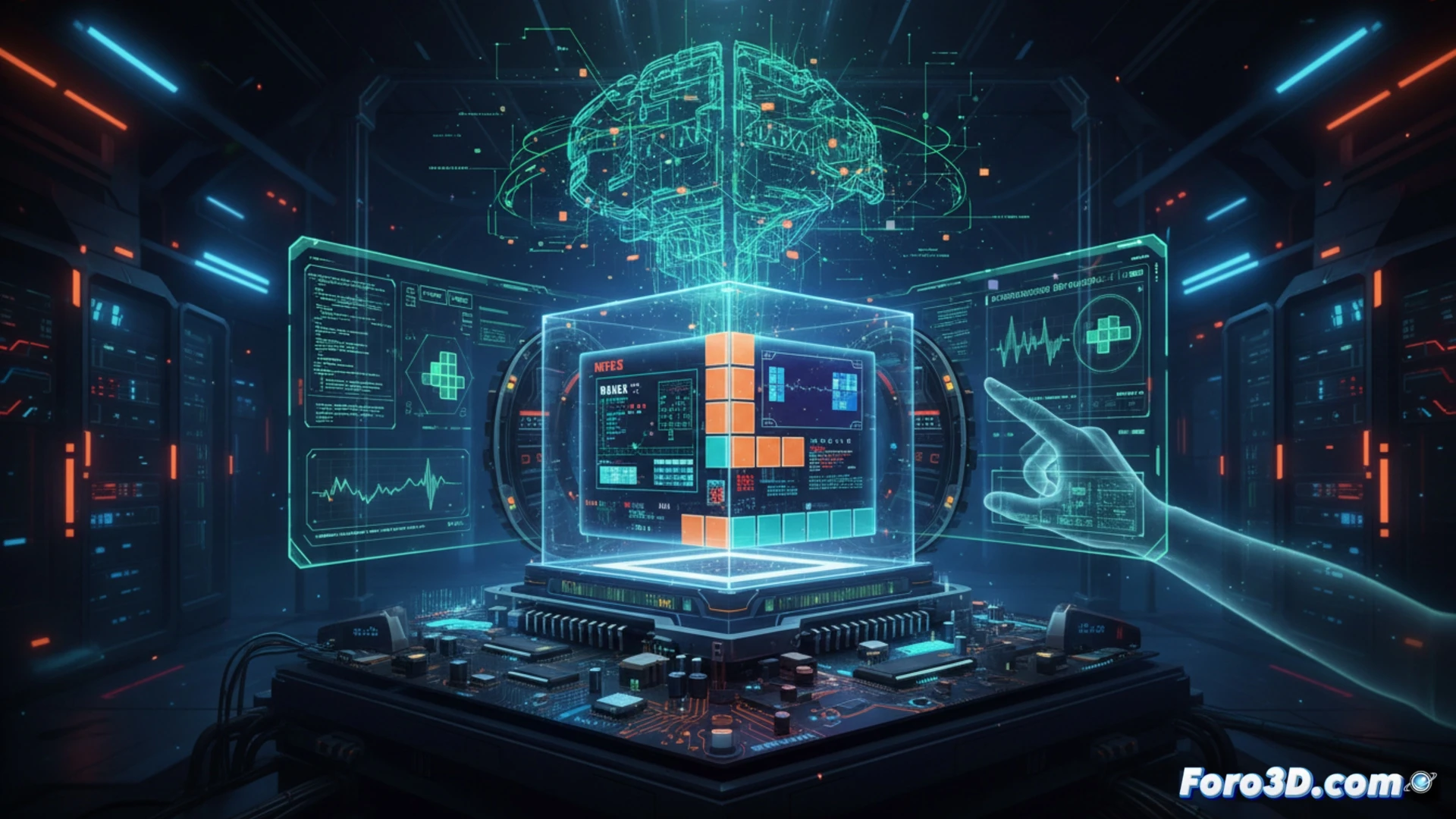
The technical process behind Tetris Forever involves capturing and digitally cloning the original ROMs, but goes far beyond a simple copy. The Eclipse Engine implements CPU cycle-level emulation techniques, replicating not only the game's logic but also the peculiarities of the era's hardware, such as screen refresh timings and color palette limitations. Digital Eclipse has developed proprietary digital preservation tools that allow each version of Tetris to be isolated in a virtual container, ensuring the gaming experience is identical to the original. Additionally, the 3D museum interface overlays these emulators, offering the user smooth navigation through timelines, design documents, and interviews, all rendered in real-time without interfering with the underlying emulation.
A Technical Model for Classic Game Preservation 🛠️
Tetris Forever demonstrates that digital preservation is not a passive act of storage, but an active process of reverse engineering and interactive documentation. For the development community, this approach sets a crucial precedent: faithful emulation not only keeps the code alive but contextualizes it within its history. The use of the Eclipse Engine to encapsulate old hardware within a modern 3D interface offers a technical roadmap for future archival projects. By separating the emulation layer from the presentation layer, Digital Eclipse solves the classic dilemma between authenticity and accessibility, proving that you can play the 1984 Tetris with the same latency and response as a real machine, while navigating a digital museum without sacrificing performance.
As a developer, which technical aspects of the Eclipse Engine do you consider most revolutionary for the digital preservation of classic titles like Tetris, and what performance or compatibility challenges does it pose when emulating original hardware on modern platforms?
(PS: 90% of development time is polishing, the other 90% is fixing bugs)