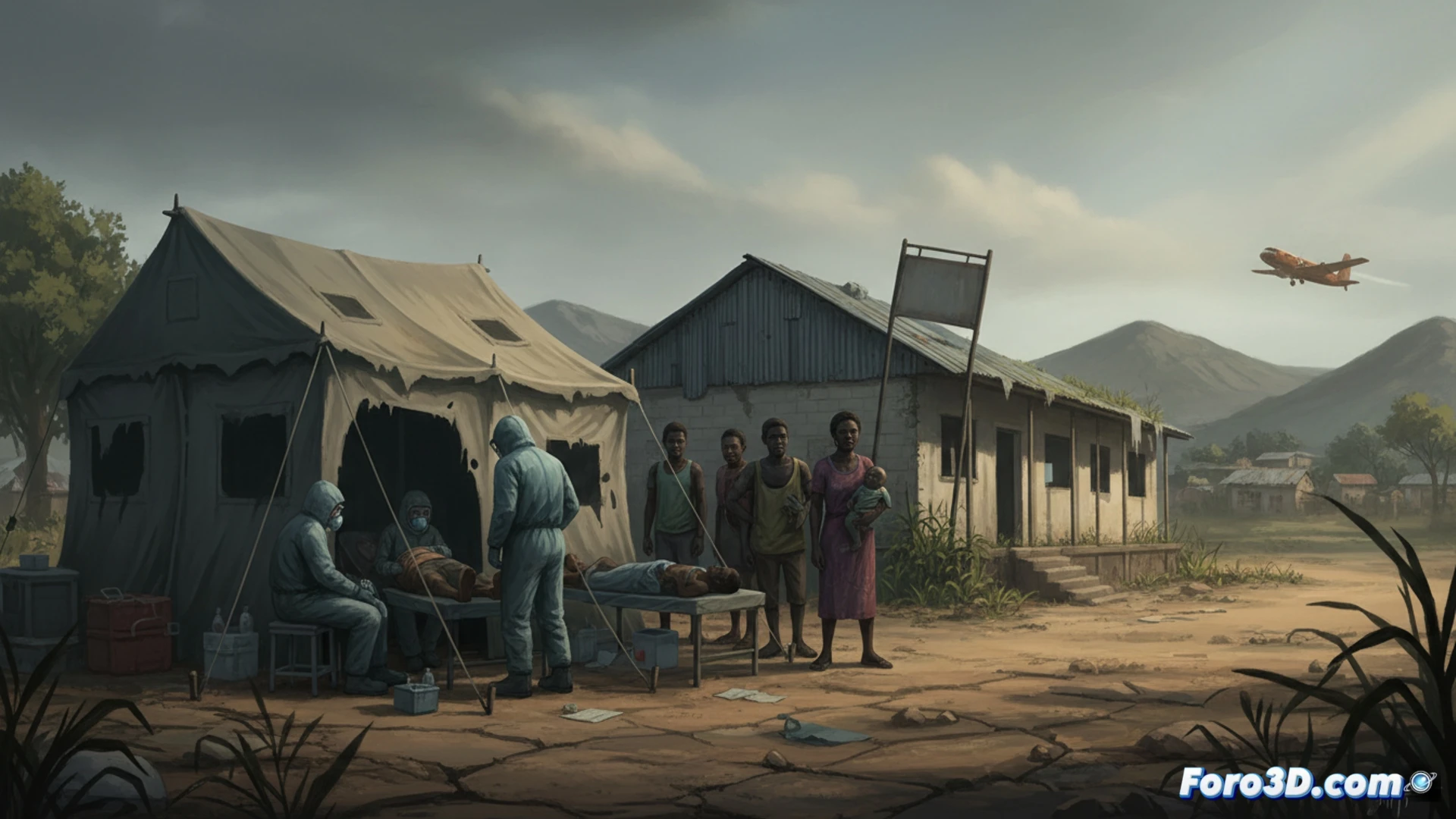
Six years after Covid-19, the international response to health crises shows deep cracks. A new Ebola outbreak in the Democratic Republic of Congo exposes the fragility of global cooperation. Local health systems, already weakened, now face a drastic cut in foreign aid, precisely when it is most needed.
Drones and sensors: technology that arrives too late 🚁
Contact tracing and vaccine logistics today depend on digital systems and cargo drones. However, lack of funding delays the deployment of these tools. Remote sensors for detecting fever in hard-to-reach areas require maintenance and trained personnel, resources that are scarce. The digital divide becomes a direct health obstacle.
The international community: from applauding healthcare workers to looking the other way 🌍
In 2020, the world praised health workers as heroes. Six years later, those same heroes see budgets for masks and gloves allocated to other purposes. Global solidarity seems to have an expiration date. Meanwhile, Ebola remains oblivious to budget cuts or selective forgetfulness.