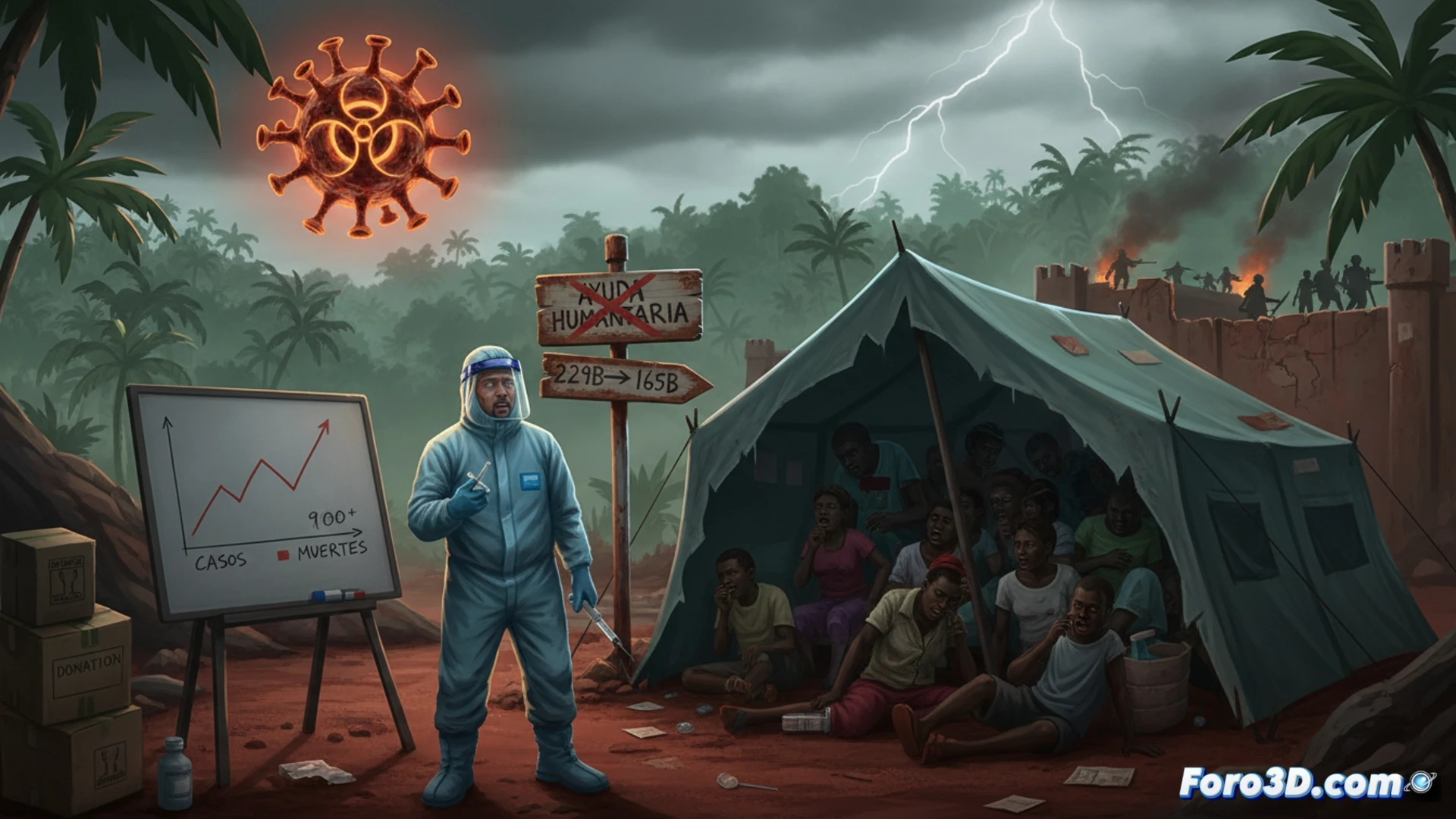
The Democratic Republic of Congo faces an Ebola outbreak with over 900 suspected cases and 220 deaths, declared an international emergency in May. The crisis is intensified by the global reduction in humanitarian aid, which dropped from $229 billion in 2023 to $165 billion in 2025. Health surveillance systems, weakened by armed conflicts, are barely functioning.
Drones and sensors: low-cost technology to track the virus 🦟
Faced with a lack of funds, some NGOs are implementing low-cost drones to map hard-to-reach areas and portable sensors that detect fever in real time. These devices, combined with open-source apps, allow local workers to record cases without relying on expensive laboratories. However, the absence of basic protective equipment in health centers limits their effectiveness. Technology does not replace structural investment.
Humanitarian cuts: the cure is more expensive than the virus 💸
It turns out that saving on public health is costly: donor countries are reducing budgets while the UN estimates that 239 million people will need assistance in 2026. It's like turning off the fire alarm because the noise is annoying. Meanwhile, in the DRC, Ebola advances without gloves or masks. A brilliant plan: let the virus do the dirty work of population control.