The Dyson 360 Vis Nav redefines autonomous navigation in domestic robotics by integrating a real-time visual mapping system based on a 360-degree panoramic lens. Unlike conventional LiDAR sensors, this robot uses proprietary computer vision and a visual SLAM algorithm to build a digital twin of the home, enabling precise localization even in low-light conditions or spaces with dynamic obstacles.
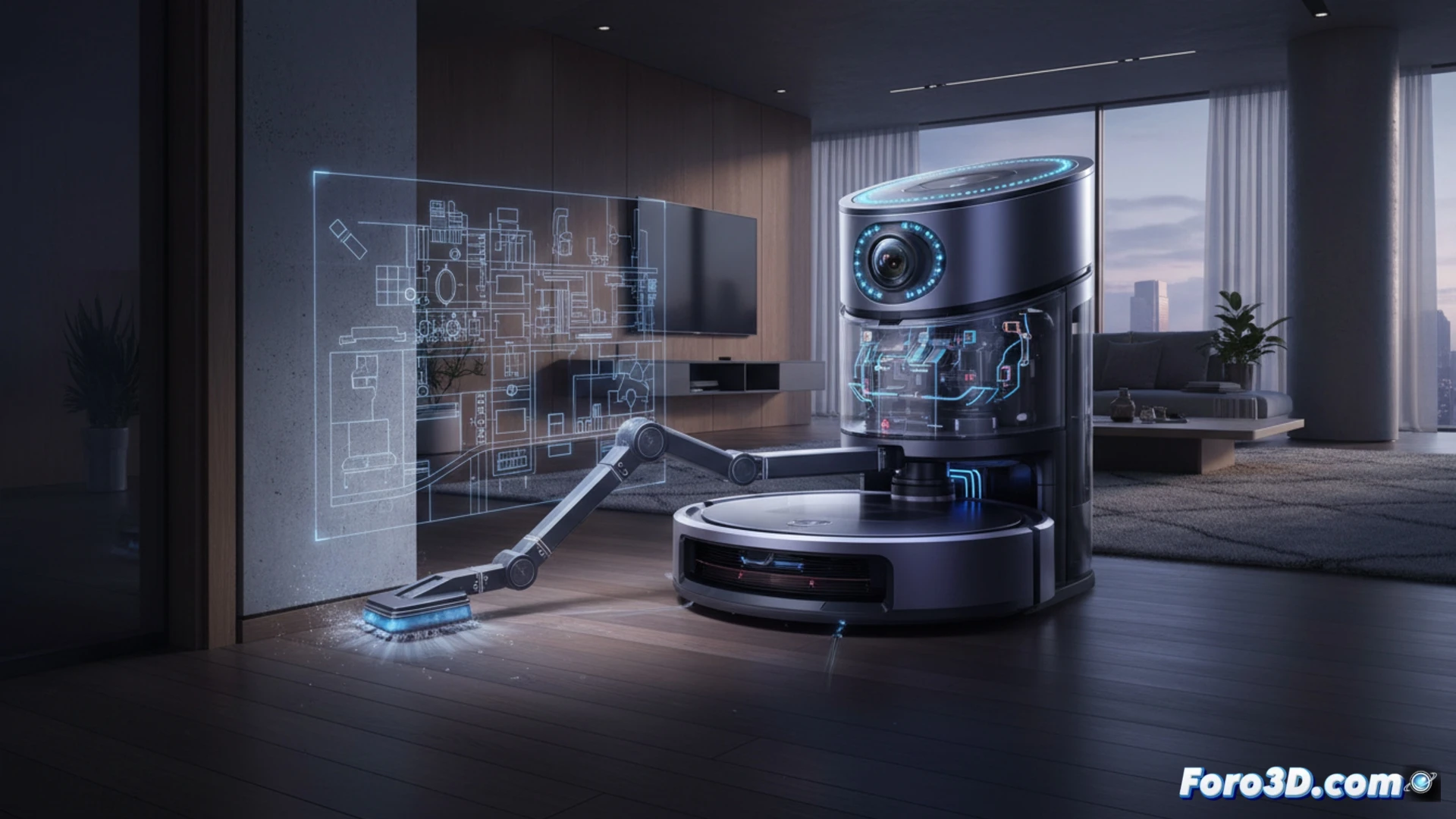
Technical Architecture: VisNav, SLAM, and the Extendable Side Arm 🤖
The core of the system is the Dyson VisNav software, which combines a 360-degree camera with a high-frequency gyroscope and accelerometer. This visual odometry approach allows the robot to triangulate its position without relying on reflective markers or beacons. The extendable side arm, a motorized actuator, deploys only when SLAM detects a corner or edge, optimizing coverage without increasing chassis width. Compared to systems like the iRobot Roomba j7+, which uses a limited front camera, or the Roborock S8 with a rotating LiDAR, the Dyson offers an advantage in volumetric mapping precision, although its processing cost is higher due to the need for a dedicated vision chip.
Implications for Smart Automation and Digital Twins 🏠
The integration of 3D sensors and visual SLAM into a consumer appliance opens the door to applications beyond cleaning. The 360 Vis Nav model can serve as a mobile sensor for smart homes, feeding digital twins that simulate furniture layout or energy efficiency. For robotics engineers, this system demonstrates how computer vision can replace traditional depth sensors in unstructured environments, a key advancement for automation in factories and logistics spaces where robots must adapt to constant changes without recalibration.
How does the integration of the visual SLAM system and the extendable arm of the Dyson 360 Vis Nav affect navigation precision in unstructured domestic environments with dynamic obstacles?
(PS: Simulating robots is fun, until they decide not to follow your orders.)