Recent research suggests that polyploidy, a process where plants inherit two complete sets of chromosomes from different species, may have been key to their resilience during mass extinctions. This genetic surplus, far from being a mistake, would have functioned as an evolutionary spare parts bank. The duplication provides extra material that, after being modified, allows for the development of new functions and adaptation to abrupt climate changes or natural disasters.
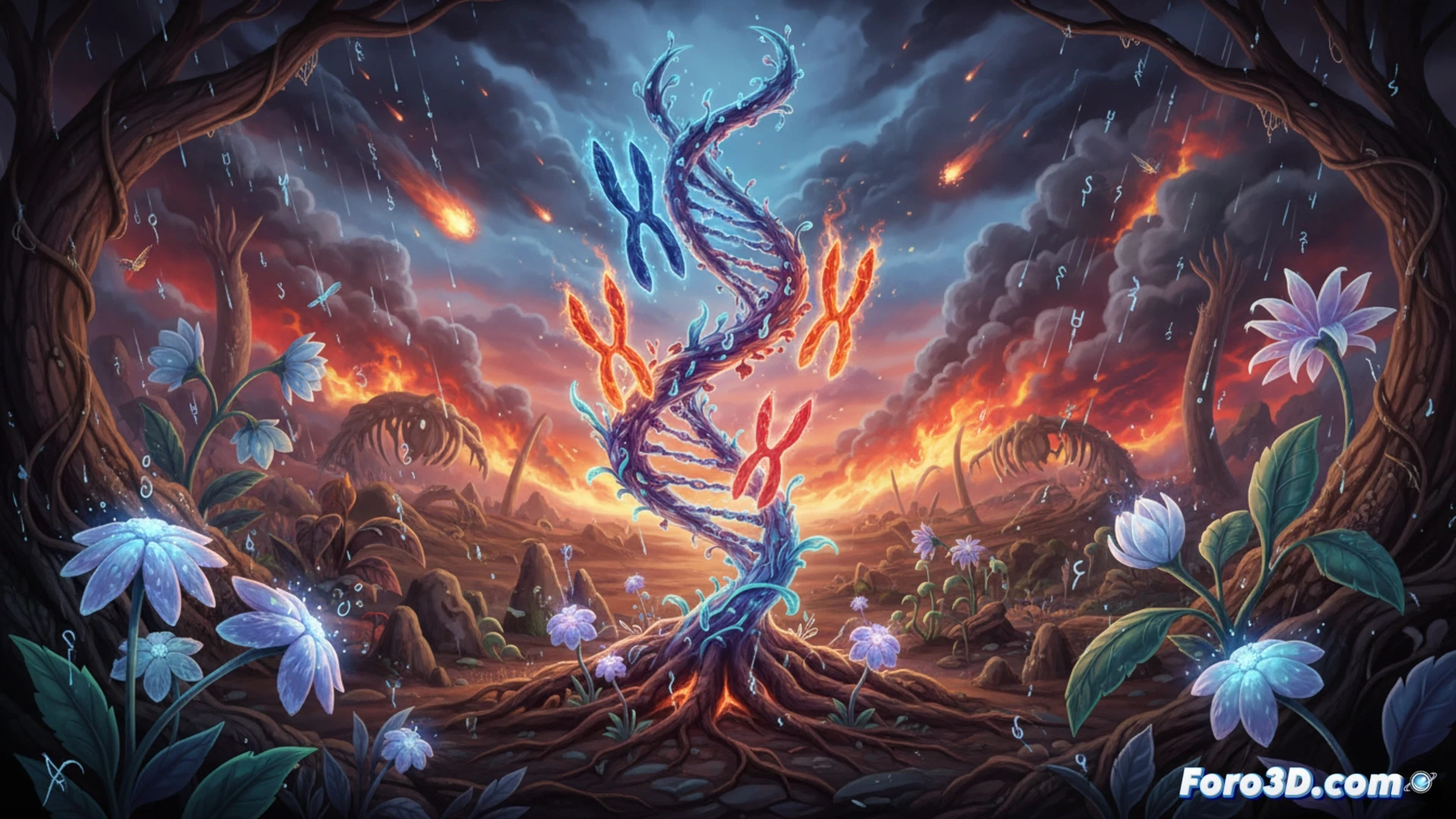
How genetic duplication accelerates plant evolution 🌿
From a technical perspective, polyploidy allows duplicated genes to be freed from their original function. This enables random mutations to generate new proteins without compromising the plant's essential functions. In terms of development, this process acts as a biological redundancy system: while one copy of the gene maintains basic tasks, the other can explore alternative metabolic pathways. Scientists observe that this genetic flexibility is particularly useful in extreme environments, where the ability to innovate quickly makes the difference between extinction and colonization.
Plants with double DNA: the advantage of having a backup in the biological cloud ☁️
It seems plants understood the concept of having a spare hard drive before we did. While humans lose data for not making backups, flowers have been duplicating their genome for millennia, like someone saving photos in two places just in case. Of course, with one difference: when a plant duplicates itself, it doesn't run out of storage space. And we keep paying for the cloud. Ironies of evolution, turning a fern into a data management expert.