The equivalence perfume industry, known as dupes, promises to replicate the scent of major luxury houses at a ridiculously low price. However, these products lack the original complex olfactory pyramid and their longevity fades within minutes. Beyond consumer disappointment, there is a deep legal problem: the infringement of intellectual property rights over olfactory accords protected by patents or trade secrets, a high-value intangible asset in the luxury market.
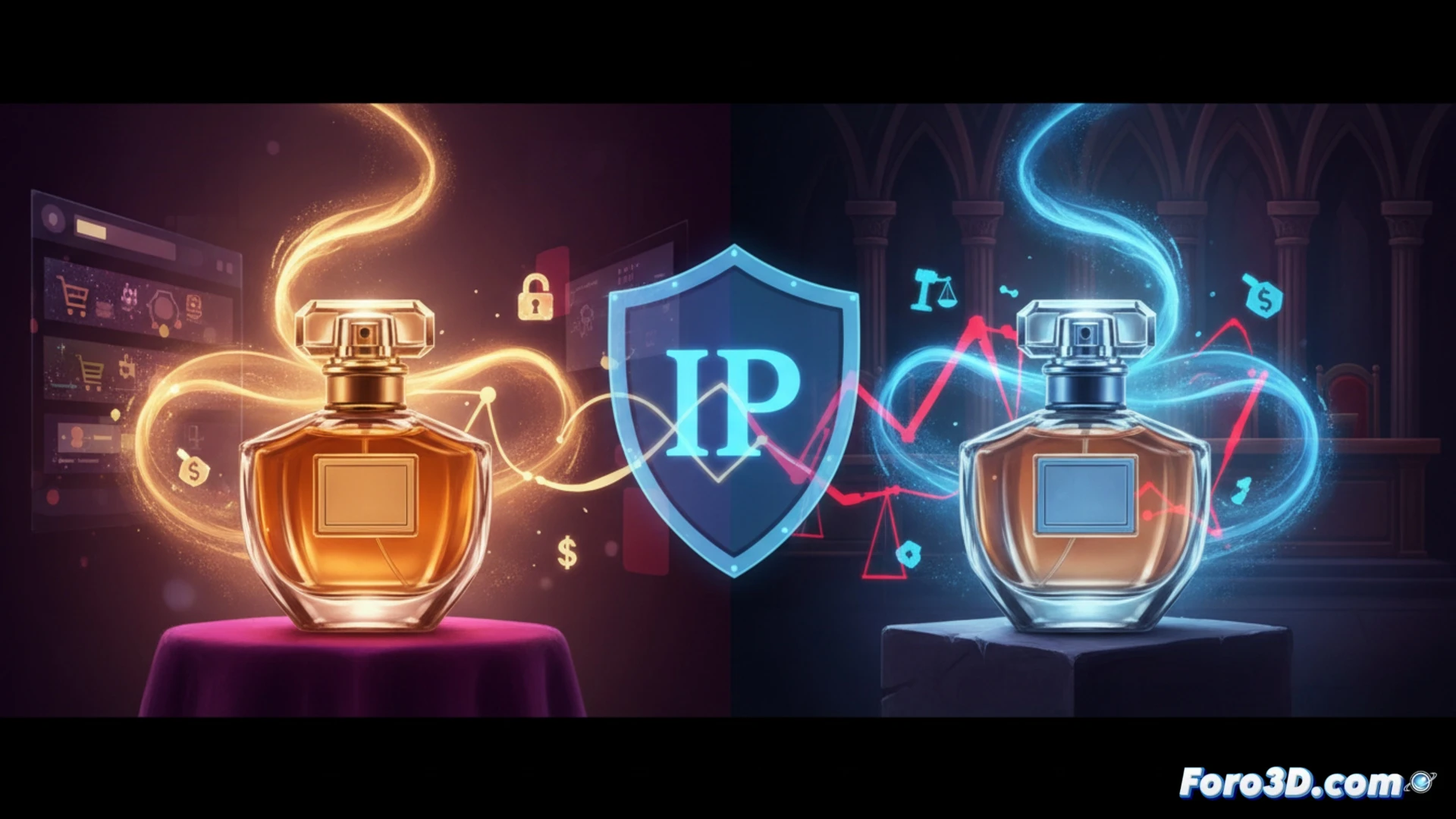
Legal framework and infringement cases in digital marketplaces ⚖️
The legal protection of a perfume is complex. While the chemical formula may be protected by a patent, the fragrance itself rarely is, creating a legal loophole exploited by dupe manufacturers. On platforms like Amazon, AliExpress, or social networks such as TikTok and Instagram, sellers offering identical copies of brands like Chanel or Creed proliferate. Cases like LVMH's lawsuit against replica sellers on Shopify demonstrate the difficulty of pursuing cross-border infringements. Generative AI aggravates the problem by being able to analyze and replicate the chemical composition of a scent in minutes, facilitating the creation of near-perfect imitations that evade traditional detection systems.
Digital compliance: platform responsibility 🛡️
Digital platforms must implement proactive compliance measures to prevent the marketing of dupes that infringe IP rights. The use of AI tools for recognizing olfactory patterns in product descriptions and verifying manufacturing licenses is recommended. Furthermore, it is crucial to establish a rapid notification channel for rights holders, such as the DMCA takedown system, but adapted to intangible goods. Without specific regulation for olfactory accords, the digital market will continue to be a haven for low-cost luxury counterfeiting.
Can an equivalence fragrance evade trademark infringement if the imitation is limited to the scent and not the name or packaging?
(PS: AI can generate art, but not copyrights... like us, who generate polygons but not money)