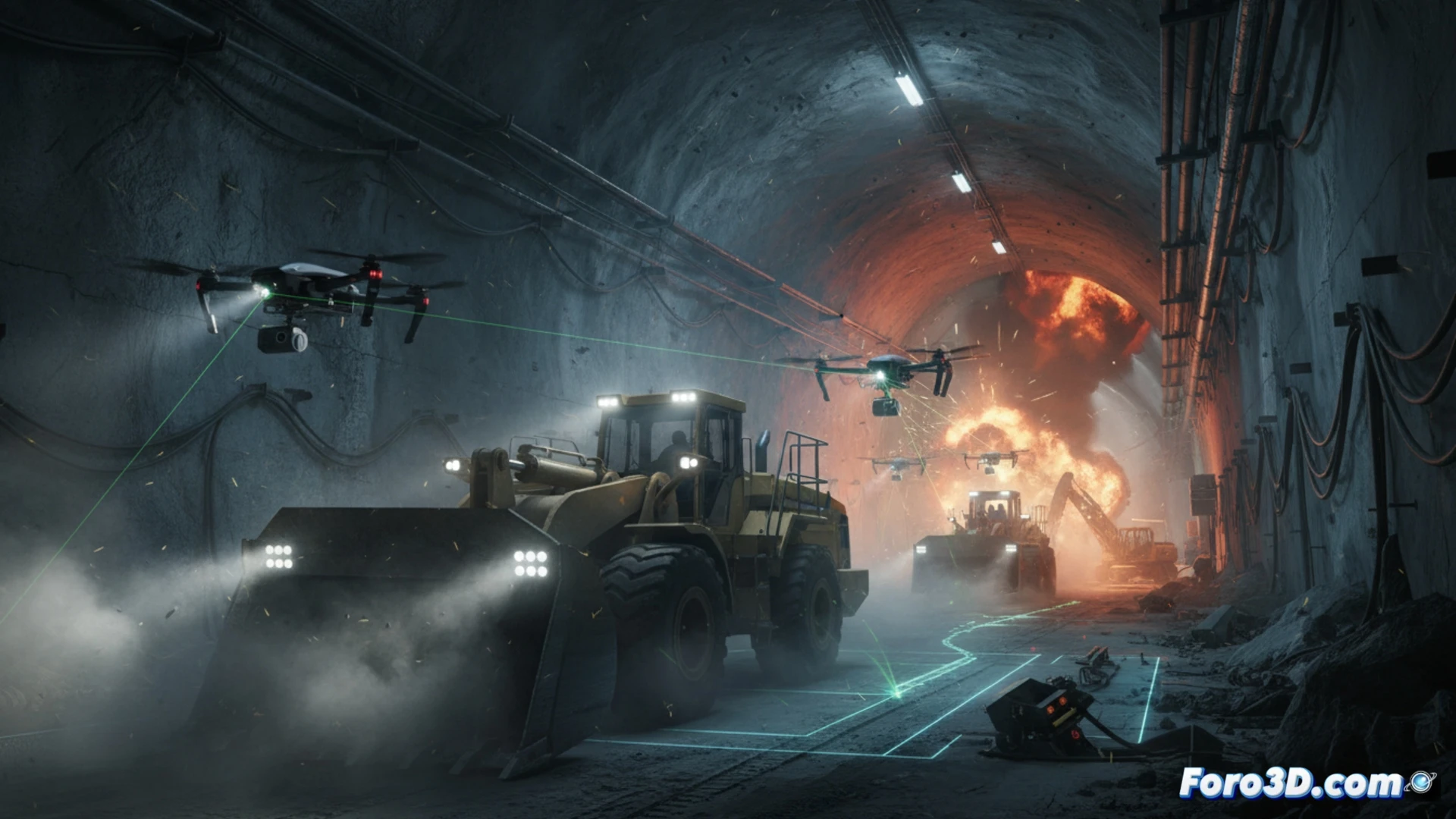
Tunnel construction in Europe is adopting drones and autonomous loaders to operate in high-risk environments. After an explosion, drones guide machinery through the smoke, preventing workers from entering dangerous areas. The result is projects with fewer accidents and a notable reduction in CO2 emissions.
How automation reduces risks and emissions 🚀
Drones equipped with thermal sensors and LIDAR map the interior of the tunnel in real time, sending coordinates to autonomous loaders. These driverless vehicles perform debris removal and excavation tasks with millimeter precision. By eliminating the need for personnel in contaminated areas, workplace accidents are reduced, and the use of diesel machinery is decreased, lowering emissions by up to 30% per project.
Goodbye to the chorizo sandwich on the construction site 🤖
While drones do the dirty work, operators can enjoy a hot coffee from a booth 500 meters away. Of course, the autonomous machine doesn't complain about the mud, doesn't ask for a raise, or leave its hard hat behind. The downside: now no one warns when the ice for the soft drink runs out, so you have to bring a thermos.