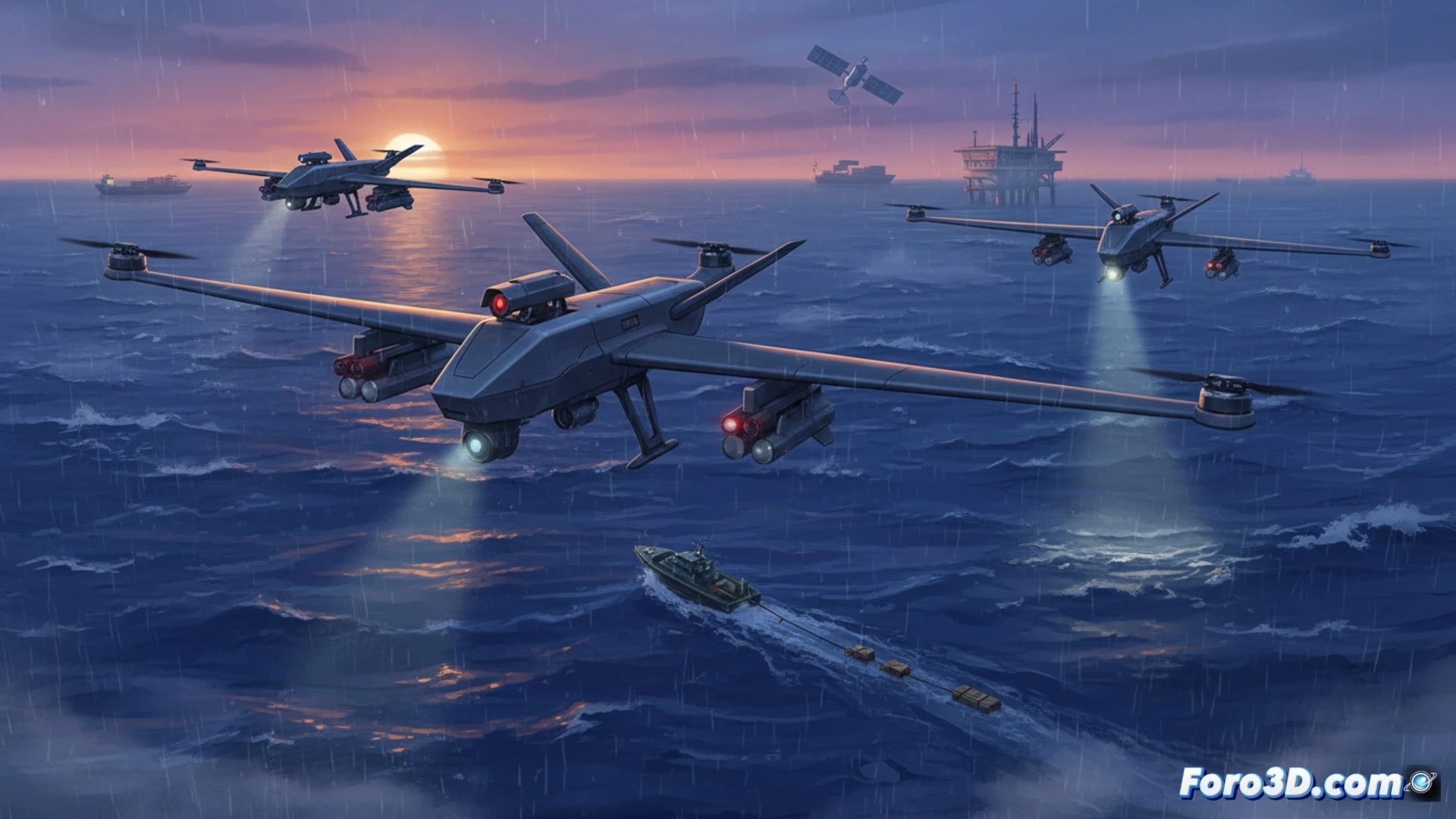
The fight against maritime drug trafficking is seeking a technological leap with the deployment of armed drones and continuous surveillance systems. The proposal aims to cover the ocean routes most used by cartels, combining artificial intelligence with immediate response capability. The goal is to reduce impunity on the high seas.
Sensors and algorithms for a permanent eye on the sea 🛰️
The technology is based on fixed-wing drones with an autonomy of up to 48 hours, equipped with synthetic aperture radars and multispectral sensors. Computer vision algorithms identify suspicious vessels, while a control center evaluates in real-time whether the use of lethal payload is authorized. The system promises to cover 500 kilometers of coastline without relief, reducing dependence on conventional naval patrols.
Goodbye spyglass, hello bad-tempered drone 😈
Drug traffickers will have to swap their speedboats for invisible submarines, or at least learn to dodge a drone that doesn't sleep, doesn't get seasick, and has good aim. Sure, the system will cost as much as three football stadiums, but hey, no one said watching the ocean was cheap. Meanwhile, local fishermen already fear their wooden boat will be mistaken for a cocaine shipment.