The visual style of Kouta Hirano in Drifters presents a fascinating technical challenge for video game development. His thick linework, high-contrast shadows, and stylized violence not only define the narrative but demand precise translation into real-time engines like Unity or Unreal. This article analyzes how to build an asset pipeline that captures the ferocity of the faces and the rawness of the fantasy world, optimizing each polygon to maintain the essence of the manga without sacrificing performance.
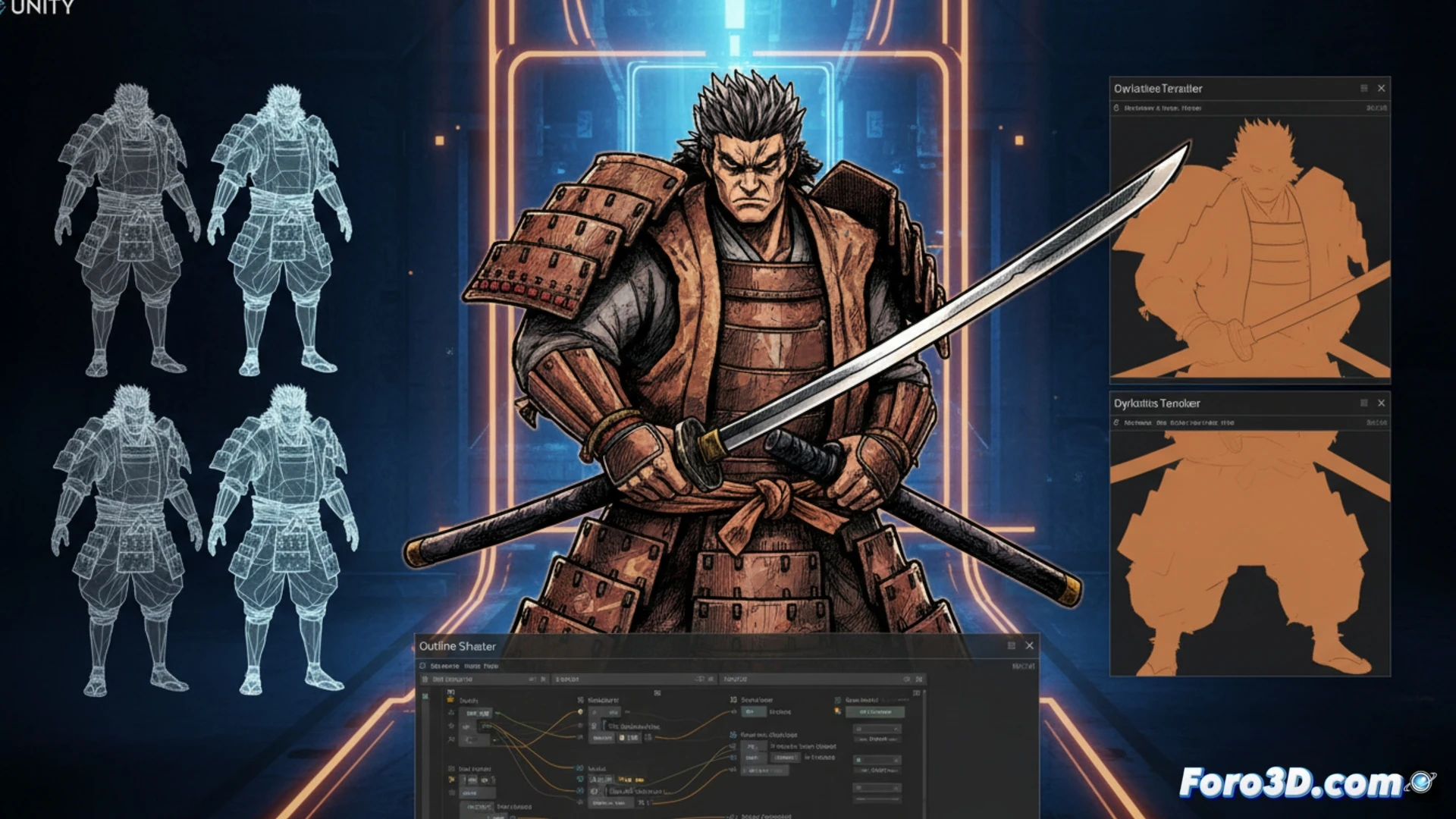
3D Modeling and High-Contrast Shaders for Real-Time 🎨
To replicate Hirano's thick linework, modeling must prioritize angular silhouettes and sharp cut planes. It is advisable to use a low-poly workflow with marked hard edges to simulate ink lines. The key lies in texturing: a flat color palette with exaggerated normal maps that accentuate the wrinkles and scars of historical warriors. Shaders should implement a cel shading effect with very defined shadow thresholds, avoiding soft gradients. For lighting, a directional light system with a single point of origin and hard shadows (without PCF filtering) will emulate the manga's extreme contrast. Games like Guilty Gear Strive and The Legend of Zelda: Breath of the Wild offer solid references for this type of stylization, although Drifters demands a rawer level of violence in impact animations.
Level Design and Hero Selection for a Brutal Fantasy World ⚔️
The premise of Drifters (historical warriors in a fantasy world) is a perfect catalyst for asymmetric level design. Each hero, from a samurai to a World War II pilot, must have a moveset that reflects their era but adapts to a magical environment. Level design should exploit this duality: a medieval castle can be destroyed by a tank, while a dark mage must be vulnerable to historical guerrilla tactics. To maintain the aesthetic, environments should use textures with a coarse grain and a posterization filter that reduces the color range to 4 or 5 tones per scene. Stylized violence is achieved with blood particles using flat sprites instead of physical simulations, prioritizing visual impact over realism.
How would you approach lighting in this level?